




Best Moving Services for Large, Heavy, or Awkward Items in 2026 in Austin

What Counts as a Large, Heavy, or Awkward Item When Moving
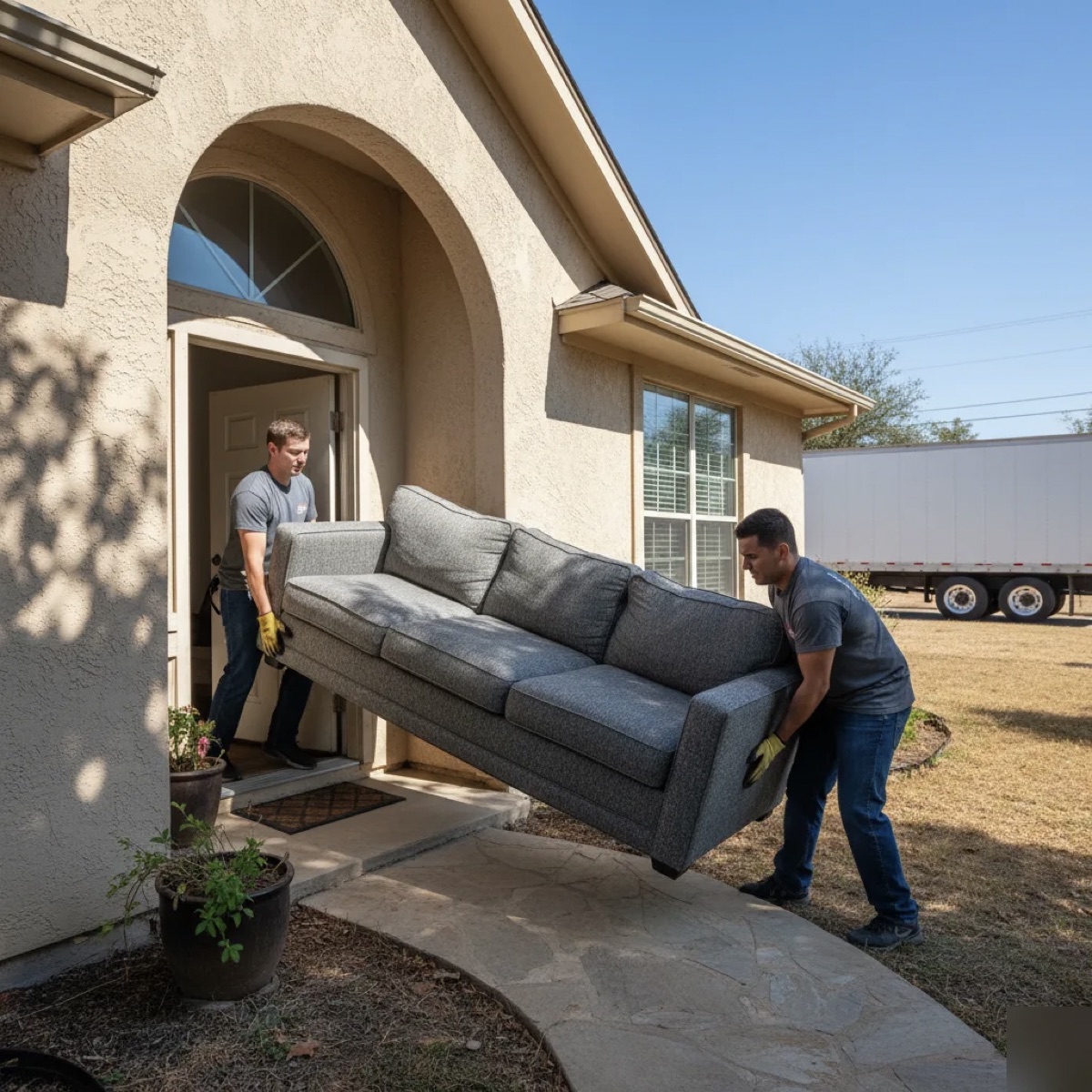
Most people assume movers handle everything the same way. They don't. There's a real difference between loading a box of books and moving a 400-pound gun safe down a flight of stairs. Specialty moving services for large, heavy, or awkward items exist specifically because standard moving crews aren't always equipped — or trained — for the hard stuff.
Anything that requires special equipment, more than two people, or a technique beyond "lift and carry" qualifies. Weight is the obvious factor, but it's not the only one. A 300-pound refrigerator is heavy, but it moves on wheels and has handles. A 300-pound cast iron clawfoot bathtub has none of that — it's low to the ground, has no grip points, and rolls nowhere. This comes up constantly in older Austin homes, especially in Hyde Park and Travis Heights, where early 1900s construction means narrow hallways and original fixtures that weigh more than modern replacements.
Here's a breakdown of what typically falls into the heavy-item category:
- Gun safes and fireproof safes (often 500–1,000+ lbs)
- Upright and grand pianos
- Large aquariums (a 200-gallon tank can exceed 2,000 lbs when full)
- Industrial gym equipment — cable machines, squat racks, plate-loaded benches
- Pool tables (slate beds alone run 400–800 lbs)
- Antique armoires and solid wood furniture from pre-1950 construction
- Riding lawn mowers and zero-turn equipment
Awkward is a different problem entirely. An item can be completely manageable in weight but nearly impossible to move because of its shape, fragility, or center of gravity. A 70-inch flat-panel TV weighs maybe 80 pounds, but one wrong flex and the screen cracks. Same goes for large mirrors, marble tabletops, and custom-framed artwork.
And then there's the access problem. A sectional sofa in a condo building with a single elevator, a 90-degree turn in the hallway, and a doorframe two inches too narrow is an awkward item situation — not because of the sofa, but because of what surrounds it.
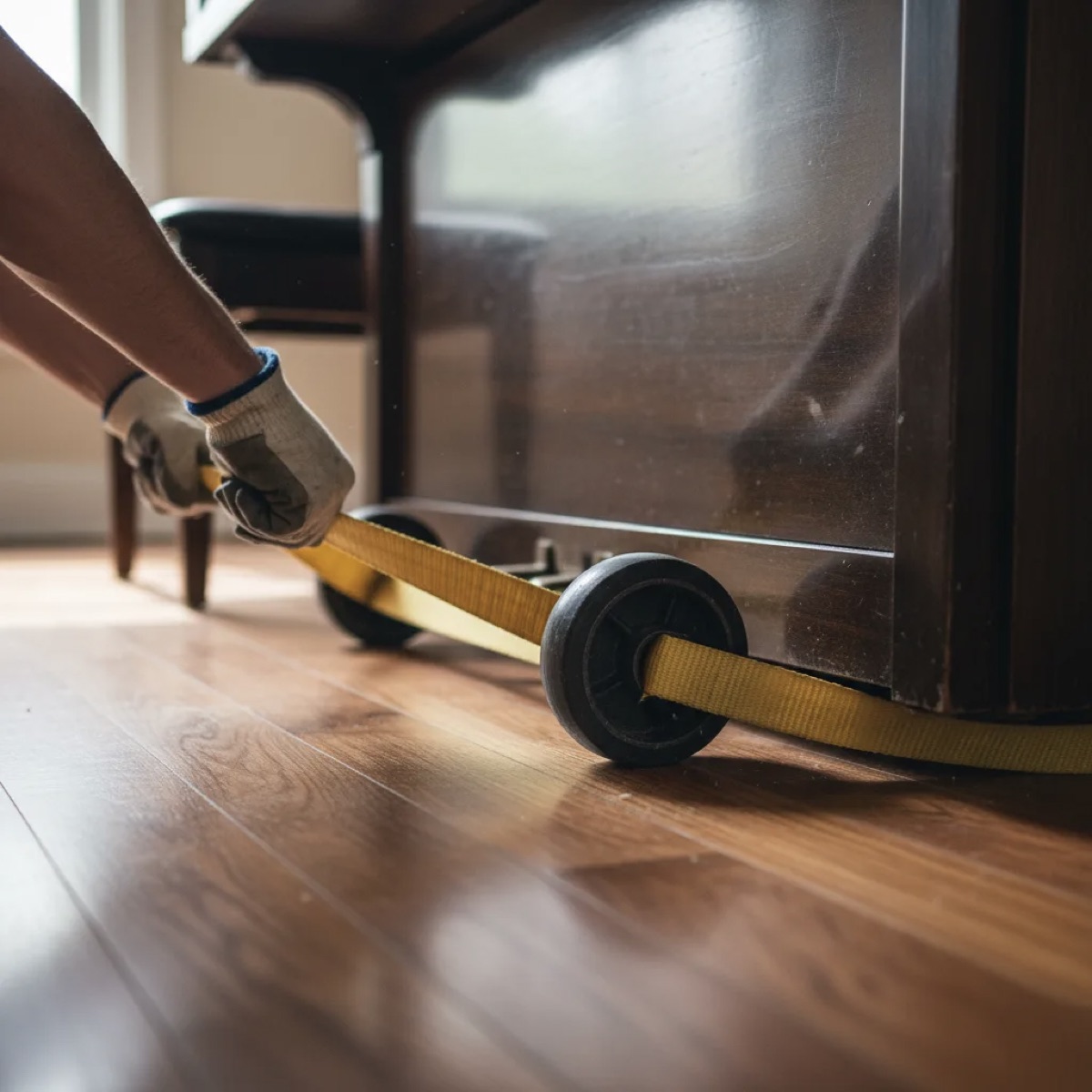
Staircases change everything. A piano that's manageable on flat ground becomes a serious engineering problem on a staircase. So does a washer-dryer pair in a two-story home with a tight landing. Stair-climbing dollies and forearm straps exist specifically for these situations.
The real question is whether a standard two-person crew can move the item safely, without damaging it, damaging the home, or injuring themselves. Before you book, get a moving quote near MoPac that specifies crew size and equipment for heavy or oversized items — because according to the Bureau of Labor Statistics, moving is consistently ranked among the top five occupations for musculoskeletal injury, which is exactly why technique and equipment matter more than muscle.
If you'd hesitate to ask a friend to help you move it, it probably needs a specialist.
Why Standard Moving Services Are Not Built for Heavy or Awkward Items
Most moving companies are set up to handle boxes, furniture, and the usual household stuff: a couch, a dresser, a stack of wardrobe boxes. That's what a standard moving crew trains for. But when you call about a 700-pound gun safe or a 9-foot concert grand piano, you're asking something very different — and a lot of companies will say yes anyway.
A company can legally show up with two people and a hand truck and attempt to move your 400-pound cast iron clawfoot tub. Whether they can do it safely is a completely different question.
Standard moving equipment has limits. A basic furniture dolly is typically rated for 600 to 800 pounds. That sounds like a lot, until you're dealing with a loaded gun safe, a commercial refrigerator, or a large marble dining table. And weight alone isn't even the whole problem — a 300-pound item that's perfectly balanced on a dolly is manageable. A 300-pound item that's top-heavy, fragile on the corners, or 8 feet long is a completely different job.
Older homes in Hyde Park and Travis Heights often have narrow staircases, low ceilings, and tight hallway turns that were never designed for modern oversized furniture. A crew that works apartment moves all day isn't going to have the right approach when they're trying to angle a 7-foot armoire around a 90-degree landing on a 1920s staircase. Scratched walls and cracked crown molding are the predictable result.
There's also the liability gap. When a standard mover damages a normal piece of furniture, it's a bad day, but usually a fixable one. When a 500-pound safe tips during a staircase move, you're looking at potential structural damage to the home, serious injury risk to the crew, and an item that may be totaled. Moving and storage workers experience one of the higher rates of musculoskeletal injury among all occupations. That number climbs when crews handle items they aren't properly trained or equipped for.
Moving specialty items properly requires stair-climbing hand trucks, heavy-duty piano boards, furniture cranes for multi-story homes, and in some cases rigging equipment. A standard moving truck may carry none of these. The moment someone says "we'll just muscle it through" — that's when things get expensive.
If you're moving standard furniture, a general moving company is fine. But the moment you have something unusually heavy, unusually shaped, or unusually fragile, the standard model breaks down fast.
Key Equipment and Techniques Professional Movers Use for Heavy Items
The equipment is what makes the job safe — for your stuff, your floors, and the crew. Too many DIY moves end with a gouged hardwood floor or a back injury on a staircase landing. The right tools change everything.
Start with the furniture dolly. There are two main types: the flat four-wheel dolly and the upright hand truck. Flat dollies are better for heavy dressers, refrigerators, and filing cabinets. Hand trucks work well for stacked boxes and tall appliances. Choosing the wrong one slows everything down while increasing the risk of tipping.
For items like gun safes, piano bases, and commercial refrigeration units, stair-climbing dollies are non-negotiable. These have motorized tracks or rotating wheels that grip each step. A standard piano can weigh between 500 and 1,000 pounds depending on the model. Without a stair climber, that move becomes genuinely dangerous — not just hard. Dangerous.
Furniture sliders are one of the most underrated tools in the business. A good set of sliders under a sectional sofa can let two people move something that would otherwise take four. Felt-bottom sliders work for hardwood; plastic-bottom sliders work for carpet. Using the wrong type on the wrong surface either tears the floor or just doesn't slide at all — especially relevant in Austin homes with mixed flooring throughout.
Moving straps — the kind that go over the shoulders and under the item — redistribute weight from your hands and wrists to your core. According to the Bureau of Labor Statistics, overexertion injuries account for more than 35% of all workplace injuries in moving and storage occupations. Shoulder straps cut that risk significantly when used correctly. They go on every item over about 150 pounds.
Pro tip: if a mover quotes you a heavy-item job and doesn't mention straps, dollies, or padding in the same conversation, ask specifically what equipment they're bringing. The answer tells you a lot.
Wrapping technique is its own skill. Stretch wrap holds padding in place and protects corners, but wrapping too tight around upholstered pieces compresses the foam permanently. The fix: wrap padding loosely, then secure with stretch wrap on the outside. Tape directly on fabric causes damage that takes time to undo before you can even load the piece.
For oversized or oddly shaped pieces — a 9-foot dining table, an L-shaped desk, a vintage armoire — the technique shifts to disassembly planning. Every joint and connection point gets checked before anything moves. Some pieces come apart cleanly. Others have press-fit dowels that snap if you torque them wrong. Knowing the difference comes from repetition, not a manual.
Ramps and liftgates are standard on professional trucks for a reason. A liftgate can handle up to 2,000 pounds depending on the truck class. For ground-floor Austin properties with no loading dock, this is often the only way to move commercial-grade equipment or large appliances safely. On anything over 400 pounds, a liftgate is the smarter call.
One thing most people don't realize until it's too late: this equipment isn't optional. It's baseline. If a mover shows up without dollies, straps, and proper padding, that's not a minor gap in their setup — it's a signal about how the whole job is going to go.
Frequently Asked Questions
What makes a heavy item too risky to move without a specialist?
An item needs a specialist when a standard two-person crew can't move it safely — without hurting themselves, damaging the item, or damaging your home. Weight is one factor, but shape and access matter just as much. A cast iron clawfoot bathtub, a pool table with a slate bed, or a loaded gun safe all need special equipment and technique. If you'd hesitate to ask a friend to help, that's your sign.
Can a regular moving company handle a piano or gun safe in Austin?
Most standard moving companies will say yes — but saying yes and being properly equipped are two different things. A regular crew is trained for boxes, furniture, and typical household items. A 700-pound gun safe or a grand piano on a staircase needs specific tools like stair-climbing dollies and forearm straps. Many standard trucks don't carry that equipment. In older Austin neighborhoods like Hyde Park or Travis Heights, narrow staircases and tight hallway turns make this even harder for a crew that isn't prepared.
How does Austin's older housing stock affect moving heavy or awkward items?
Austin's older neighborhoods create real challenges for heavy item moves. Homes in Hyde Park and Travis Heights were built in the early 1900s with narrow hallways, low ceilings, and tight staircase landings that weren't designed for today's oversized furniture or appliances. A 7-foot armoire or a cast iron tub that fits fine in the room can become nearly impossible to remove without the right plan. Knowing the layout of your home before moving day helps a specialty crew prepare the right equipment and approach.
Is an item considered 'awkward' only if it's heavy?
No — awkward has nothing to do with weight alone. A 70-inch flat-panel TV might weigh only 80 pounds, but one wrong flex cracks the screen. Large mirrors, marble tabletops, and custom-framed artwork are the same way. The real issue is shape, fragility, or center of gravity. Sometimes the item is fine and the environment is the problem — like a sectional sofa that's totally manageable but won't fit through a doorframe that's two inches too narrow. Awkward means the move requires extra planning, not just extra muscle.
What's a common mistake people make when moving large items themselves?
The most common mistake is underestimating the item until moving day. People measure the item but forget to measure the hallway, the staircase landing, or the elevator door. A pool table, a large aquarium, or a solid wood antique armoire can seem manageable until you're trying to angle it around a 90-degree turn. According to the Bureau of Labor Statistics, moving ranks among the top five occupations for musculoskeletal injury — even with trained crews. Planning the full path before the move, not just the item itself, prevents most of these problems.
When should I call a heavy item moving specialist instead of handling it myself?
Call a specialist any time the item weighs more than two people can safely control, has no good grip points, or needs to travel through a tight or complicated space. Gun safes, pianos, pool tables, large aquariums, and riding lawn mowers all fall into this category. If your home has stairs, narrow hallways, or a single elevator — common in South Congress condos and older Central Austin homes — that raises the difficulty even more. A specialist brings the right equipment and a plan. That protects you, your home, and the item.




Google Reviews
518 Reviews | 4.9 Avg Rating