

Movers Near Burger Stadium in Austin





How Movers Handle High-Occupancy Rental Communities
Apartments and condos fill nearly the whole area around Burger Stadium, while single-family homes make up less than one percent of local housing. It changes the work for movers near Burger Stadium, who handle plenty of quick studio and one-bedroom moves built around elevators, loading docks, and lease turnover. Since nearly 79 percent of residents rent, we handle plenty of quick studio and one bedroom moves built around elevators, loading docks, and lease turnover. That rental-heavy market explains why professional movers work differently here than they do across suburban Austin.
Housing near Burger Stadium looks nothing like a typical Austin suburb. Detached single-family homes account for just 0.68% of nearbyunits, so we mostly work inside mid-rise apartments, high-rise buildings,converted lofts, and mixed-use residential towers. The setup changes fast.Instead of pulling into driveways and garages, our 3-person crews deal withloading docks, low-clearance parking garages, and shared freight elevatorsreserved through property management. And we see those elevator calendars fillquickest near month-end.
Renter turnover runs high in this pocket of Austin, with78.98% of homes classified as renter-occupied. It stays busy. We see a steady run of moves tied to twelve-month leases, job relocations, and short-term housing demand around stadium events. Move dates pile up during the first and final few days of each month because far more residents rent than own. Our calendar follows that rhythm rather than the looser pattern found in owner-heavy neighborhoods, and by the way, a Tuesday lease deadline is never as quiet as people expect.
The median resident age is 34.8. That points to a neighborhood filled with young professionals and short-term renters rather than families settling into long-term homes. Household loads are usually smaller, with fewer bulky pieces. We’ve noticed residents also favor professional movers who work quickly and send text updates, offer online booking, and provide flexible arrival windows instead of relying only on phone calls.
- Studio and one-bedroom apartment moves need compact loading methods, not oversized truck capacity.
- Freight elevators need advance reservations with building management. We see conflicts most often during first-of-month turnover, when several tenants may share one elevator.
- Move-in and move-out windows must match property rules, including certificate of insurance requests.
- Parking permits or loading zones take planning near Burger Stadium, where event-day curb space disappears quickly. Trucks need room.
- Flexible same-day or next-day scheduling can help with midweek lease endings, and a guaranteed quote keeps the price clear. Zero surprises.
Apartment-to-apartment moves call for smaller and more maneuverable gear. We bring furniture dollies made for narrow hallways, and we stay familiar with leasing office rules at major nearby complexes. Local knowledge saves time. We already recognize buildings that require freight elevator bookings, enforce narrow move-in slots, or issue fines for an unplanned arrival during stadium traffic. But we still confirm before every move, the building could have changed its rules-
How Our Team Reaches the Burger Stadium Area
We dispatch every stadium-area job from 901 S, Suite300/317, in Austin. That’s our starting point. Our trucks usually head south on MoPac Expy, then merge onto Cesar Chavez Street or Riverside Drive based on traffic before cutting east toward the stadium corridor. Crews watch live traffic because MoPac and its frontage roads can jam fast during commute hours or before a game. And we’ve noticed Riverside Drive gets especially touchy when event traffic meets the evening rush.
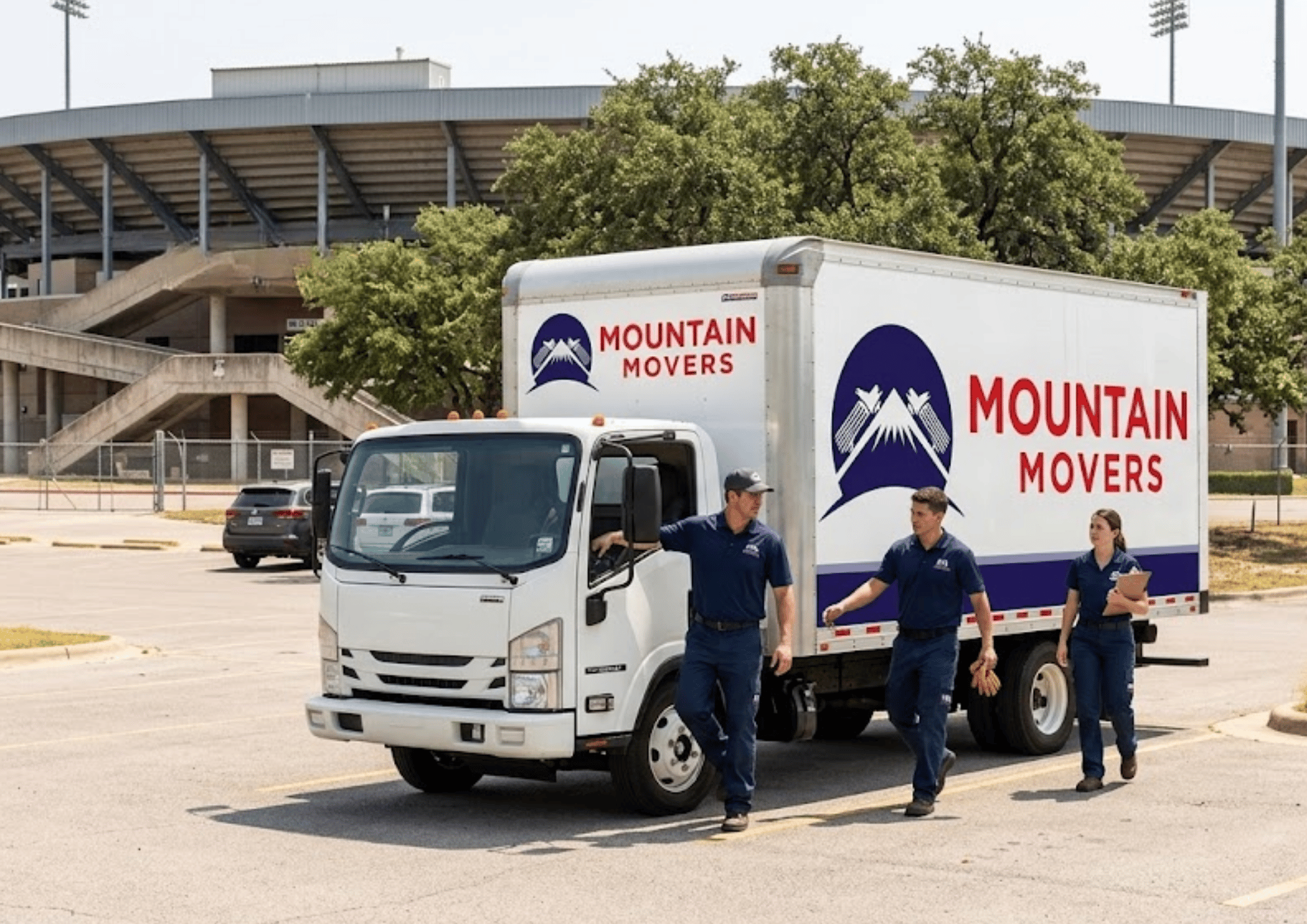
- With light weekday traffic, the drive from Suite 300/317 to the Burger Stadium area takes about minutes. Rush hour or event arrivals can stretch it to minutes, so every arrival window includes a buffer.
- Before confirming move day, we check the City of Austin's event calendar and stadium traffic notices for closures, no-parking zones, and changed entry points. It matters.
- Loading docks, visitor spaces, and curbs near stadium apartments or offices can be narrow or held for game-day use. Our drivers may stage one or two blocks away and use hand trucks or shuttle runs, the move keeps going without blocking traffic.
The stadium area sits near dense residential towers, office parks, and event venues. Access gets tight. Shared elevators, narrow loading bays, and security check-ins can add time to an otherwise simple job. We contact building management before move day whenever possible. And we confirm freight elevator reservations, parking permits, and loading windows so our professional movers can unload upon arrival instead of circling for a spot.
We drive this stretch often. Familiarity with Austin from the MoPac corridor through the surface streets feeding the stadium district means fewer move-day surprises. Dispatch checks traffic apps and local alerts every morning. If a closure or detour appears, the crew lead calls you to adjust the arrival window rather than arriving late without a word. We’ve noticed event closures can surface after morning routes are set, so that direct call matters.
What Event-Day Traffic Near Burger Stadium Means for Movers
The Burger Stadium area looks different on paper from mostrenter-heavy Austin neighborhoods. Median household income is $101,936, higherthan in typical apartment corridors and tied to the concentration of youngprofessionals around the entertainment district. Yet most residents rent. Median home values sit at $462,500. For movers, that often means higher-endapartments and converted lofts rather than single-family homes. Parking accesschanges. So do loading-dock rules, elevator bookings, floor protection, and theamount of coordination required before anyone lifts a box.
Building age catches plenty of new residents off guard. Some structures near Burger Stadium date to 1976, and we see narrow halls, tight stairwells, and freight elevators never built around today’s furniture sizes. A queen mattress that glides through a newer tower may need careful angling or a service entrance in an older property. Sectional sofas may need disassembly. We ask about building age and elevator dimensions before move day because those details affect crew size, equipment, and time estimates. And a sticking door in an older Austin building can turn an easy carry into a puzzle.
The venue creates the biggest scheduling variable here. Gamedays and concert nights bring thousands of extra vehicles onto already narrow and heavily metered streets. Traffic backs up blocks from Burger Stadium hours before some events, and rerouted buses or street closures are common. We’ve noticed Friday event traffic tangles earlier when it overlaps with the evening commute. A route that normally takes fifteen minutes can become an hour of grid lock when a move overlaps with event load-in or the post-game exit.
- Check Burger Stadium's published event calendar before choosing your move date or arrival window.
- Avoid loading or unloading within two to three hours of a game or concert start. Timing wins.
- Ask whether your moving company tracks Austin event schedules while planning routes, because a clear street at noon may look different by 4 p.m.
- Reserve loading docks and freight elevators early in buildings dating to the 1970s.
- Add buffer time to Friday and Saturday moves, when events often cluster and nearby metered spaces disappear first. We see it every season.
Moving near Burger Stadium is manageable. Timing and building knowledge simply carry more weight here than in many parts of Austin. Mountain Movers builds schedules around the venue calendar rather than treating it as a late check. One home game can reshape traffic across the surrounding grid, it happens fast. Renters and buyers should ask how professional movers plan around event days before choosing a booking window. We’re biased, but direct scheduling questions prevent a lot of waiting.
Frequently Asked Questions
How quickly can movers get to an apartment near Burger Stadium?
We dispatch from our South MoPac location and adjust arrival times based on traffic and stadium events. Weekday moves without game-day conflicts go smoothly, but rush hour or event traffic near the stadium corridor can slow things down. We build a buffer into every arrival window and call you directly if a closure changes our route.
Do older buildings near Burger Stadium cause moving delays?
Yes, many buildings in this area date back to around 1976,and with detached homes making up less than one percent of nearby housing, we're almost always working inside mid-rise or high-rise buildings. That means narrow hallways, older freight elevators, and loading docks instead of driveways, so our crews bring compact dollies built for tighter spaces.
Why do moves near Burger Stadium need extra scheduling coordination?
Because nearly 79% of homes here are renter-occupied, move dates cluster heavily around the first and last days of each month. Freight elevators often need reservations weeks in advance, and several tenants may compete for the same elevator slot. We recommend booking early, especially if your lease ends near month-end turnover.