

Movers Near West Austin, Highway 290 Corridor in Austin




How Multi-Family Complexes Handle Move-In Day
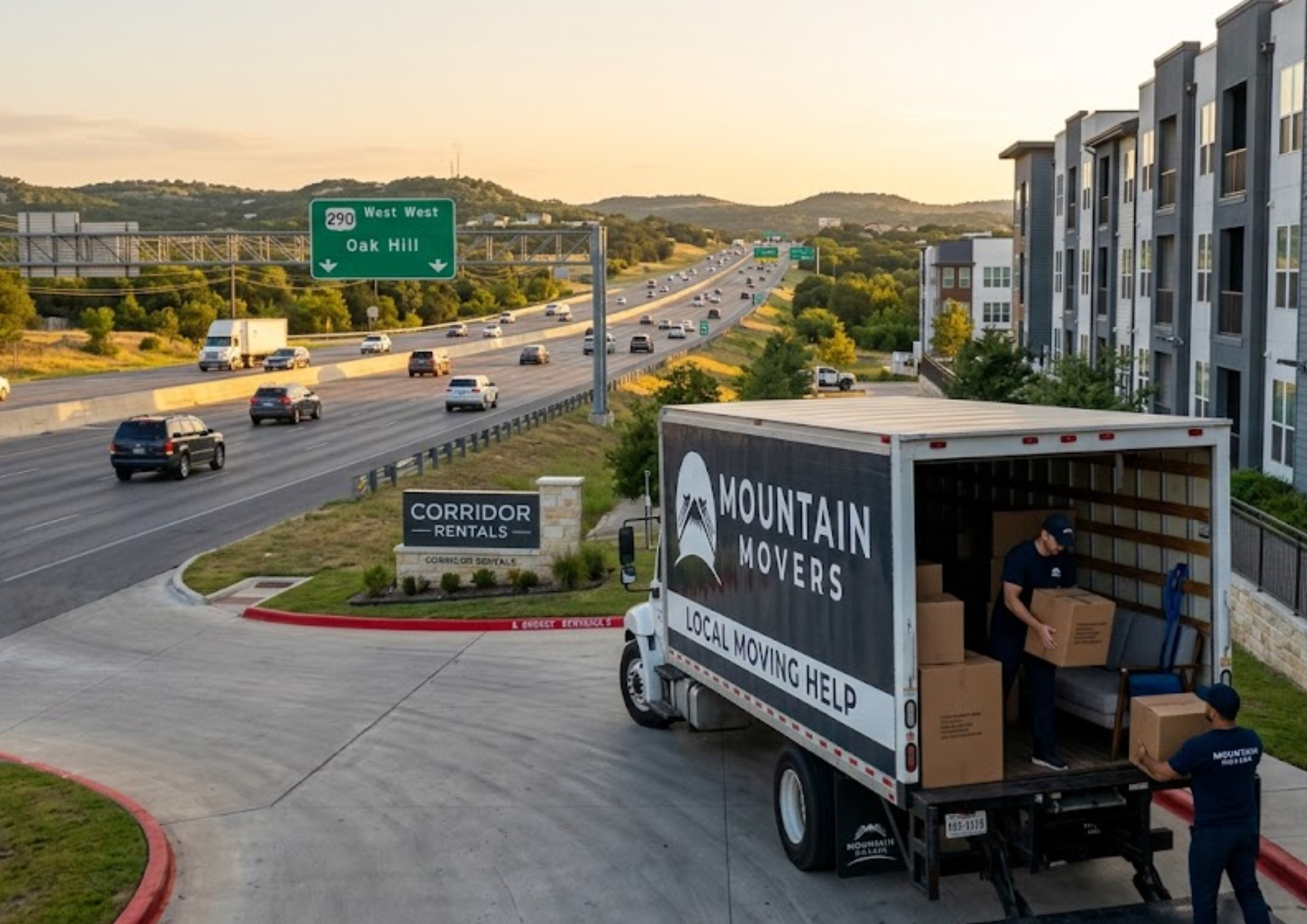
The Highway 290 corridor in West Austin has tons of apartment complexes. Renters make up almost 79% of households here, so movers near the Highway 290 corridor spend a lot of time talking to leasing offices. High incomes mean we often move big furniture, office gear, and multi-bedroom setups. And we do it all while dealing with tight elevator schedules and shared loading zones.
Unlike single-family homes, apartment moves along thiscorridor need planning with property staff. Garden-style complexes often havenarrow parking lots. Mid-rise buildings often require reserving freight orservice elevators. We always contact the leasing office days before the move.This confirms elevator access, loading dock availability, and any rules aboutmove-in hours or insurance certificates.
Renters dominate this part of West Austin, so units are always turning over. Weekends mean lots of move-outs and move-ins in the same complex. Sometimes even the same building. A crew finishing one job by noon might immediately start a second one nearby. That means precise scheduling is key here.
- Confirming elevator reservation windows with the leasing office at least 48 hours before move day
- Verifying whether the complex requires a certificate of insurance or a security deposit for shared common areas
- Scouting loading zone availability, since many complexes only have one or two designated spots for moving trucks
- Padding walls, elevator interiors, and door frames to avoid damage fees in shared hallways
- Building in buffer time between back-to-back jobs on weekends when multiple units are turning over at once
Household income is high in West Austin-around $101,936. This means many renters are moving full households. Not just a few boxes. We regularly handle sectional sofas, standing desks, dual-monitor office setups, and furnishings for two or three bedrooms. Those take longer to get through stairwells or shared elevators. Mountain Movers always plans extra labor and time for these larger loads. We don't assume every apartment move will be quick. Honestly, that's how you avoid zero surprises on move day.
How Our Team Reaches the Highway 290 Corridor
Our crews start every Highway 290 Corridor job from our office at 901 S MoPac Expy, Suite 300, room 317, Austin, TX 78746. From there, the truck gets onto South MoPac Expressway. Then we head toward the Oak Hill area. MoPac connects into the Y at Oak Hill interchange. This is the fastest way to get onto US-290 West toward the corridor. It keeps our crew off smaller side streets until they are close to the delivery spot.
Outside of rush hour, this drive is short. Usually a straight forward run. Weekday rush windows are different. Highway 290 gets heavy commuter traffic morning and evening. Drivers go between West Austin neighborhoods and the city core. Our dispatch team builds extra time into any move scheduled between 7 to 9 a.m. or 4 to 6:30 p.m. This keeps our arrival windows accurate. We like to give you zero surprises.
As the truck gets near the corridor, the crew focuses on thefrontage roads along 290. Many homes and apartment complexes in West Austin areonly reachable by exiting onto a frontage road first. Then you cut back towardthe property. Drivers not familiar with these access points can miss a turn.That adds ten or fifteen minutes. Our team treats this stretch like its owncheckpoint. We slow down early. We confirm the right frontage exit. We don'trely on a GPS that might be a few seconds too late.
- Route start: South MoPac Expressway from the Suite 300 office toward the Oak Hill Y
- Highway: merge onto US-290 West at Oak Hill toward the corridor
- Timing adjustment: extra buffer built in for weekday morning and evening rush windows
- Local navigation: frontage road access points checked before the final turn into the property
- Arrival step: parking and building access confirmed before any unloading begins
Once the truck reaches the spot, the crew doesn't startunloading right away. They check for designated visitor parking, a loadingzone, or a freight elevator. One that needs to be reserved. This is importantfor the apartment complexes along the 290 corridor. A missed elevatorreservation can stall a move for thirty minutes. Or more. Confirming thisbefore the first box comes off the truck keeps the job moving. We don't wantdelays for our neighbors.
What 1976-Era Apartments Along West Austin Mean for Movers
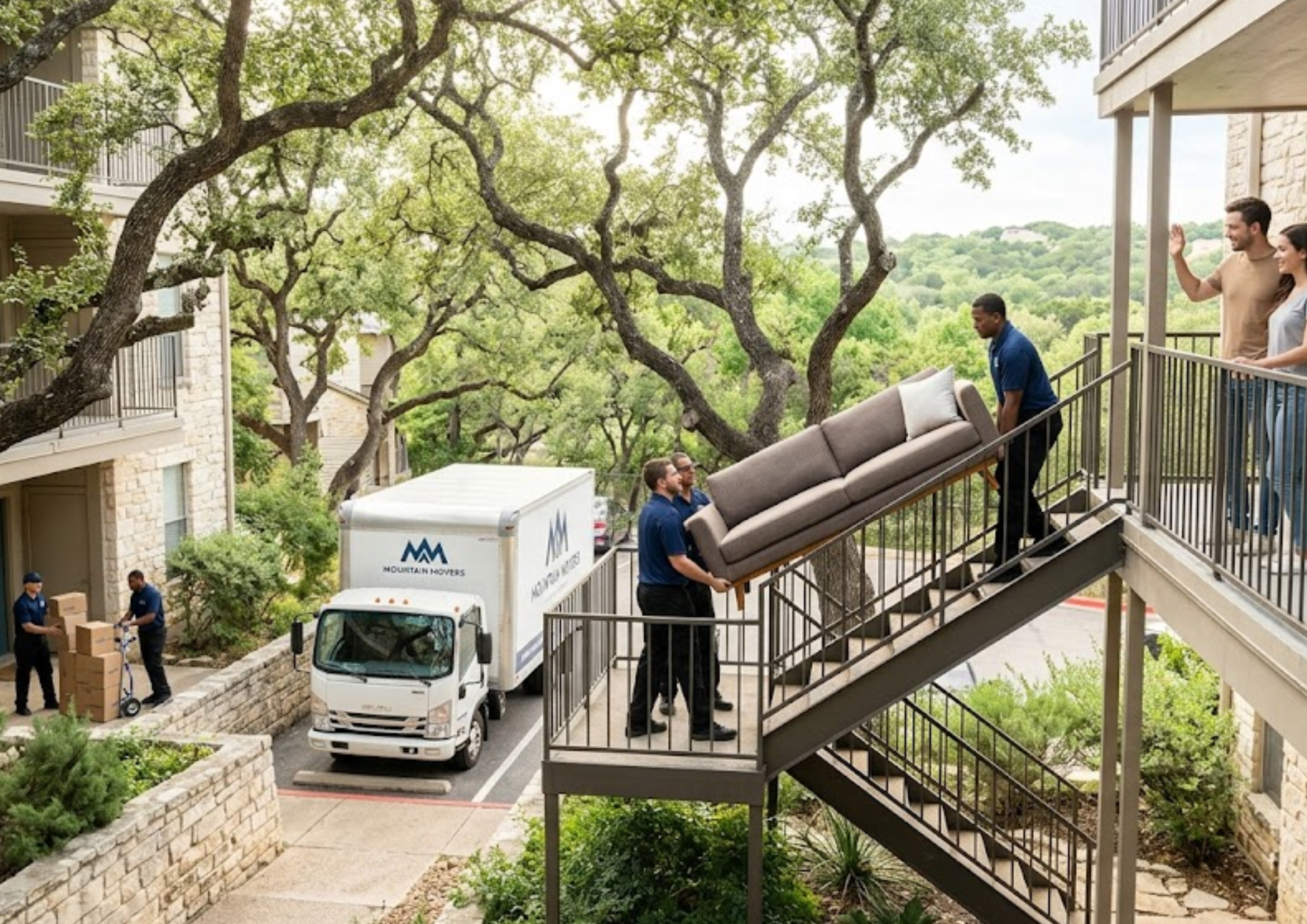
Most buildings out here went up around 1976. And you can tell. Popcorn ceilings, narrow hallways, and stairwells. They were built for smaller furniture than what people own today. We're out here every week, hauling sectional couches through doorways that weren't meant for them.
Fewer than one in a hundred homes near this stretch is astandalone house. Almost everything is a multi-unit building. That changes howa move works. Parking lots fill up fast. Loading zones are tight, sometimesnonexistent. And the walk from the truck to your door can be longer than you'dexpect.
- Second and third-floor units with no elevator, common in complexes built before 1980
- Narrow interior stairwells that slow down large furniture and appliances
- Shared parking lots that require careful truck placement during business hours along the 290 corridor
- Older unit layouts with smaller doorframes than newer Austin construction
- Limited loading zones near buildings packed close to the highway access roads
Here's the thing about a renter-heavy area like this. Move-out day matters as much as move-in day. Almost 80% of households near West Austin along 290 rent. So turnover is constant. We see it every month. Boxes going out one door while a new tenant's furniture waits in the lot.
A lot of these complexes have management offices with strictrules about elevator reservations or dock hours. Some don't have elevators atall. We've learned which buildings need extra hands on the stairs. And whichones have loading areas wide enough for a full-size truck. That's not somethingyou pick up overnight, it comes from doing this route again and again.
We handle apartment moving and furniture moving in these buildings all the time. Heavy item moving through a 1970s stairwell takes a different plan than moving into a newer high-rise downtown. We bring padding for tight corners. And extra hands for the second flight of stairs-because that second flight always shows up.
None of this is complicated. But it's specific. Know thebuilding, know the stairs, know where the truck can park along the access road.That's the job. And honestly, we make sure we get it right.