





How Long Does an Interstate Move from Round Rock Take?
The single biggest factor in your interstate move timeline? Miles. A move from Round Rock to Dallas looks nothing like a move from Round Rock to Portland. And the type of shipment you choose changes things just as much as the distance itself.
Simple version first, then we'll get into the details.
Distance Brackets That Matter
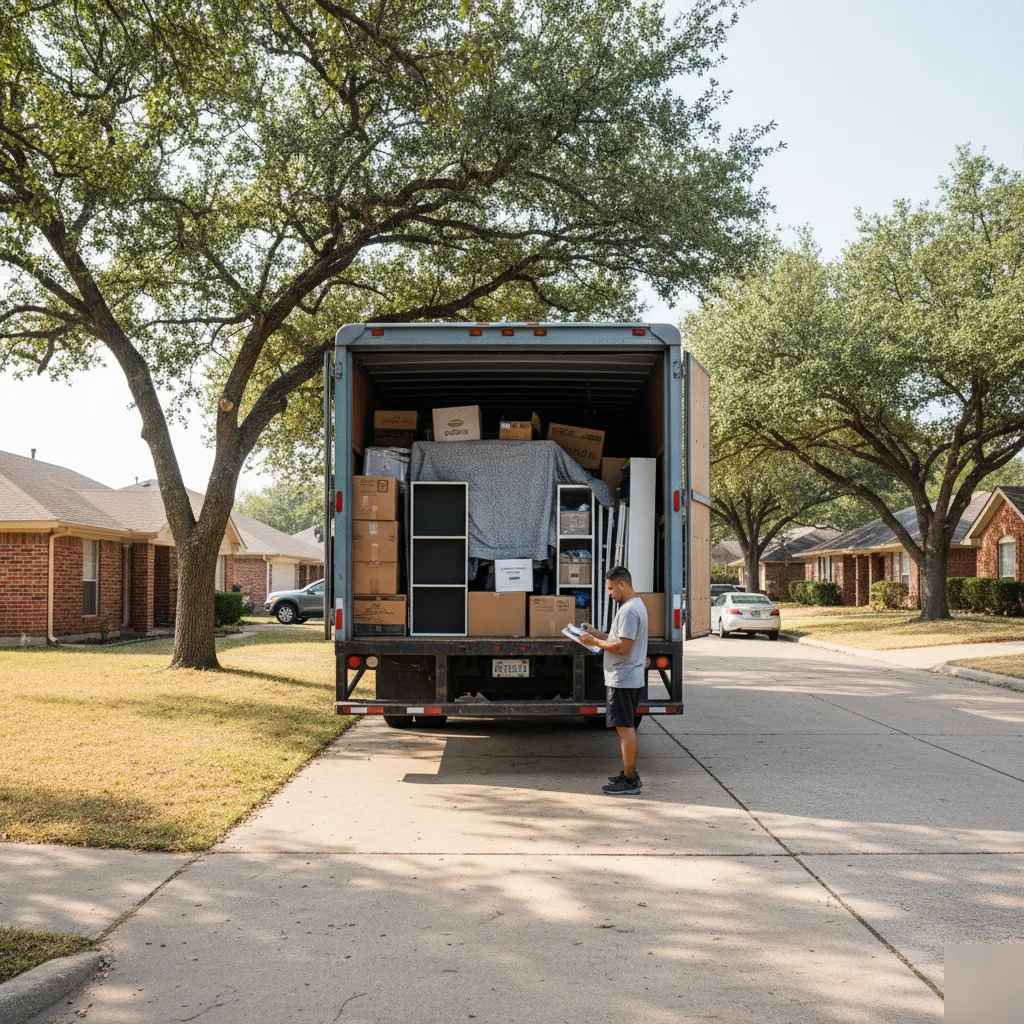
Most interstate movers group moves into distance tiers. Each tier comes with a different transit window. Here's what we typically see for moves starting in Round Rock:
- Under 500 miles (think Oklahoma City or New Orleans): Transit usually runs 1 to 3 days once the truck is loaded.
- 500 to 1,000 miles (like Atlanta or Denver): Plan for 3 to 5 days of transit time.
- 1,000 to 2,000 miles (Chicago, Phoenix, the Carolinas): You're looking at 5 to 7 days on the road.
- Over 2,000 miles (Pacific Northwest, New England): Transit can stretch to 7 to 14 days depending on routing.
These are transit windows only. They don't include packing days or delivery scheduling on the other end. A lot of folks confuse transit time with total move time, it's an easy mistake to make.
Dedicated vs. Shared Shipments
Not all trucks head straight to your new home. This part matters more than most people expect.
A dedicated shipment means one truck carries your belongings and only your belongings. It drives from Round Rock to your destination without stopping for other pickups. If you're moving a four-bedroom house near Old Settlers Park and need everything there by a specific date, this is the option that gives you the most control over timing. Straight shot. No surprises.
A shared shipment works differently. Your belongings share truck space with other households heading the same direction, and the driver makes multiple stops along the way. A move to Nashville might take 3 days on a dedicated truck but 7 to 10 days on a shared load. The tradeoff is real, and it catches people off guard.
Most people don't realize this until they're already deep into planning.
Why Round Rock's Location Helps
Round Rock sits right along the I-35 corridor. That's a major artery running north-south through the middle of the country, and moves heading to cities along that route tend to move faster because drivers aren't threading through smaller highways or mountain passes.
Moves heading east or west from Central Texas are a different story. Routes to California often cut through New Mexico and Arizona. Routes to the Southeast run through Louisiana and Mississippi. Each state line doesn't add much on its own, but the cumulative routing adds up.
We've done this hundreds of times. A family moving from a neighborhood near Brushy Creek to somewhere in Tennessee will have a very different timeline than someone heading to Oregon. Same packing day. Very different arrival day.
So what should you actually plan around? Ask your interstate movers two questions. First: is this a dedicated or shared shipment? Second: what's the delivery window for my specific distance? Those two answers will give you a realistic picture, and you can build your schedule around something real instead of guessing.
And don't forget to factor in the days before the truck even leaves. Packing, loading, and final walkthrough can take 1 to 2 days for most homes. For larger homes or heavy item loads, it could be more. That's all part of your total timeline even though it happens before the truck hits the highway.
Six Factors That Affect How Long Your Interstate Move Takes
Not every interstate move takes the same amount of time. A family moving from Round Rock to Nashville will have a very different timeline than someone heading to Portland. Distance is just one piece of the picture.
Here are the six biggest factors that shape your interstate move timeline:
- Total distance. A 500-mile move to New Mexico might take 2 to 3 days. A cross-country move to the East Coast could take 7 to 14 days. But the number alone doesn't tell the whole story.
- Size of your home. A one-bedroom apartment in the Old Town district takes a few hours to load. A four-bedroom house near Forest Creek might need a full day just for packing and loading. More stuff means more truck space, more labor hours, and sometimes a bigger vehicle.
- Time of year. Summer is peak moving season. Nearly 80% of moves happen between May and September (that's an industry-wide pattern, not a local one). During those months, carrier schedules fill fast. Book early if you're planning a summer interstate move out of Round Rock, because the heat alone makes morning loading a must, and the calendar fills up faster than people expect.
- Route and road conditions. Heading north through Oklahoma on I-35 is pretty straightforward. Moves going through mountain passes or into congested metro areas can add hours. Winter weather on northern routes slows things down too. The actual driving route matters.
- Pickup and delivery logistics. Your belongings might share truck space with other shipments on long-distance routes, which means the truck could make stops along the way. A dedicated truck is faster. Ask about this when you get your moving estimate.
- Access at both locations. Can the truck park right outside your door? Or is there a narrow street, a steep driveway, a third-floor walkup with no elevator? Tight access in Round Rock neighborhoods like Brushy Creek or near Main Street can add time on loading day. And the same goes for wherever you're landing.
Here's what this looks like in practice. A three-bedroom home near the Round Rock Premium Outlets to Charlotte, North Carolina is roughly 1,200 miles. Loading takes around six hours. Transit runs about five days. Unloading takes another four hours. Total timeline from start to finish lands just under a week.
A small apartment's worth of belongings to Albuquerque? That whole interstate move can wrap up in three days.
Your timeline depends on your specific situation. Not someone else's. And the clearest answer comes from talking through the details with someone who's moved people out of Round Rock before and knows what actually affects the clock.
What a Delivery Window Means, and Why Movers Use One
You've probably heard the term "delivery window" and thought, wait, they can't give me an exact date? A 7-to-14-day range sounds vague when you're trying to coordinate a new job start or a school enrollment deadline.

It's not vague. Here's what's actually behind it.
A delivery window is the planned range of days during which your belongings will arrive at your new home. Interstate movers use delivery windows because long-distance routes involve multiple stops, shifting road conditions, and federal driving regulations that cap how many hours a driver can be behind the wheel each day. The Federal Motor Carrier Safety Administration limits most commercial drivers to 11 hours of driving per shift. That single rule shapes every delivery schedule in the industry, and there's no working around it.
How Delivery Windows Actually Work
When you book an interstate move from Round Rock, your moving company maps out a route that often includes pickups and drop-offs for other customers along the way. Your truck might head east on I-10 toward Florida or north on I-35 toward the Midwest. Each stop adds time. Weather delays add more. So instead of promising Tuesday at 2 p.m., your movers give you a range they can actually stand behind.
Here's what typical delivery windows look like based on distance:
- Under 500 miles: 2 to 5 business days
- 500 to 1,500 miles: 5 to 10 business days
- Over 1,500 miles: 7 to 14 business days
- Cross-country (2,000+ miles): 10 to 21 business days
These ranges aren't random. They account for the realities of the road. We've seen them hold up consistently, move after move.
Why Tight Windows Are a Red Flag
If someone promises your belongings will arrive on one specific day for a move over 1,000 miles, slow down. That's usually a sign they're telling you what you want to hear instead of what's true. Professional movers give you a window because they know what can happen on a 1,200-mile haul.
Take a move from the Old Settlers Park area to North Carolina. That's a real route we've run. The family was nervous about a 10-day window. Their things arrived on day 7. But there was a storm system sitting over Louisiana that could have pushed it to day 9 or 10. That's exactly why the window exists, not to give movers wiggle room, but to give you an honest picture.
What You Can Do to Narrow It
You're not powerless here. A few things actually help:
- Book your interstate move early. More lead time means better route planning.
- Be flexible on your pickup date. Movers can build tighter schedules when they're not rushed.
- Ask about dedicated truck options. If your load fills a full truck, there are fewer stops along the way.
- Stay in contact with your moving coordinator. They can update you as the truck gets closer.
Most people don't realize that the pickup date matters just as much as the delivery window. Push your pickup to the last minute and the whole schedule compresses, everything gets harder to predict.
Your delivery window should be written into your moving agreement. If it's not on paper, ask for it. That document protects you.
So when your interstate movers give you a range instead of a date, that's not a dodge. It means they're being straight with you. The window is built on experience, regulations, and the reality of moving your life across state lines from Round Rock to wherever home is next.
Frequently Asked Questions
How long does an interstate move from Round Rock to a nearby state usually take?
For moves under 500 miles from Round Rock — like Oklahoma City or New Orleans — transit usually runs 1 to 3 days once the truck is loaded. That does not include packing or delivery scheduling on the other end. Round Rock sits along the I-35 corridor, which helps for north-south moves. Those routes tend to move faster because drivers stay on major highways instead of smaller roads.
Does the time of year affect how long an interstate move from Round Rock takes?
Yes, summer moves from Round Rock take longer to schedule because carrier calendars fill up fast. Nearly 80% of moves happen between May and September. During peak season, available trucks and crews are harder to book. The Central Texas heat also means loading needs to start early in the morning. If you are planning a summer move, book as early as you can to protect your timeline.
What is a common mistake people make when planning an interstate move timeline?
The most common mistake is confusing transit time with total move time. Transit is just the driving portion. You also need to count packing days, loading day, and delivery scheduling on the other end. For most homes, packing and loading alone takes 1 to 2 full days before the truck leaves. If you want a full picture of what your move involves, our interstate moving services page walks through the whole process from start to finish.
What is the difference between a dedicated and shared shipment for an interstate move?
A dedicated shipment means one truck carries only your belongings straight to your new home. A shared shipment means your items ride with other households, and the driver makes multiple stops. That difference changes your timeline a lot. A move to Nashville might take 3 days on a dedicated truck but 7 to 10 days on a shared load. If your schedule is tight, ask your movers which type of shipment they are quoting you.
Does where I live in Round Rock affect my moving timeline?
Yes, your street and neighborhood can add time on loading day. Tight access in areas like Brushy Creek or near Main Street can make it harder for a large moving truck to park close to your door. A narrow driveway or a third-floor walkup without an elevator adds labor hours before the truck even hits the road. The same access issues can slow things down at your destination too.
How does the route out of Round Rock affect how fast my belongings arrive?
Round Rock's spot on the I-35 corridor helps for north-south moves. Drivers stay on a major highway without detours. East and west moves are a different story. Routes to California cut through New Mexico and Arizona. Routes to the Southeast run through Louisiana and Mississippi. Mountain passes and congested metro areas can add hours. A move from Round Rock near Brushy Creek to Tennessee will have a very different arrival day than a move to Oregon, even if both start on the same morning.




Google Reviews
518 Reviews | 4.9 Avg Rating