





How Much Do Long-Distance Movers Charge Per Mile in 2026?
Most people start by asking how much movers charge per mile for a long-distance move in 2026. It's a fair question. But the per-mile rate is only one piece of a bigger puzzle.

Think of it like a plane ticket. The distance matters, sure. But so does the time of year, how much luggage you bring, and whether you picked a direct flight. Long-distance moving works the same way.
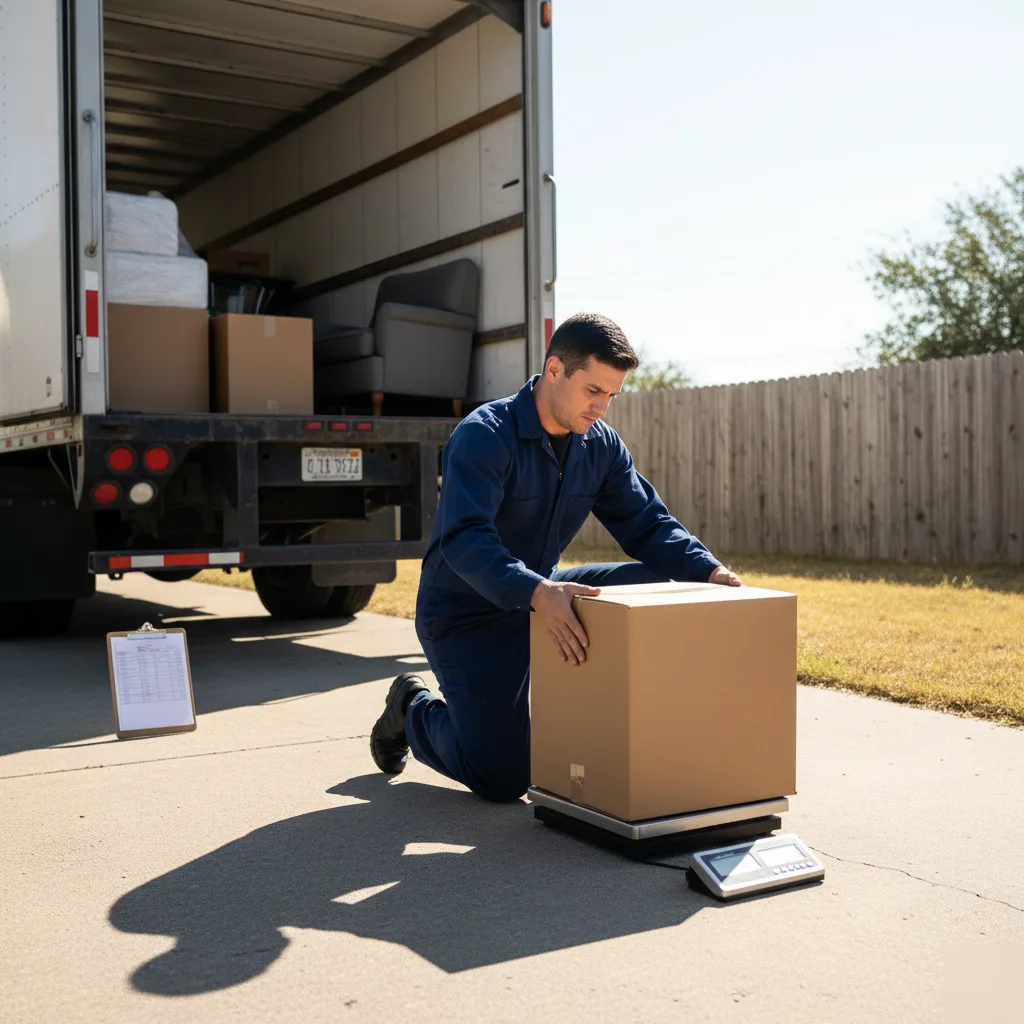
The total weight of your stuff is usually the biggest factor. A one-bedroom apartment in Round Rock weighs a lot less than a four-bedroom house near Old Settlers Park. We see this surprise people all the time. They focus on the miles but forget that every box on the truck adds cost. Most long-distance movers use certified scales to weigh your shipment before and after loading.
Here's what actually drives your final number:
- Total shipment weight
- Distance from pickup to delivery
- Time of year you're moving
- How hard it is to access your home
- Extra services like packing or special item handling
And each one of these can shift your cost by hundreds of dollars.
Home access matters too. If you live in a third-floor apartment with no elevator, that changes things. Movers need more time and more labor. Narrow staircases, long carry distances from the truck to your door, tight parking situations near downtown Round Rock. These all add fees that have nothing to do with miles.
Seasonality is huge too. Moving between May and September costs more almost everywhere. According to the American Moving and Storage Association, summer months account for roughly 70 percent of all annual moves. That demand pushes rates up. A move in February from Round Rock to, say, Denver could cost noticeably less than the exact same move in July.
Most people don't realize this until it's too late.
Special items are another factor people overlook. Got a piano? A pool table? Oversized artwork? These need extra padding, custom crating, sometimes a separate crew. None of that shows up in a simple per-mile estimate.
So why does per-mile pricing even exist? It gives you a starting point, a rough framework. Movers use it as one input in their formula. But the formula itself pulls from five or six different variables. Two families moving the exact same distance can get very different quotes based on weight, timing, and services alone.
Here's a scenario we run into a lot. A family near Brushy Creek calls for a quote. They're moving 1,200 miles to the East Coast. They assume the cost is just distance times some rate. Then we walk through their inventory, a full garage, a home office setup, kids' furniture, outdoor equipment. The weight alone doubles what they expected. That's not the mover being unfair, it's just how the math works.
But here's the good news. Once you understand what goes into the quote, you can control some of those costs. Declutter before the move. Get rid of things you don't need. The lighter your shipment, the lower your bill. Move in the off-season if your schedule allows it. And if you can handle your own packing, that removes a labor charge entirely.
If you're planning a long-distance move from Round Rock, the smartest first step is getting an in-home or virtual survey. A per-mile estimate from a website won't capture the real picture. You need someone to look at what you're actually moving.
We've helped families across Round Rock plan moves to every corner of the country. The ones who feel best about their experience are the ones who understood their quote before signing anything. Knowledge removes stress.
Want to see how all these factors apply to your specific move? Our long-distance moving services page breaks down exactly what's included and how to get a detailed estimate.
The per-mile rate matters. It's just not the whole story.
Typical Per-Mile Rates for Long-Distance Moves in 2026
Let's get right to the numbers. Most carriers price long-distance moves somewhere between a few cents and a few dollars per mile in 2026. That range is huge, right? It depends on what you're moving, how far you're going, and when you book.
A small apartment move might sit at the lower end. A four-bedroom house packed to the ceiling pushes costs way up. The per-mile rate isn't just about distance, it's about weight and volume too.
Here's what we see most often for Round Rock customers heading out of state. A one-bedroom move going around 1,000 miles usually falls in a predictable range per mile. Add more rooms and the rate per mile climbs. That's because the truck is heavier. Heavier trucks burn more fuel. They also need bigger crews at both ends.
According to the American Moving and Storage Association, the average long-distance move in the U.S. covers about 1,225 miles. Most households ship around 7,400 pounds. Those two numbers shape everything about your final bill.
But here's what most people miss when comparing long distance relocation services. The per-mile rate you see in a quote isn't the only cost — it's the base layer. Fuel surcharges sit on top. So do accessorial fees for stairs, long carries from the truck to your door, or bulky items like a piano. We see this mistake all the time. Someone focuses only on the per-mile number and then gets surprised by the total. The best long distance relocation services break every layer of that cost down upfront so nothing lands as a surprise on delivery day.
Think of it like airfare. The ticket price gets you on the plane. Bags, seat selection, and snacks add up fast.
So what actually drives that per-mile number higher or lower? A few things matter most:
- Total shipment weight or cubic feet
- Time of year you're moving
- How far in advance you book
- Whether your route is a popular corridor or a less-traveled one
Round Rock sits along the I-35 corridor. That's one of the busiest moving routes in Texas. Moves heading north toward Dallas or south toward San Antonio use well-traveled lanes. Trucks run those routes constantly. That can work in your favor because carriers fill trucks more easily on popular corridors.
Now compare that to a move from Round Rock to a small town in Montana. Fewer trucks go that direction. The carrier might have to deadhead back empty. You'll likely see a higher per-mile rate for that kind of route.
Seasonality matters a lot too. Summer months between May and September are peak moving season. Demand spikes. Rates follow. If you can move in October or February, you'll often see lower per-mile charges. We've had clients save noticeably just by shifting their move date by a few weeks.
Here's a real scenario. A family in the Teravista neighborhood needed to relocate to North Carolina. They originally planned a July move. After we talked through timing, they pushed to mid-September. Same distance. Same stuff. Lower rate per mile because demand had dropped.
Weight is the other big lever. Every pound counts on a long-distance move. That old treadmill collecting dust in the garage? It adds weight. Those boxes of books you haven't opened since college? More weight. Decluttering before your move is one of the simplest ways to bring your per-mile cost down.
And don't forget about binding versus non-binding estimates. A binding estimate locks in a price. A non-binding one can change after the truck is weighed. Most people don't realize this until it's too late. Always ask which type of estimate you're getting.
One more thing worth knowing. Some movers use a flat-rate model instead of a per-mile breakdown. They calculate weight, distance, and services, then give you one number. Others break it out line by line. Neither approach is automatically better. What matters is understanding what's included.
If you're planning a move from Round Rock to anywhere out of state, getting multiple quotes is smart. Compare the per-mile rates, but also compare what each quote covers. A lower per-mile rate with a long list of extra fees can end up costing more than a slightly higher rate that bundles everything together.
Want help figuring out what your specific move might look like? Our long-distance moving page walks you through the process and makes it easy to request a personalized quote.
The bottom line is simple. Per-mile rates give you a starting point. But your total cost depends on weight, timing, route, and extras. Understanding all those pieces puts you in control.
Frequently Asked Questions
How do long-distance movers calculate cost per mile for a move out of Round Rock?
Long-distance movers use your shipment weight, total distance, and time of year to build your quote. The per-mile rate is just one input. Round Rock sits along the I-35 corridor, which is a busy moving route. That can work in your favor. Trucks run popular corridors often, so carriers fill loads more easily. But your weight, access, and move date still shape your final number more than miles alone.
Does the time of year affect how much long-distance movers charge per mile?
Yes, the time of year has a big effect on what you pay. Summer is the most expensive season to move. According to the American Moving and Storage Association, summer months account for roughly 70 percent of all annual moves. That demand pushes rates up. A move from Round Rock in February can cost noticeably less than the same move in July. If your schedule is flexible, moving in the off-season is one of the easiest ways to lower your total cost.
Is the per-mile rate the only cost I should expect from a long-distance mover?
No, the per-mile rate is just the base layer of your quote. Fuel surcharges, stair fees, long carry fees, and special item handling all sit on top. Think of it like airfare. The ticket gets you on the plane, but bags and extras add up fast. Many people focus only on the per-mile number and get surprised by the total. Knowing all the cost factors before you sign anything helps you avoid that surprise.
How does home access near downtown Round Rock affect my moving quote?
Home access can add real cost to your move. Tight parking near downtown Round Rock, long carry distances from the truck to your door, and narrow staircases all take more time and labor. Movers charge for that extra effort. It has nothing to do with how far you're going. Before you get a quote, think about how easy it is for a large truck to reach your front door. That detail matters more than most people expect.
Should I get an in-home estimate or is an online quote good enough for a long-distance move?
An in-home or virtual survey gives you a much more accurate number than an online quote. A website estimate cannot see your full garage, home office setup, or outdoor equipment. Families near areas like Brushy Creek often discover their shipment weighs far more than they expected once someone actually walks through the home. A real survey removes guesswork. It also helps you understand your quote before you commit to anything, which makes the whole move less stressful.
What is a common mistake people make when comparing long-distance moving quotes?
The most common mistake is comparing quotes based only on the per-mile rate. Two quotes can look similar on paper but include very different services. One may include packing labor. Another may not cover a stair fee or a long carry. Always compare what is actually included, not just the rate. A lower per-mile number with hidden accessorial fees can end up costing more than a slightly higher quote that covers everything upfront.




Google Reviews
518 Reviews | 4.9 Avg Rating