

Commercial Movers in Round Rock, TX Office and Business Moving Done Right
In Round Rock, commercial moves require more planning than a standard home move. This page covers what commercial movers do — offices, retail spaces, warehouses, and multi-suite floors — and what to expect from crew arrival through final placement. Our licensed moving service protects your assets and gets your team back to work fast.





Google Reviews
518 Reviews | 4.9 Avg Rating
What Do Commercial Movers Do in Round Rock?
Commercial movers are crews trained to relocate businesses — offices, warehouses, and retail spaces — with minimal disruption to daily operations. In Round Rock, commercial moving teams handle large furniture, filing systems, electronics, and multi-floor builds. A licensed crew manages access logistics, loading dock coordination, and careful placement in the new space.
- Disassemble, wrap, and transport office furniture and equipment
- Coordinate freight elevators, loading docks, and building access windows
- Place and reassemble items according to your new floor plan


What Commercial Movers in Round Rock Actually Do on Move Day
Move day on a commercial job runs differently than a residential move. The crew begins with a walkthrough of both locations — confirming access points, elevator reservations, and any building restrictions. From there, the job follows a specific sequence: high-priority items load last so they unload first and reach the new space without blocking the crew.
On a typical commercial move you can expect the crew to wrap and pad all furniture, use dollies and lift equipment for heavy pieces, and keep a running inventory as items leave the building. Boxes are labeled by department and placed in the corresponding rooms at the destination — your staff should not have to hunt for their desks.
Commercial buildings along Dell Way and University Boulevard often have strict loading dock windows — specific hours during which a moving truck is allowed to occupy the dock. Our crews confirm those windows before move day and build the schedule around them so a missed window does not stall the entire job.
Questions to Ask a Commercial Moving Company Before You Book
The right questions before you sign a contract separate experienced commercial movers from crews that handle the occasional office move between residential jobs. Ask these before you commit:
- Are you licensed with the TXDMV? Any mover operating in Texas should have a verifiable license number. Ask for it and look it up.
- Do you carry commercial general liability insurance? Ask for a certificate of insurance. A legitimate company provides one before you ask twice.
- How many commercial moves have you completed in the past year? Residential volume does not equal commercial experience — get a number and ask for references.
- Have you moved a space this size before? A ten-person office and a 40-desk multi-suite floor are different jobs. Confirm they have handled your scale.
- What is your crew size for this job? Under-staffed crews slow down on large jobs. Make sure the crew matches the scope.
- Do you provide a written binding estimate? If the answer is no, keep looking.
Round Rock's commercial sector is growing fast. Not every mover advertising locally has handled multi-suite or warehouse-scale jobs — ask directly and verify what they tell you.


Red Flags to Watch for When Hiring Commercial Movers
A few warning signs before you book can save a significant amount of time and money on the back end.
Stop and reconsider if:
- There is no physical business address listed — a P.O. box or no address at all is a problem
- The quote is far below every other estimate you received — low bids on commercial jobs often mean an underqualified crew or hidden fees added later
- The company pushes you to sign quickly or pay a large upfront deposit before providing a written estimate
- They cannot produce a TXDMV license number or proof of commercial insurance when asked
- References they provide are all residential — ask specifically for commercial move references
- The contract is vague about crew size, timeline, and what happens if something is damaged
With Round Rock's commercial growth near the Avery Ranch and Brushy Creek corridors, demand spikes attract unvetted operators who are not equipped for business-scale moves. Verify credentials before any deposit changes hands.
What Professional Movers Won't Pack or Load
Knowing what falls outside a commercial moving scope prevents gaps on move day. Our crew handles office furniture, standard electronics, boxed files, break room appliances, and modular workstation systems. These items are not loaded on a commercial truck:
- Hazardous materials — industrial cleaning chemicals, pressurized tanks, flammable liquids, and batteries beyond standard laptop size
- Controlled or regulated substances — medications, lab chemicals, and any items requiring chain-of-custody documentation
- High-value proprietary equipment without prior written confirmation — specialized lab, medical, or manufacturing equipment may require a separate specialist crew
- Live plants and perishables — not suitable for a sealed truck environment
Round Rock tech firms frequently have lithium battery backup systems, pressurized UPS units, and proprietary rack hardware. If your office includes any of this equipment, flag it when you contact us. Handling protocols are confirmed in writing before the move is scheduled — not discovered on move day.
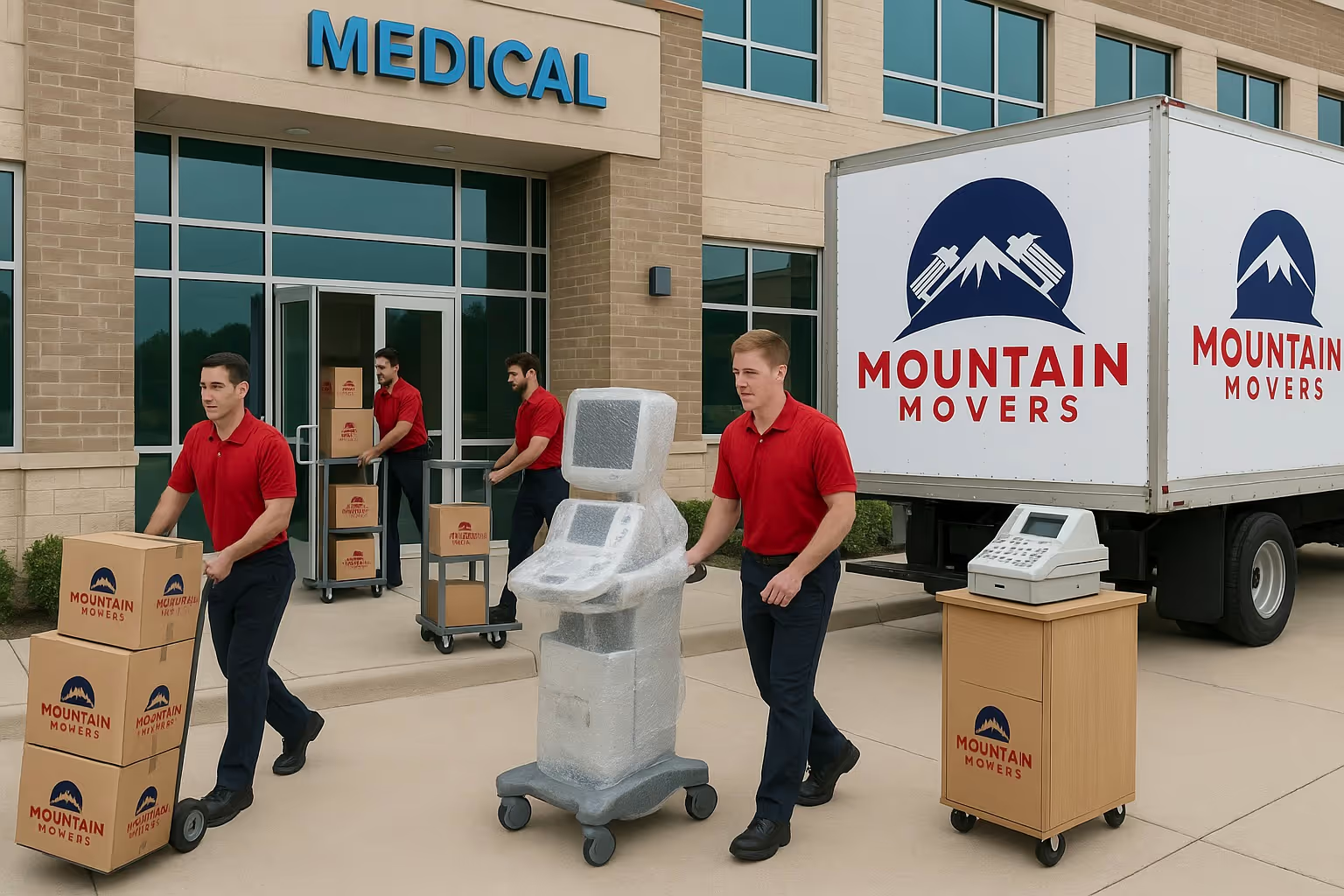

The Hardest Spaces to Move in a Commercial Building
Some spaces take longer than others. Knowing which ones helps you build buffer time into the schedule rather than discovering the delay mid-move.
Server rooms and IT closets are the most time-sensitive. Disconnects and reconnects require IT staff on site. The physical move of rack-mounted equipment is precise work — it cannot be rushed without risking damage. Schedule IT staff at both locations and build in time before and after the physical move.
Dense open-plan offices with heavy workstation clusters take longer to break down than traditional private offices. Many Round Rock office parks in the corridors near Teravista feature these layouts. Each workstation has multiple components — desk surface, monitor arms, cable management, pedestals — and all of it needs labeling before disassembly starts.
Filing-heavy offices — law firms, medical practices, accounting offices — move large volumes of boxes that need to stay in sequence. Numbered box labels and a dedicated staging area at the new location keep files organized through the move.
Break rooms and commercial kitchens involve heavy appliances, plumbing disconnects, and items that cannot be boxed. These areas need to be scheduled last at the old location and first for reconnection at the new one.
How to Prepare Your Round Rock Office Before the Moving Crew Arrives
A prepared office cuts crew time and reduces the chance of damaged or misplaced equipment. These steps can be completed by your team in the days before move day.
- Label everything by department — every desk, chair, filing cabinet, monitor, and box should have a destination label before the crew arrives
- Back up all data — do this before any equipment is disconnected, not after
- Disconnect and coil cables — label each cable set so IT reconnection goes quickly at the new location
- Clear all walkways and exits — crews move faster through clear paths, and cluttered hallways create liability
- Confirm freight elevator and loading dock reservations in writing with your property manager — have the confirmation ready to show the crew on move day
- Share the new floor plan with the crew lead before the first item is loaded so placement decisions are made upfront
Round Rock commercial leases frequently require a walkthrough inspection before the space is vacated. Completing your own prep checklist first gives you a clean record of what the space looked like when you left — which protects your security deposit if any damage dispute comes up later.

Frequently Asked Questions
How far in advance should I book commercial movers in Round Rock?
Book three to six weeks out for a standard office move. Warehouse and multi-floor jobs benefit from eight weeks or more of lead time. End-of-month slots fill fastest — if your lease end date is set, lock in your crew as soon as you have the date confirmed.
What should my staff do to help prepare for the commercial move?
Label all personal and department items, back up any files stored locally on their machines, disconnect and label all device cables, and clear their immediate work area of personal belongings. The more organized each desk is before the crew arrives, the faster everything moves.
What documents should I gather before booking a commercial move?
Have the floor plan of your new space, your building's access rules and freight elevator reservation confirmation, and an itemized inventory of major items ready when you call. The more detail provided upfront, the more accurate your written estimate will be.
Do Round Rock commercial movers work evenings and weekends?
Yes. After-hours and weekend scheduling is available and is the right choice for businesses that need to stay open during the week. Confirm availability when you contact us — weekend slots during peak moving season go quickly.
Can commercial movers in Round Rock handle server rooms and IT equipment?
We move the physical hardware. Technical disconnects and reconnects are handled by your IT staff. For large server rooms or specialized rack equipment, confirm the full handling scope with us in writing before the move is scheduled.
How long does a commercial move in Round Rock typically take?
A small office of fewer than ten people typically wraps up in one day. A mid-size floor runs two to three days. Warehouse moves vary based on volume and loading dock access. We provide a timeline estimate after reviewing your space — not before.