





Moving Company vs. PODS: Which Is Cheaper for a Long-Distance Move?
If you're planning a long-distance move from Round Rock, this is probably the first question you're asking. Both options look affordable on the surface. But the real cost depends on details most people don't think about until they're already committed. This article breaks down exactly how each option works so you can make a smarter decision before you sign anything.
How Moving Company and PODS Costs Are Calculated Differently
This is where most people get tripped up. A moving company and a portable container service don't charge you the same way. Not even close. The formulas are totally different, the variables change, and what feels cheap upfront can get expensive fast.

Let's break it down so you actually understand what you're paying for.
When searching for the best long distance movers near me, understanding how your cost is calculated puts you in a much stronger position. A full-service moving company bases your cost on weight and distance — that's the core formula. Movers weigh your stuff on a certified scale before the truck leaves Round Rock, then weigh it again at the destination. The difference is your shipment weight. Distance is measured in miles from pickup to drop-off. Those two numbers drive most of your final bill, and the best long distance movers near me will walk you through both before you ever sign a contract.
But weight and distance aren't everything.
Moving companies also factor in labor. How many crew members does the job need? Two people for a one-bedroom apartment cost less than four people for a large house near Old Settlers Park. Stairs add time. Narrow hallways add time. A third-floor walkup adds time. And time is money when you're paying hourly labor rates.
There's also the date you pick. Summer moves cost more than winter moves. Weekends cost more than weekdays. The American Moving and Storage Association notes that nearly half of all moves happen between May and September. That demand spike changes what you'll pay. If you're flexible on timing, you have leverage.
Accessorial charges pile on too. These are the extras most people forget about. Long carry fees kick in when the truck can't park close to your door. Shuttle fees apply if a full-size truck can't fit into your new neighborhood's street. Packing services, specialty item handling for pianos or pool tables, storage-in-transit if your new place isn't ready. Each one adds to the total.
We see this mistake all the time. Someone gets a quote based on weight and distance alone, then gets surprised by the extras.
Now flip to the PODS model. Totally different structure.
A portable container company charges you for three separate things: the container rental, the transportation, and the time you keep it. You rent a container. It gets dropped at your house. You load it yourself. Then the company picks it up and drives it to your destination city. You unload it yourself on the other end.
The container rental is a monthly fee. That clock starts ticking the day it hits your driveway. Transportation is a flat charge based on distance. So far, pretty straightforward.
Here's where it gets tricky.
Most people underestimate how long they'll need the container. You think you'll load it in a weekend. But life happens. Work gets busy. Your kids have soccer tournaments. That one weekend turns into two weeks, the container sits in your driveway near your home off University Boulevard, and you're paying for every day. If your new home isn't ready on the other end, you'll pay for storage at a facility until you can accept delivery.
And you're doing all the labor yourself. No crew shows up to wrap your furniture or carry boxes down the stairs. You need to buy or rent your own moving blankets, dollies, straps, and padding. Those costs add up quietly. You also need to load the container correctly so nothing shifts during a long-distance haul. Poor loading leads to damage, and that's a real risk most folks don't think about until it's too late.
So what's really different? A moving company bundles labor, materials, and transport into one bill. A container service splits everything apart and puts the labor on you. One gives you a single number. The other gives you a base number that can grow depending on your timeline and how much help you need.
Think of it like this. You're moving from Round Rock to somewhere across the country. With a moving company, the crew shows up, packs your stuff, loads the truck, drives it there, and unloads. One transaction. With a container, you're managing the packing, the loading, the scheduling, the unloading, and any storage gaps yourself.
Neither approach is automatically cheaper. The real cost depends on your situation. How much stuff do you have? Can you handle heavy lifting? Do you have a tight timeline or a flexible one? Are you moving during peak season?
But here's what most people don't realize. The "cheaper" option on paper often costs more in hidden time and effort. Your weekend has value. Your back has value. A broken dresser has a replacement cost.
If you're weighing these options for a long-distance move out of Round Rock, it helps to talk through the specifics with someone who handles these moves every week. Our long-distance moving team can walk you through what your move actually involves so you're comparing real numbers, not guesses.
What a Full-Service Moving Company Actually Includes on a Long-Distance Move
Most people think hiring movers just means a truck shows up. That's barely scratching the surface. A full-service moving company handles your entire move from start to finish. Every box, every piece of furniture, every fragile item.
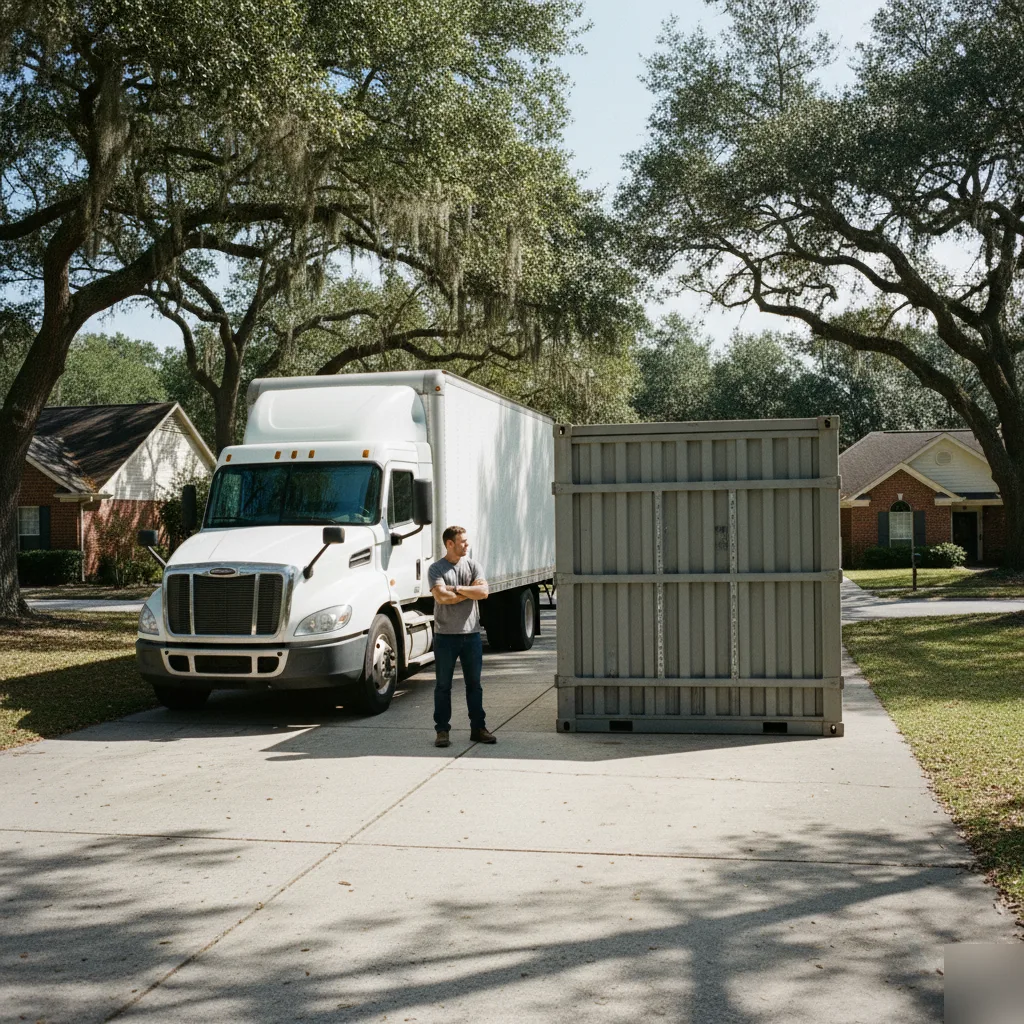
Here's what that actually looks like in practice.
A crew arrives at your Round Rock home on moving day. They bring all the packing materials. Boxes, tape, bubble wrap, furniture pads, shrink wrap. You don't buy any of it. They pack every room in your house, label each box by room, and load everything onto the truck in a specific order. Heavy items go first. Fragile items get secured so nothing shifts during the drive.
We see people surprised by this all the time. They assumed they'd need to have everything boxed up before the crew arrived. With a full-service long-distance move, that's the whole point. You don't lift a finger.
But packing is just one piece of it.
The truck itself matters more than you'd think. Full-service moving companies use dedicated trucks for long-distance moves. Your belongings aren't sharing space with three other families' stuff. One truck, one household, one destination. The driver takes a direct route. That means fewer stops and less handling of your items along the way.
Compare that to a container service where your pod sits in a transfer yard, gets loaded onto a flatbed, and might change hands multiple times before reaching you. The American Moving and Storage Association notes that full-service moves include door-to-door transit as a standard feature. Your things leave your old home and arrive at your new one. No storage yards in between.
So what else comes with it?
Disassembly and reassembly. Your bed frame gets taken apart at your old place and put back together at the new one. Same with dining tables, shelving units, and cribs. If you've got a big sectional sofa that barely fits through the hallway of your home near Old Settlers Park, the crew knows how to angle it out without scratching your walls.
That kind of hands-on problem solving is something you can't get from a container sitting in your driveway.
Here's a scenario we run into a lot. A family in Round Rock is moving to somewhere like North Carolina. They've got a three-bedroom house, two kids, and a garage full of holiday decorations. The idea of packing all of that themselves feels overwhelming. They look into renting a portable container because it seems simpler. But then they realize nobody's going to help them load a 400-pound treadmill or wrap their grandmother's china cabinet.
A full-service moving company sends trained people who do this every single day.
Floor protection is another detail most folks overlook. Professional movers lay down runners and padding on hardwood floors and carpet. They put corner guards on doorframes. These small steps prevent damage that could cost you your security deposit or lead to expensive repairs at the home you're leaving behind.
And there's the logistics side. A full-service move includes coordination you don't have to manage yourself. The company schedules the pickup window, plans the route, estimates the delivery date, and keeps you updated. You get a point of contact. One phone number to call if you have questions. Try getting that level of communication from a container rental company during a cross-country move.
Inventory tracking is standard too. Every item gets logged. If something goes missing or arrives damaged, there's a record. That paper trail matters a lot more than people realize. It's your proof if you ever need to file a claim.
One more thing worth mentioning. Full-service movers handle specialty items. Pianos, pool tables, antique dressers, large TVs mounted on walls. These aren't things you can just toss in a container and hope for the best. They need custom crating or special wrapping techniques. Professional crews train specifically for these situations.
If you're weighing a long-distance move out of Round Rock and want someone to handle every step, our long-distance moving services page breaks down exactly how the process works from booking to delivery day.
The bottom line is simple. Full-service means full service. You pack nothing, carry nothing, drive nothing. The crew does it all. That's a big deal when you're moving hundreds or thousands of miles away and can't afford things going wrong halfway through the trip.
Not everyone needs that level of help. But most people underestimate how much work a long-distance move really involves until they're knee-deep in packing tape at midnight.
Frequently Asked Questions
Is a moving company or PODS cheaper for a long-distance move from Round Rock?
Neither option is automatically cheaper — it depends on your specific situation. A moving company bundles labor and transport into one bill. PODS splits costs apart, but you handle all the loading yourself. If you have a lot of furniture or a tight timeline, a full-service mover often ends up costing less when you count your time and effort.
What is a common mistake people make when comparing PODS to movers?
The biggest mistake is only comparing the base price. People forget about extra costs like container rental time, storage fees, and supplies like dollies and moving blankets. With PODS, you do all the labor yourself. If loading takes longer than planned — which it usually does — that monthly rental fee keeps adding up. Always compare the full cost, not just the starting number.
Does the time of year affect moving costs for Round Rock residents?
Yes, timing makes a real difference for anyone moving out of Round Rock. Summer is the busiest season for movers. The American Moving and Storage Association notes nearly half of all moves happen between May and September. That demand drives prices up for both moving companies and container services. If you can move in fall or winter, or on a weekday instead of a weekend, you may have more room to negotiate.
How does Round Rock's layout affect which moving option works better?
Round Rock has a mix of neighborhoods with wide streets and newer subdivisions with tighter access. Areas near Old Settlers Park or off University Boulevard may have driveways or streets where a full-size moving truck parks easily. But some communities have narrow roads or HOA rules about container drop-offs. Always check with your HOA or city before scheduling a PODS delivery. A moving company handles truck logistics for you.
When should you hire a professional mover instead of using a container service?
Hire a professional mover when you have a lot of heavy furniture, a short timeline, or physical limitations that make loading difficult. If you're moving a large home, have specialty items like a piano, or need everything handled quickly, a full-service mover is the smarter call. PODS works better when you have extra time, fewer belongings, and the ability to do physical work over several days.
What happens if your new home isn't ready when your PODS container arrives?
If your new place isn't ready, the container goes into a storage facility until you can accept delivery. That means you pay both the monthly rental fee and a separate storage charge. Those costs stack up fast. With a full-service moving company, storage-in-transit is also an option, but it's typically managed for you. Either way, delays cost money — so plan your move dates carefully before committing.




Google Reviews
518 Reviews | 4.9 Avg Rating