

Trusted Commercial Piano Moving in Austin TX Corporate Relocation Experts
In Austin, commercial piano moving protects your venue's most valuable instruments during office moves, concert hall updates, or venue renovations. We cover grand piano transport, upright piano relocation, and climate-controlled storage coordination for businesses. Licensed moving company specialists handle weight distribution, doorway clearance, and multi-floor access challenges. Same-day quotes available; service throughout downtown Austin, Round Rock, and Cedar Park.





Google Reviews
518 Reviews | 4.9 Avg Rating
Professional Piano Movers Use Specialized Equipment and Team Coordination
Moving a piano in your Austin office or venue requires more than muscle. Our four-person crews use padded dollies, ratchet straps, and stair-climbing equipment designed for instruments weighing 500 to 1,200 pounds. Each team member has a role: one guides the dolly, two stabilize the piano body, and one clears the path and watches for obstacles.
We wrap your piano's soundboard, legs, and pedals in quilted padding before securing everything with stretch wrap. This prevents finish scratches and internal damage during transport. Grand pianos get extra protection—we remove legs and pedal lyres to reduce height and width for doorway passage.
Austin's historic buildings downtown often lack freight elevators. We bring specialized stair-climbing dollies with track systems that grip steps without tilting the instrument past safe angles. For tight turn radius in older construction, our crew uses pivot techniques that protect walls and keep your piano level.
You get a dedicated moving coordinator who walks the route before move day. They measure doorways, check floor weight limits, and plan the exact path through your building. This prevents surprises and keeps your business running smoothly while we work. Local piano moving within Austin requires the same attention to detail whether you're relocating across town or just moving between floors in the same building.
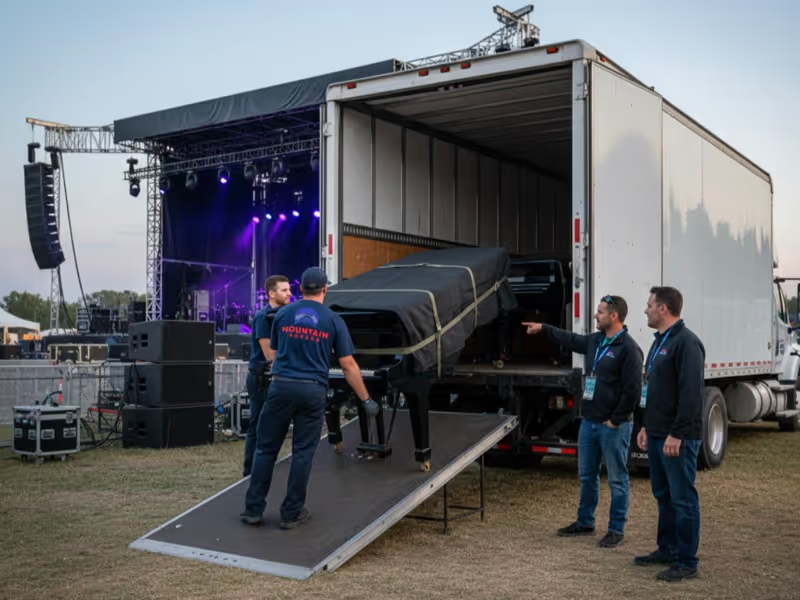
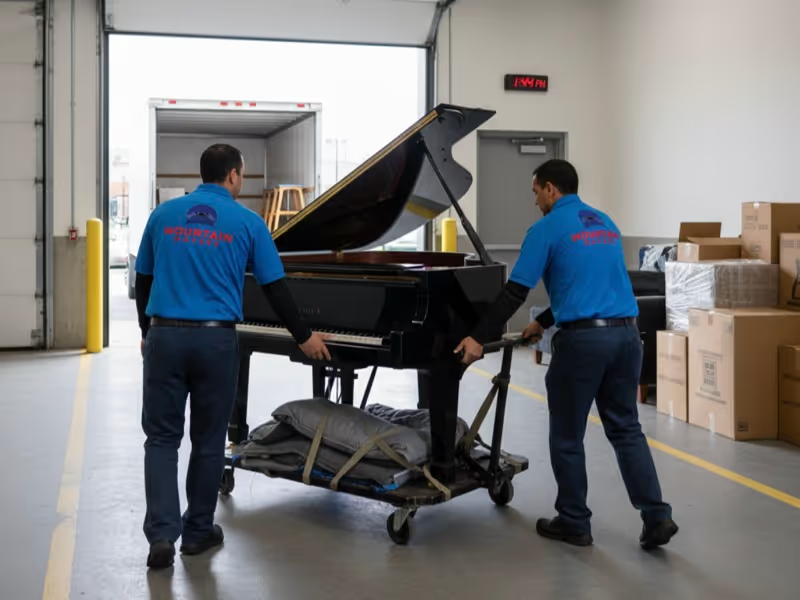
Moving a Grand Piano Requires Building Assessment and Route Planning
Before we move your grand piano, we survey your building's layout. Our team measures doorways, hallways, stairwells, and elevator dimensions to confirm the instrument fits through every passage. We check floor load ratings to verify your space can support 800 to 1,200 pounds in concentrated weight. This prevents structural issues and last-minute routing changes.
Corporate event planners in Austin coordinating venue changes need advance planning. We map the exact route from loading dock to final placement, noting tight corners and narrow passages. For moves in Domain office parks, we coordinate with property management to reserve freight elevators and loading zones. This keeps your event timeline on track.
Many Warehouse District lofts and South Congress mixed-use buildings have loading dock restrictions. Some require advance notification 48 to 72 hours before moving day. Others limit access to specific hours or charge standby fees exceeding $150 if crews arrive without confirmation. We handle this coordination so you avoid delays and extra costs.
Facility directors managing multi-building campuses benefit from our site assessment photos and notes. We document every obstacle and create backup plans if primary routes become blocked. Your piano arrives on schedule without damage to walls, doorframes, or the instrument itself.
Concert Venues and Corporate Offices Need Climate-Controlled Piano Transport
Pianos respond to temperature and humidity changes. Wood soundboards expand in moisture and contract in dry air. String tension shifts when temperatures swing more than 10 degrees during transport. Our enclosed trucks maintain stable 68 to 72°F environments with humidity control to prevent warping and tuning drift.
Austin performing arts centers and recording studios in East Austin rely on instruments that stay in tune. We use air-ride suspension trucks that absorb road vibration. Climate control runs continuously during loading, transport, and unloading. Your piano arrives in the same condition it left, ready for performance or recording sessions.
May through September humidity swings between 30% and 90% in Austin. These changes cause soundboards to expand and contract, creating stress cracks in unprotected instruments. Hotel conference centers and university music departments schedule moves during cooler months when possible, but our climate-controlled fleet protects pianos year-round.
Corporate headquarters with lobby showpiece instruments need extra care. We blanket-wrap the exterior after padding to block direct sunlight during loading. Temperature regulation continues even during short moves across Austin metro. Your investment stays protected from summer heat exceeding 100°F and winter cold snaps that can crack finish lacquer. According to NPR's reporting on climate impacts, temperature extremes have become more frequent across Texas, making climate-controlled transport increasingly important for valuable instruments.
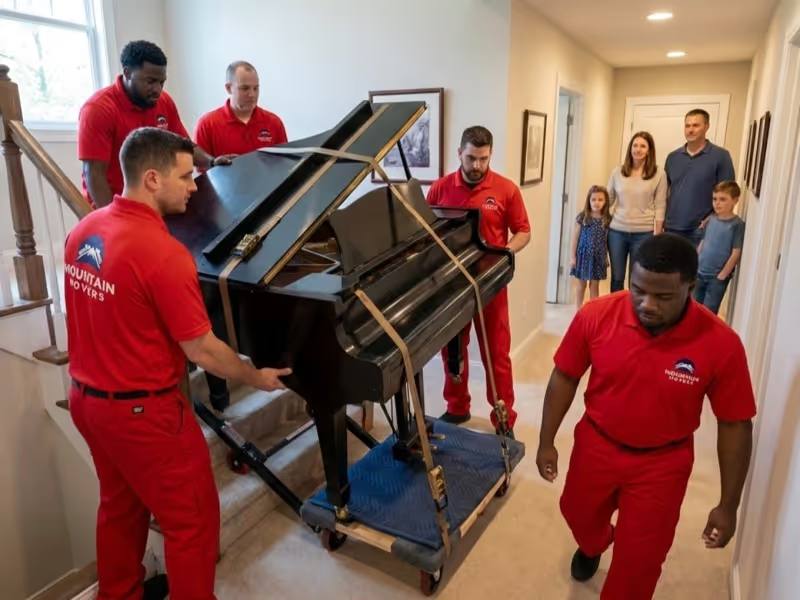

Piano Moving Timing Depends on Stairways, Elevators, and Load-In Access
Ground-floor moves with direct loading dock access take 1 to 2 hours from arrival to final placement. Elevator moves in buildings with freight access add 30 to 45 minutes for coordination and transport between floors. Stairway moves require 3 to 5 hours depending on flight count and landing space for maneuvering equipment.
Austin business owners scheduling office moves need accurate time estimates. We assess your building's access points during the pre-move survey and provide realistic timelines. Property managers coordinating tenant improvements can schedule other contractors around our confirmed window. This prevents business disruption and keeps projects on track.
Downtown Austin high-rises require certificates of insurance and advance elevator reservations. Some buildings mandate weekend moves to avoid weekday traffic in loading areas. We handle insurance documentation and coordinate with building management 5 to 7 days before your scheduled move. Event venues planning equipment rotation avoid conflicts by booking moves during off-peak hours.
Weekend moves work best for Barton Creek office complexes where weekday loading docks stay busy with deliveries. Early morning Saturday slots between 7 and 10 a.m. give our crews clear access before other tenants start weekend activities. You get faster service and lower risk of delays from shared loading zone conflicts.
Post-Move Piano Tuning Prevents Damage from Austin's Temperature Swings
Wait 2 to 3 weeks after moving before scheduling piano tuning. Your instrument needs time to adjust to the new building's temperature and humidity levels. Strings settle into stable tension during this period. Tuning too soon wastes money because strings drift again as the piano acclimates to its environment.
Austin businesses that have just relocated pianos should monitor room conditions during the adjustment period. Facility managers maintaining instrument fleets know that immediate tuning before stabilization requires return visits within days. We provide humidity guidelines for your specific location so you protect your investment during the transition.
Austin's limestone foundation causes buildings to run drier than outdoor humidity year-round. Pianos moved from climate-controlled storage experience the biggest adjustment. Westlake and Tarrytown locations with forced air heating create especially dry indoor environments. Gradual adjustment prevents soundboard cracks that occur when wood loses moisture too quickly.
Venue operators preserving performance quality should place humidity monitors near relocated pianos. Target 42 to 48% relative humidity for year-round stability. If your building runs below 35%, consider room humidifiers to protect wood components. Our team provides care instructions specific to your Austin neighborhood and building type so your piano stays in peak condition.

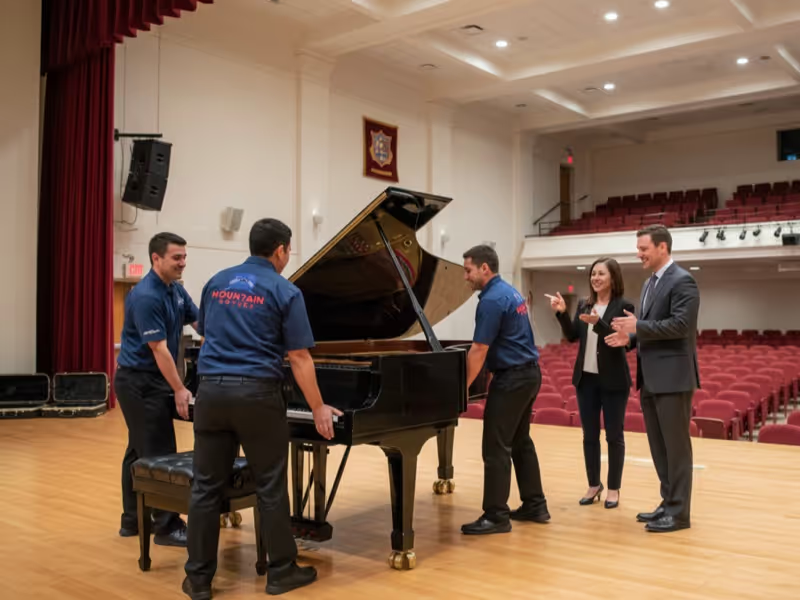
How do professionals move pianos in Austin TX?
- Survey building layout, measure doorways, stairwells, and elevator dimensions before move day
- Wrap piano soundboard, legs, and pedals in quilted padding secured with stretch wrap
- Position 4-wheel piano dolly under instrument center of gravity; secure with ratchet straps
- Navigate turns using spotter communication; never tip grand pianos beyond 15 degrees
- Use stair-climbing equipment or crane service for buildings without freight elevators
- Stabilize instrument in climate-controlled truck compartment with air-ride suspension
- Reassemble piano legs, level instrument, schedule tuning 2 to 3 weeks after Austin delivery
Frequently Asked Questions
Do Austin moving companies move grand pianos in high-rise buildings?
Licensed moving company specialists coordinate freight elevator access and provide certificates of insurance required by downtown Austin property managers. We handle advance reservations and scheduling to meet building requirements.
Can pianos be moved in Austin summer heat?
Professional movers use climate-controlled trucks and schedule early morning moves to minimize instrument exposure to 100°F+ temperatures. Our enclosed fleet maintains stable 68 to 72°F environments during transport.
Should Austin businesses hire piano tuners after office relocations?
Yes, schedule tuning 2 to 3 weeks post-move to let instruments adjust to new building humidity levels. Immediate tuning before stabilization requires return visits as strings drift during the acclimation period.
How long does commercial piano moving take in Austin?
Ground-floor moves with loading dock access take 1 to 2 hours. Multi-story moves in buildings without freight elevators require 3 to 5 hours including rigging setup and stair-climbing equipment deployment.
What buildings in Austin require crane service for piano moving?
Venues without freight elevators and tight stairwell turns may need exterior crane hoisting. This is common in Clarksville and Hyde Park historic buildings where interior access cannot accommodate piano dimensions safely.
Do movers disassemble piano legs for transport in Austin?
Grand piano legs are always removed for safe transport. Concert grands require additional pedal lyre disassembly to fit through standard doorways without tilting the instrument beyond safe angles.