





What to Move Yourself vs. Give the Crew | Round Rock Movers
Every item in your home fits into one of two groups. Things your moving crew handles best. And things you keep with you. Knowing the difference protects what matters most and keeps the whole day from going sideways.
We tell every family in Round Rock the same thing before their move: think of it as "crew items" versus "personal items." Crew items are the heavy stuff, the bulky furniture, the boxes you packed and labeled. That's what professional movers train for. Personal items are different, they're the things that would genuinely wreck your day if something went wrong with them.

Crew Items: What Your Movers Do Best
Your crew wants the big stuff. Couches, dressers, mattresses, dining tables. Boxes of books, kitchen gear, linens. These are the items movers load and unload constantly, and heavy furniture is exactly what they're built for.
Here's what belongs on the truck:
- All sealed and labeled moving boxes
- Large furniture like beds, sofas, and shelving units
- Appliances that have been properly disconnected
- Rugs, lamps, and general household goods
If it's heavy and replaceable, let the crew take it. That's the job, and they've done it hundreds of times.
Personal Items: What You Keep With You
This is where most people don't think ahead. Personal items aren't just "valuable" in a dollar sense. They're things that can't be replaced, or things you'll need before the truck even pulls into your new driveway.
A family near Old Settlers Park packed their kids' medications in a box labeled "bathroom." That box ended up buried behind a couch on the truck. They didn't reach it until 10 p.m. One small oversight turned an otherwise smooth move into a late-night scramble.
Your personal items should include:
- Prescription medications and daily health supplies
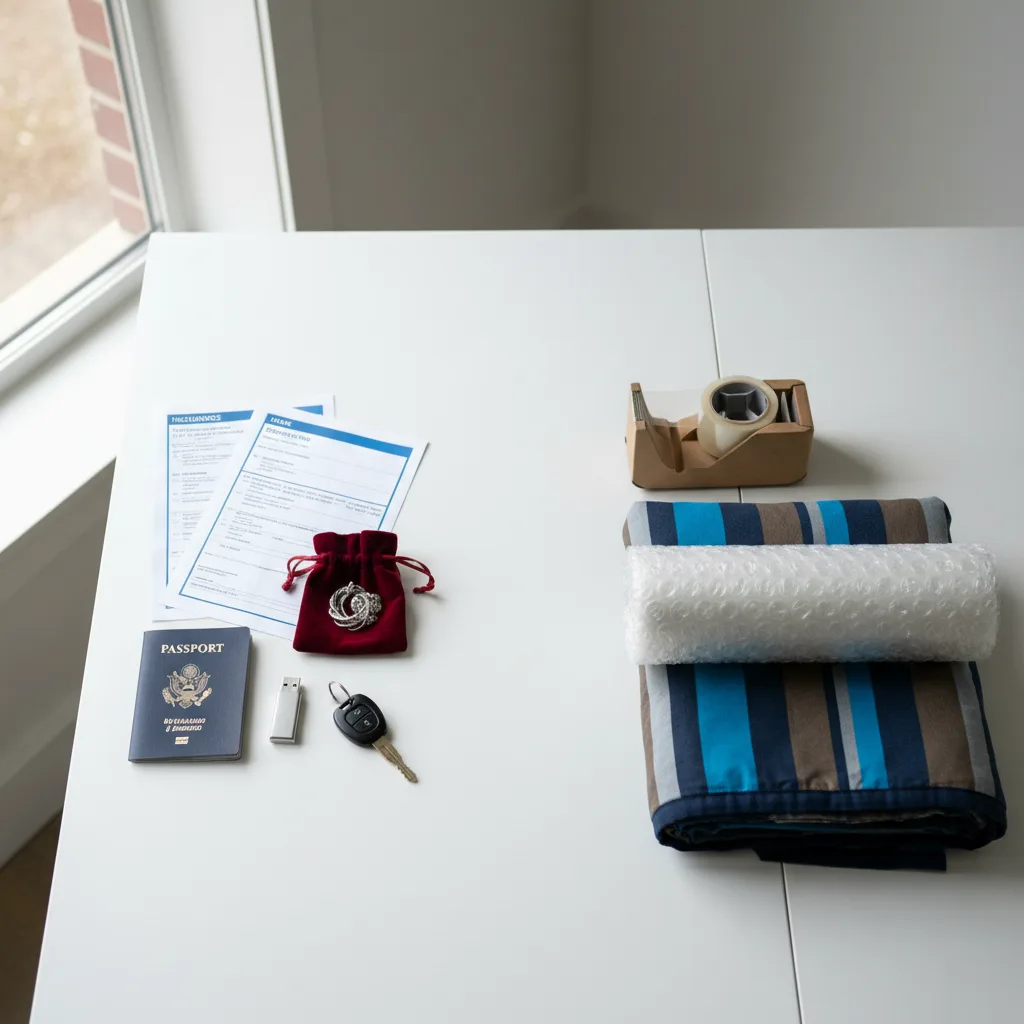
- Important documents like passports, birth certificates, and closing paperwork
- Jewelry, cash, and small irreplaceable keepsakes
- Car keys, house keys, and garage remotes
- Laptops, external hard drives, and phones
But it goes beyond the obvious. Family photo albums that haven't been digitized. Your grandmother's ring. The folder with your mortgage documents. These don't go on the truck. They go in your car.
We see this all the time. Someone tosses their laptop bag into a moving box because they're rushing. Then they can't work the next morning. A little planning the night before goes a long way.
The Simple Test
Not sure which category something falls into? Ask yourself two questions.
- Would losing this item cause a real problem tonight or tomorrow morning?
- Could I replace this item if it got damaged?
Yes to the first? Move it yourself. No to the second? Same answer. Everything else rides with the crew.
Most people overthink this. You don't need a long checklist. Spend fifteen minutes the night before your move putting personal items in one bag that stays in your vehicle. That's the whole system.
Sort those two categories before the truck shows up. Your crew focuses on what they do best, and the stuff that matters most never leaves your hands.
Valuables and Important Documents to Keep With You
This is the category people forget most often. And it's the one that matters most.
Birth certificates, passports, Social Security cards, marriage licenses, car titles, none of these go on the truck. Not because your crew is careless (they aren't), but because a moving truck makes multiple stops and things shift. Boxes get buried under other boxes. You don't want to be digging through 40 cartons at 9 p.m. looking for your kids' immunization records the night before school starts.
Documents You Should Pack Yourself
Grab a folder or small file box and pull these together before moving day. The Texas DMV's guide on items to keep separate from movers is a helpful reference when building your personal document checklist:
- Government-issued IDs and passports for every family member
- Birth certificates and Social Security cards
- Insurance policies for your home, car, and health
- Recent tax returns and financial statements
- Property deeds, car titles, and your new lease or closing paperwork
- Medical records, prescription lists, and vet files for pets
This file box rides in your personal vehicle. Not in the cab of the moving truck. Your car, where it stays under your control the whole time.
Jewelry, Cash, and Small Valuables
Standard moving coverage doesn't protect high-value small items the way most people expect. Claims for lost small items are among the hardest to verify and resolve. Your grandmother's ring, your watch, loose cash, an envelope of savings bonds, all of it stays with you.
We see this mistake regularly in Round Rock. A family packs jewelry inside a dresser drawer thinking it's safe. The dresser gets wrapped, loaded, and moved. But drawers shift during transport. Small items fall behind furniture pads. By the time anyone notices, it's a needle-in-a-haystack situation.
The fix is simple. Put jewelry in a ziplock bag. Put the bag in your purse or backpack.
Electronics and Irreplaceable Data
Your laptop, external hard drives, and backup drives belong with you. So do thumb drives with family photos or work files. A laptop can be replaced, the data on it often can't.
Same goes for tablets your kids use for school. If you're moving within Round Rock ISD during the school year, those devices might be needed the same evening you arrive. Don't let them ride in a box that won't get opened for three days.
And here's what people consistently overlook: chargers. Pack the chargers with the devices. We've had customers keep their laptop in the car and then realize the charging cable is somewhere in box number 87. One bag, devices and chargers together, stays with you.
Medications and Daily Essentials
Prescription medications stay with you. Non-negotiable. This goes double for anything temperature-sensitive, Round Rock summers are no joke, and a truck interior can push well past 120 degrees by mid-morning in July. Insulin, certain heart medications, EpiPens, none of these should sit in a hot trailer while you're wrapping up at the old house.
Pack a small overnight bag with medications, a change of clothes, phone chargers, and basic toiletries. Think of it as your first-night kit. You'll be glad you did when you're exhausted at 10 p.m. and everything else is still in boxes.
If you want to walk through exactly what to handle yourself versus hand off to the crew, we can cover that during your moving estimate. We've done this hundreds of times and know where the headaches come from.
Items Movers Are Not Allowed to Transport
This one catches people off guard. Some items aren't just risky to hand off. They're prohibited.
Federal and state regulations prevent licensed moving companies from loading certain materials onto a truck, regardless of how careful the crew is. It's not about skill. It's about safety and liability, full stop.
The Federal Motor Carrier Safety Administration lists hazardous materials that movers cannot transport. These rules apply whether you're moving across town from Teravista to Old Settlers Park or heading out of state entirely. Same restrictions either way.
What Falls on the Prohibited List
You might picture "hazardous" as industrial chemicals. But plenty of ordinary household items qualify. Here's what you'll need to move yourself rather than load onto the truck:
- Flammable liquids like gasoline, lighter fluid, and paint thinner from the garage
- Pressurized containers such as propane tanks, oxygen tanks, and aerosol cans
- Corrosive chemicals including pool chlorine, bleach, and car batteries
- Ammunition and firearms that aren't properly secured for personal transport
- Perishable food that could spoil and damage other belongings during transit
We see this regularly. Someone packs a box of cleaning supplies from under the kitchen sink without thinking twice. That box has ammonia, a can of oven cleaner, and half a bottle of nail polish remover. Each one is a problem on a moving truck.
And it's not just explosion risk people miss. A single leaking bottle of bleach can ruin furniture, clothing, and upholstery packed nearby. One cracked aerosol can in a hot truck during a Round Rock summer, when cargo area temps push past 100 degrees before noon, is a real hazard, not a theoretical one.
What to Do With These Items
You've got options. The simplest approach:
- Walk through your garage, laundry room, and bathroom cabinets about a week before your move
- Pull out anything flammable, pressurized, or corrosive
- Use up what you can before moving day
- Dispose of the rest properly, Williamson County runs household hazardous waste collection events periodically, worth checking the schedule
- Transport small quantities of approved items yourself in your personal vehicle with good ventilation
Most people don't catch this until moving day. They pack everything, the crew arrives, and boxes have to be reopened and sorted on the spot. That eats into your time and theirs.
One family we helped near the Round Rock Premium Outlets had packed a box labeled "garage stuff." Inside were two propane canisters, a bag of fertilizer, and several cans of spray paint. Good people, just didn't know. We got it sorted out, but it added about 30 minutes to the loading process that nobody had planned for.
A 20-minute sweep of your home a week out saves all of that.
Plants are a gray area worth mentioning. They're not hazardous, but most movers can't guarantee their safety in a truck. Live plants can also carry pests across county or state lines, which creates problems for long-distance moves under agricultural regulations. Your best bet is to transport plants in your own car.
If you're unsure about a specific item, just ask when you schedule your moving estimate. A quick question upfront is always better than a surprise on moving day. And your quote won't change just because you asked.
The crew handles the heavy lifting. But certain items are your responsibility by law. Knowing that before you start packing keeps everyone safe and keeps your move on schedule.
Frequently Asked Questions
What's the most common mistake Round Rock families make when deciding what to hand off to movers?
The most common mistake is packing medications, documents, or chargers into labeled boxes that end up buried on the truck. Once a box is loaded, it may not be reachable until late that evening. Round Rock summers also mean a hot truck cab — temperature-sensitive items like medications can be damaged before you even arrive. Keep one bag in your car with everything you'll need that first night. That simple step prevents most moving-day headaches.
Is jewelry really safer in my car than inside a dresser drawer on the truck?
Yes, your car is always the safer choice for jewelry and small valuables. Dresser drawers shift during transport, and small items can fall behind furniture pads or get lost in wrapping. Standard moving coverage is also difficult to apply to small, high-value items. A simple ziplock bag in your purse or backpack keeps rings, watches, and keepsakes under your control the entire move.
What documents should I never let go on the moving truck?
Government-issued IDs, passports, birth certificates, Social Security cards, insurance policies, property deeds, and medical records should never go on the truck. These documents are hard to replace and easy to lose when boxes get stacked and shuffled. Pull them together in a small file box or folder the night before your move. That file box rides in your personal vehicle, not in the moving truck cab, so it stays under your control the whole time.
Does it matter if I'm moving within Round Rock ISD during the school year?
Yes, it matters more than most families expect. If your kids use school-issued tablets or laptops, those devices may be needed the same evening you arrive at your new address. Don't let them ride in a box that won't get opened for days. Pack school devices, chargers, and any homework folders directly into your personal bag. A smooth school-night arrival starts with keeping those items in your car, not on the truck.
How do I quickly decide if something should ride with me or go on the truck?
Ask yourself two questions: Would losing this cause a real problem tonight or tomorrow morning? Could I replace it if it got damaged? If the answer to either question points toward yes and no, it stays with you. Everything else is fair game for the crew. This two-question test takes about ten seconds per item and works for everything from laptops to family photo albums. Our full guide on local moving in Round Rock covers how to apply this system before moving day.
Do Round Rock's summer temperatures affect what I should keep out of the moving truck?
Yes, heat is a real factor here. Moving truck interiors can reach extreme temperatures during Round Rock summers, especially on long loading days. Prescription medications, certain supplements, and even some electronics can be damaged by that heat. Anything with a label that says 'store below 77°F' or 'keep refrigerated' should ride in your air-conditioned car. Check medication storage requirements the night before your move so nothing gets overlooked.




Google Reviews
518 Reviews | 4.9 Avg Rating