

Austin Mover near Stratford Place




Your Austin Mover near Stratford Place for Local Moves
How Older Single-Family Homes Get Moved
Most homes near Stratford Place date back to around 1988, which means movers regularly navigate narrow hallways, original staircases, and mature trees that limit curb access. Since roughly 53% of the area is single-family detached housing, jobs center on driveway staging, garage cleanouts, and multi-level furniture moves rather than elevator logistics.
Walk through almost any home near Stratford Place and you will notice the same architectural fingerprints: hallways sized for late-1980s furniture rather than today's oversized sectionals, staircases with tighter turns than modern builds, and ceiling heights that occasionally complicate moving armoires or tall dressers. These details matter because a crew unfamiliar with this housing stock might show up with a moving plan built for newer construction, only to discover a stairwell that requires disassembling a bed frame or a hallway that needs furniture tilted at an angle to clear a doorframe. That's exactly why choosing an Austin mover near Stratford Place who already knows this housing stock makes the difference on moving day.
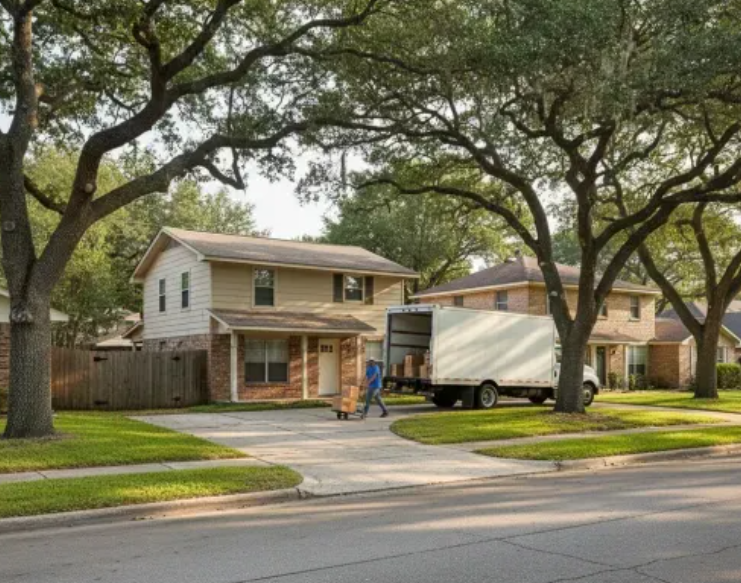
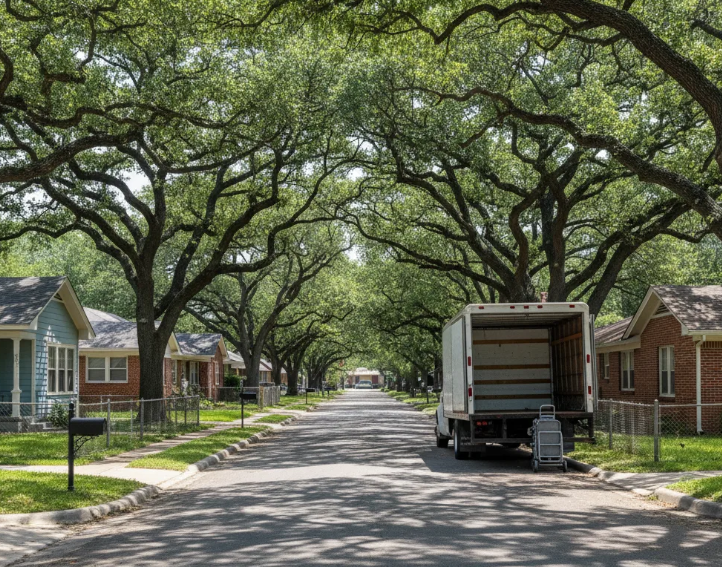
Because roughly half the homes in this tract are detached single-family properties, the logistics look different from an apartment complex move. There is no elevator to reserve or loading dock to schedule. Instead, the job depends on driveway width, garage door clearance, and how close a truck can get to the front entrance. Many of these lots were landscaped decades ago, so mature oak and pecan trees now shade the curb and, in some cases, restrict where a full-size moving truck can park without risking low branches or root damage to the yard.
The most common job types reflect this housing pattern. Full-home moves are frequent, especially for families relocating out of four-bedroom houses that have accumulated decades of belongings. Garage and shed cleanouts are another regular request, since two-car garages built in this era often double as storage for lawn equipment, holiday decorations, and furniture that never made it back inside. Multi-room moves involving finished basements or converted attics also come up often, as late-1980s construction in this part of Austin frequently included bonus spaces that homeowners later turned into offices, guest rooms, or media rooms.
Consider a typical scenario: a four-bedroom single-family home with a two-car garage, where mature trees along the street prevent a moving truck from parking directly at the curb. In this case, an experienced local crew will plan for a longer carry distance, stage boxes near the garage rather than the front door, and sequence the load so bulky garage items go in first while smaller boxes fill gaps later. This kind of planning only comes from familiarity with how these specific properties are laid out.
- Measuring hallway and staircase widths before moving day to avoid doorway damage
- Scouting tree canopy and driveway clearance ahead of time for truck placement
- Bringing furniture dollies suited for original hardwood or tile flooring
- Allocating extra time for garage cleanouts alongside the main household move
How Our Team Reaches the Stratford Place Area
Our dispatch point sits at 901 S MoPac Expy, just off the Loop 1 corridor near Barton Creek, which puts our crews within easy reach of most of Austin's central and western neighborhoods, including Stratford Place. From our suite, trucks typically head north or south along MoPac depending on the specific approach to the neighborhood, then onto surface streets that lead into the residential grid where Stratford Place is located. Because MoPac and Loop 360 are two of the busiest corridors in the city, our team plans departure times around known peak windows rather than promising a fixed number of minutes, since congestion on these roads can shift between mid-morning, midday, and late afternoon.
Crews familiar with this part of Austin know to watch for slowdowns near major interchanges and school-zone traffic during drop-off and pickup hours. When a move is scheduled during these windows, our coordinators build in extra buffer time so the truck and crew arrive ready to work rather than rushed. This local knowledge is part of why we ask customers for their preferred time of day when booking, since a move that starts before the morning rush or after early afternoon often proceeds more smoothly than one squeezed into peak congestion.
Once the truck turns off the main corridors and into the Stratford Place area itself, the driving experience changes noticeably. The neighborhood's quieter residential streets are a welcome contrast to the arterial roads leading in, and our drivers slow their approach accordingly to watch for children, pets, and other vehicles common in a low-density, owner-occupied community.
Arrival logistics in this neighborhood tend to be more predictable than in denser parts of Austin. Homes here generally feature private driveways and attached garages rather than shared parking structures or loading docks, which means our crews can typically back the truck close to the front door or garage entrance without needing special permits or coordinating with a building manager.
- Driveways and attached garages allow trucks to park close to the entry point, cutting down on the distance crews carry boxes and furniture
- Low-density streets mean fewer competing vehicles and less need to circle for parking on move day
- Owner-occupied homes often have more predictable schedules, making it easier to confirm exact arrival windows with neighbors or building coordination not required
- Wider residential streets in this part of Austin generally accommodate our moving trucks without tight turns or restricted access
For customers preparing for moving day, it helps to let us know if your specific street has any unusual restrictions, such as temporary construction, HOA guidelines about truck size, or a shared driveway with a neighbor. Outside of these exceptions, our crews consistently find Stratford Place to be one of the more straightforward areas to serve, thanks to its layout and the accessibility of most homes.
What Makes Stratford Place Homes Unique to Move
Most houses around Stratford Place went up in the late 1980s. That matters more than people think. Older wiring in a hallway closet, a water heater tucked into a weird corner, narrow hallways that were never built for a king-size mattress. We've walked into enough of these homes to know where the tight turns are before we even get the truck backed in.

It's not a rental-heavy street and it's not all owners either. Just over half the homes here are owner-occupied, the rest are rented, so on any given week we might be loading up a family that's lived here twenty years or helping a tenant clear out a two-year lease. Both jobs look different. Owners tend to have more stuff packed into garages and attics. Renters usually move faster, tighter timelines, less patience for delays.
The homes themselves run a mix. Some blocks near Stratford Place are lined with single detached houses, others have duplexes and smaller multi-unit buildings mixed right in. Here's what we typically see on a job in this area:
- One-story ranch homes from the late 80s with original layouts
- Duplexes and fourplexes tucked between single-family lots
- Homes with detached garages that double as storage
- A handful of updated interiors with newer kitchens but original bones
- Mature trees close to driveways that limit truck placement
Home values around here run high, we're talking well over a million on the median. That doesn't mean every move is a mansion job. But it does mean nicer finishes, hardwood floors we're careful not to scuff, built-in shelving that took someone years to fill with books and photos. We treat a $1,088,100 house the same way we'd treat any home, careful, but we also know these owners have put real money into their places and expect us to notice.
The neighborhood skews toward folks in their late thirties, families settled in, some with kids heading into middle school, some just starting out. That's a different crowd than a college rental strip. Furniture is heavier. There's more of it. Kids' rooms, home offices, the occasional piano that's been sitting in a formal living room since the house was built. We handle piano moving too, so if Stratford Place is finally letting go of that upright in the corner, we've got a plan for that.
And every home near here has a slightly different setback from the street. Some driveways fit our truck close, others make us stage boxes on a dolly for an extra thirty yards. We plan for that ahead of time now, we don't guess anymore.
It's easy to see why U.S. News recognizes Austin as one of the best places to live in America, and Stratford Place's mix of established charm and easy access to the city is part of that appeal.
Frequently Asked Questions
How quickly can your crew get to a home near Stratford Place?
We plan around MoPac and Loop 360 traffic instead of promising an exact time. Since Stratford Place sits within easy reach of our dispatch point off Loop 1, most moves start smoothly if scheduled before morning rush or after early afternoon. We ask about your preferred time window so we can build in buffer time and avoid peak congestion near the interchanges.
Will an older home near Stratford Place cause moving problems?
It might, but we plan for it. Homes here date to around 1988, so hallways and staircases are often narrower than newer builds, sometimes requiring a bed frame to be disassembled. We measure doorways ahead of time and bring dollies suited for original hardwood or tile floors common in this housing stock.
Do I need to arrange special parking for a move at Stratford Place?
Usually not. Most homes here have private driveways and attached garages, so our truck can park close to your entry point without permits or building coordination. The one exception is mature tree canopy along some curbs, which can limit truck placement, so let us know if your street has low branches or a shared driveway.