

Austin Movers Cost Guide 2026: How Much Should You Expect to Pay?




What Really Drives Your Moving Bill
Your moving bill depends on how much stuff you have, how far it travels, and how hard it is to access your home. Add in timing, packing needs, and specialty items like pianos, and you'll see why two moves that look similar can cost very differently.

Every move has its own personality. We've packed up tiny Bouldin Creek bungalows that took half a day and loaded three-bedroom houses in Circle C that needed a full crew and two trucks. So what separates a simple job from a big one? It comes down to a handful of factors, and once you understand them, moving quotes stop feeling like a mystery.
Distance matters, but not the way most people think. A move across South Congress might take longer in traffic than a straight shot to Georgetown. And a local move within Austin and Round Rock is priced differently than a long-distance haul, since local jobs usually factor in crew time and truck size, while longer trips add mileage and fuel into the mix. This is one more reason it pays to compare a few Austin TX movers before booking.
- Home size and item count: more furniture and boxes mean more time and more hands on deck
- Access and layout: stairs, narrow streets in Hyde Park or Travis Heights, and downtown freight elevator scheduling all add labor time
- Packing needs: full packing and unpacking services take longer than moving boxes you've already packed yourself
- Specialty items: pianos, antiques, and heavy furniture need extra care and sometimes extra crew
- Timing and season: weekend moves and peak summer months fill up fast, and Austin's June through September heat can slow down a crew that has to pace itself and stay hydrated
Here's a scenario we see often. A family in Steiner Ranch books a move for a Saturday in July. Nice house, three flights of stairs, no elevator. That's a different job than a one-story home in Pflugerville with a driveway you can back a truck right up to. Same square footage, different bill.
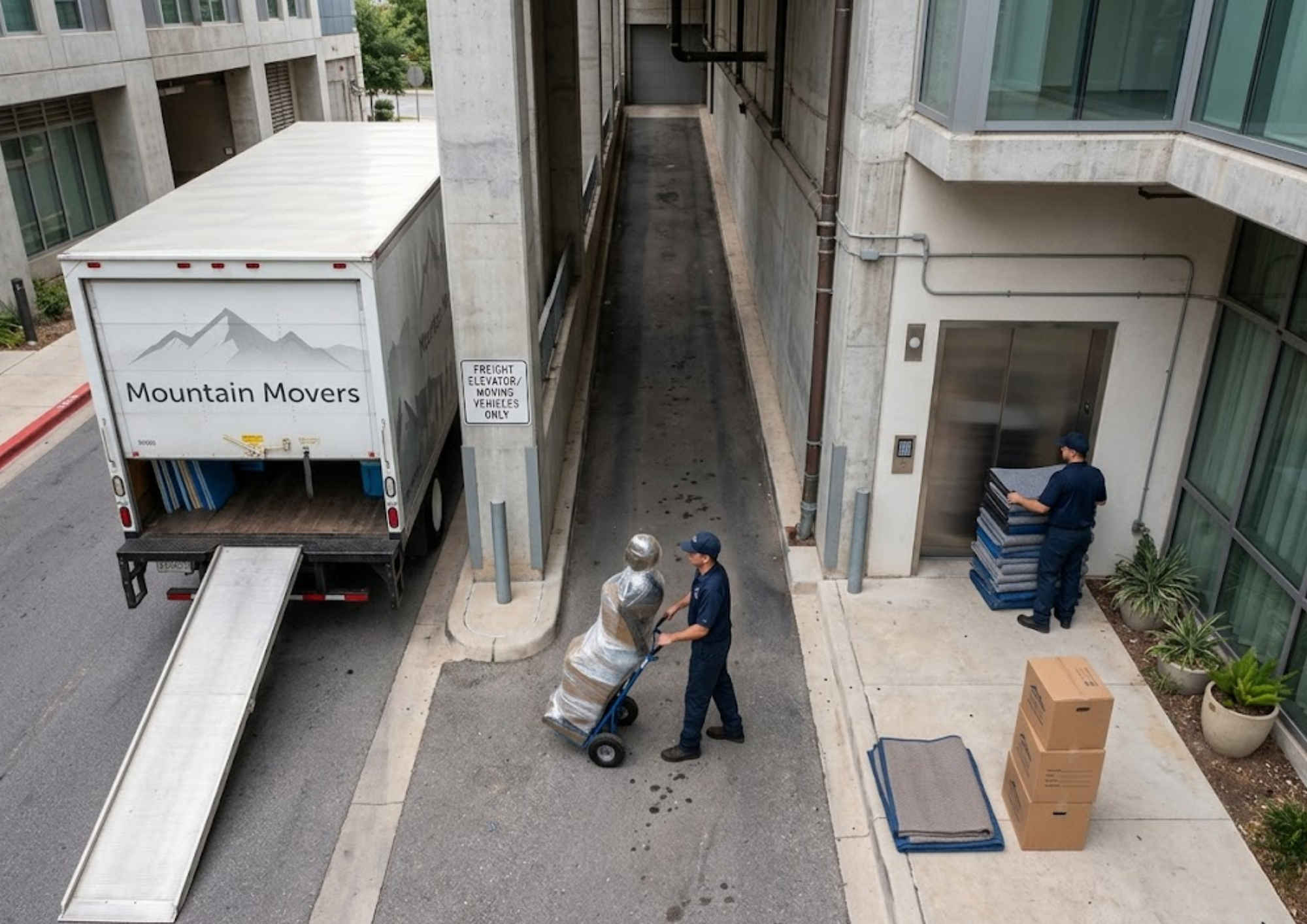
Building type plays a bigger role than people expect. A downtown Austin condo move often means coordinating loading dock permits and a building's freight elevator window, which adds planning time even before the trucks show up. Compare that to a single-family home in Cedar Park or Forest Creek in Round Rock, where the crew can park close and move straight through the day without waiting on an elevator.
Packing is another swing factor. If you want full packing and unpacking, that's more hours on site, but it also means less stress on your end and fewer things left behind in the truck. Some folks pack their own kitchen boxes and let the crew handle furniture and heavy item moving. Both are common, and both change the final number.
Storage needs can shift the plan too. A move that includes short term storage or long term storage, maybe because your new place isn't ready yet, adds another layer to the estimate. We handle moving and storage together often, especially for people moving into Austin from out of state during the city's ongoing growth wave.
None of this is meant to overwhelm you.
It's meant to help you ask better questions when you request a moving estimate. Once you know what affects the cost, you can talk through your specific situation instead of guessing.
Average Local Moving Costs by Home Size
Home size is the biggest factor in any local move. More rooms mean more boxes, more furniture, and more time on the clock. A one-bedroom apartment in East Austin and a four-bedroom house in Circle C are two totally different jobs, and the crew size, truck size, and hours needed will reflect that.
Here's the thing most people don't think about until moving day: cost isn't just about square footage. It's about how much stuff you've collected, how many stairs the crew has to climb, and whether your street allows a truck to park close to the door. We've moved folks out of tiny Bouldin Creek bungalows that took longer than three-bedroom homes in Round Rock, simply because of how much furniture they'd packed into a small space.
- Studio or one-bedroom apartments usually need a smaller crew and fewer hours, since there's less furniture and fewer boxes to move
- Two and three-bedroom homes take more time because of bedroom sets, dining furniture, and more kitchen boxes
- Four-bedroom-plus houses often need a larger crew and a bigger truck to avoid multiple trips
- Homes with heavy items like pianos or large appliances add time no matter the square footage
- Stairs, long driveways, or narrow streets in older neighborhoods like Hyde Park can add labor time even in a smaller home
So how do you get a real number instead of a guess? The only way to know your actual cost is a walk-through or a detailed conversation about your inventory. And that's exactly what a moving estimate is for. It lets a crew look at your specific home, your specific belongings, and your specific street before quoting anything.
One quick scenario. A two-bedroom condo move in downtown Austin sounds simple on paper. But add a freight elevator reservation, a loading dock permit, and a narrow loading zone during a weekday, and that job takes longer than a similar-sized house move in Georgetown with wide-open driveway access. Same bedroom count, very different job.
This is why we never quote a home size alone.
We ask about boxes already packed, furniture that needs disassembly, and any specialty items like a piano or a large gun safe. Those details change the labor hours, and labor hours are what drive local moving costs more than distance ever does within Austin and Round Rock.
Local Moves vs. Long-Distance Moves: Why the Cost Gap Is So Large
Here's something that surprises a lot of folks moving across Austin, TX in 2026. A move from South Congress to Mueller and a move from Austin to Dallas don't just cost different amounts. They're priced using two completely different systems. Local moves get billed by the hour. Long-distance moves get billed by weight and distance. Once you understand that split, the whole cost picture starts making sense.

A local move, meaning anything staying inside the Austin and Round Rock area, usually runs on an hourly rate with a crew size attached. Two movers and a truck cost less per hour than four movers and a truck, but the bigger crew often finishes faster. So the total can land in a similar range either way. We've watched a two-bedroom apartment move in Cedar Park take four hours with two guys, or two and a half hours with four guys. Same job, different math.
Long-distance moves flip the whole model. And this is where people get sticker shock if nobody explained it upfront. Once you're crossing state lines or driving more than a few hours out, movers aren't charging by the hour anymore, they're charging by the weight of your stuff and the miles it travels. That's a federal standard, not a local one, it comes from how interstate carriers are regulated under Department of Transportation rules (FMCSA, 2023). More boxes and furniture, more truck weight, more fuel, more cost. Simple as that.
- Local moves (in-state, short distance): hourly rate, crew size, and total time on site drive the cost.
- Long-distance moves (cross-country or far in-state): weight of your shipment and total mileage drive the cost.
- Local jobs finish in hours, long-distance jobs may take days between pickup and delivery.
- Fuel and drive time barely affect a local quote but heavily affect a long-distance one.
- Storage needs, like a gap between move-out and move-in dates, add cost to long-distance moves more often than local ones.
Here's a real scenario. A family moving from a house in Steiner Ranch to a smaller place in Georgetown will get an hourly quote, plain and simple. But that same family moving from Austin to Denver gets a quote based on estimated shipment weight, sometimes 8,000 to 10,000 pounds for a full house. That number, not the hours worked, sets the price. It's a different formula entirely, and no amount of comparing it to your neighbor's local move quote will make it match up.
So which one are you dealing with? That's the first question to answer before you ask anyone for a number.
One more wrinkle worth knowing. Long-distance moves almost always need more advance planning, since trucks are shared across multiple households and scheduling windows get tighter. Local moves in Austin have way more flexibility, aside from busy stretches like late May through August when everyone's trying to move before school starts, or the tight HOA move-in windows we see a lot in newer Cedar Park and Round Rock developments.
Frequently Asked Questions
How do movers decide between charging by the hour and charging by weight or distance?
Movers use hourly rates for local jobs and distance-based pricing for long-distance moves. Local moves within Austin and Round Rock are billed on crew time and truck size, since the trip itself is short. Long-distance moves factor in mileage, fuel, and total weight, since the truck is on the road longer. This is why a move from South Congress to Mueller feels nothing like a move from Austin to Dallas, even if you're moving the same amount of stuff.
Why do two homes with the same square footage sometimes get different moving quotes?
Square footage alone doesn't tell the whole story. A small Bouldin Creek bungalow packed tight with furniture can take longer than a bigger house with an open floor plan. Stairs, narrow streets, and how much you've collected over the years all add labor time. That's why we ask about your specific belongings and layout before quoting, instead of guessing off bedroom count alone.
Does Austin's summer heat affect how long a move takes?
Yes, it can. Crews working through Austin's June to September heat often need to pace themselves and take more water breaks to stay safe. This can slightly stretch the time a job takes compared to a cooler month. If your move falls in peak summer, it's worth mentioning to your crew so they can plan the day with breaks built in.
What's the difference between full packing service and moving boxes I've already packed?
Full packing means the crew wraps, boxes, and unpacks everything for you, which adds hours on site but saves you the work. If you pack your own kitchen boxes and let the crew handle furniture, the job moves faster since there's less to prep. Both are common choices in Austin, and the right one depends on your timeline and how much help you want on moving day.
How do downtown Austin condo moves differ from moves in the suburbs?
Downtown condo moves usually need extra planning for freight elevator windows and loading dock permits, which adds time before the trucks even show up. A single-family home in Cedar Park or Forest Creek in Round Rock lets the crew park close and move straight through the day. Both jobs might have the same bedroom count, but the building type changes how long it takes.
How can I get an accurate number instead of just guessing at my moving cost?
The only real way to know your cost is a walk-through or a detailed conversation about your home and belongings. Home size, stairs, packing needs, and timing all shift the final number, so a guess based on square footage alone won't be accurate. Once you understand what drives the bill, you can request a moving estimate and get answers specific to your street, your stuff, and your schedule.