

Austin Movers near Hill of Life in Austin





Austin Movers Near Hill of Life in Austin
Moving Large Single-Family Homes Near Hill of Life
Most homes in this area are big single-family places built around 1985, sitting on hilly lots with long driveways and multiple levels. We know the tight turns and steep grades up here, and we plan crew size around them, not the other way around.
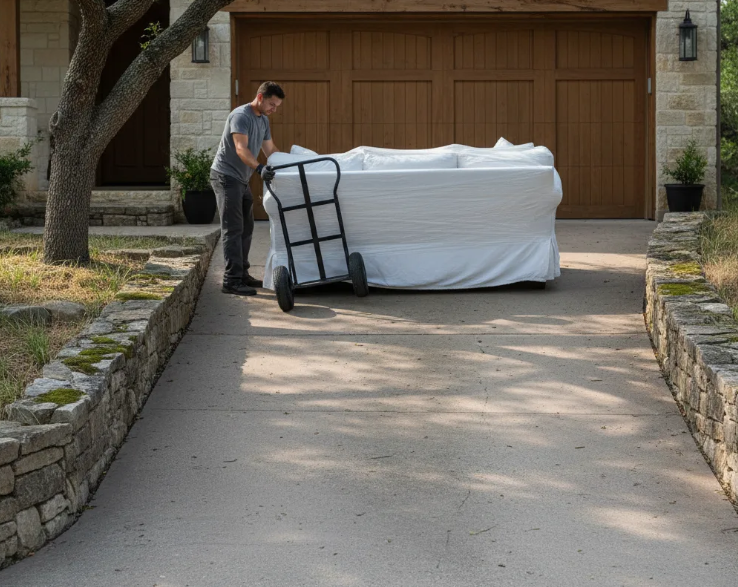
Drive the streets winding up toward Hill of Life and you'll notice most houses share a look. Split levels, wraparound decks, three-car garages built into hillsides. The typical house up here went up around 1985, and it shows in the layout: sunken living rooms, split staircases, decks that jut out over a slope. Those decks are great for a view. They're not great for a moving truck trying to get a sectional sofa around a corner which is exactly the kind of maneuvering Austin Movers Near Hill of Life deal with on a regular basis.
We're out here often enough to know which driveways are steep enough to need a hand truck instead of a dolly, and which streets near Barton Creek Greenbelt narrow down to almost nothing once you pass the second switchback.
Nearly all the homes in this stretch, about 91%, are detached single-family houses, not condos or duplexes. That matters on move day. A single-family home this size usually means a full garage, a shed out back, maybe a workshop nobody mentions until the truck's already loaded.
So we ask about outbuildings before we show up. We've had jobs in this neighborhood where the real work wasn't the living room, it was the detached office over the garage nobody warned us about.
- Multi-level homes with interior staircases that need furniture broken down first
- Long, sloped driveways that call for extra hands over extra dollies
- Detached garages, workshops, or guest suites that hold as much as the main house
- Wide decks and patios furnished with heavy outdoor sets that take real muscle
- Mature landscaping and retaining walls that limit where a truck can park
Almost 9 in 10 households in this pocket of Austin own their home rather than rent, and folks tend to stay a while. That means when someone does call us, it's often a big move. A whole house, decades of stuff, sometimes a piano that's been in the family room since the kids were small. We handle piano moving and storage right along with the furniture, so nothing gets left behind because it's awkward to lift.
And with home values running high in this part of Austin, people care about how their place gets treated on the way out the door. We move slow on the stairs, wrap the rails, protect the hardwood. That's just how it goes around the Hill of Life trailhead.
How Our Team Reaches the Hill of Life Area
Getting a loaded moving truck into the Hill of Life neighborhood takes more than a GPS pin. Our crews leave from our office at 901 S MoPac Expy, Suite 300, Room 317, and head south on South MoPac Expressway toward Loop 360, also known as Capital of Texas Highway. From there we continue south into West Lake Hills, exiting toward Camp Craft Road and following it west until it connects with Spyglass Drive, the residential corridor that feeds into the streets bordering the Barton Creek Greenbelt and the Hill of Life trailhead. This route avoids several of the tighter residential cut-throughs that larger trucks struggle to navigate, keeping the move efficient from the first mile.
- Under normal traffic conditions, the drive from our MoPac office to the Hill of Life area runs about 15 to 20 minutes, but rush-hour congestion on Loop 360 and Camp Craft Road can stretch that same trip to 35 minutes or more, so we build extra buffer time into morning and evening move windows.
- Arrival often means steep driveways cut into the hillside, gated entries with call boxes or code pads, and multi-car garages set below or above street grade, all of which require our crews to plan ramp placement and dolly routes before unloading begins.
- The winding, narrow roads near the trailhead demand careful truck routing, since sharp curves and limited shoulder space mean our drivers often scout turnaround points in advance rather than relying on backing up blind on a hillside street.
Because so many houses in this pocket sit on sloped lots with limited flat staging space, our team typically sends a lead mover ahead of the truck to walk the driveway and confirm the safest parking position. This is especially important on streets near the greenbelt access points, where parked cars for hikers and trail visitors can narrow already tight lanes. We also coordinate with property managers or homeowners ahead of time when a gated entry or shared driveway requires a code, since delays at the gate can throw off a tightly scheduled moving day.
Our familiarity with this specific stretch of West Lake Hills, from the Loop 360 approach to the final turn onto the residential streets bordering the trailhead, means fewer surprises on move day and a truck that arrives ready to work rather than circling the block looking for a place to park.
What Makes Moves Here Different
Moving a home in this area rarely resembles a standard apartment move, and the numbers explain why. With a median build year around 1985, many houses in this pocket of Austin were designed with narrower staircases, tighter hallway turns, and garage layouts sized for smaller vehicles and less storage than modern households need. A sectional sofa or a king-size bedroom set that fits easily through a newer home's entryway can become a genuine puzzle in one of these older floor plans. Movers who have not worked this specific area often lose time figuring out angles on site, while crews familiar with the neighborhood know in advance which pieces need to be broken down, which doorframes need protective padding, and when a piece simply will not clear a corner without going through a window or sliding door instead.
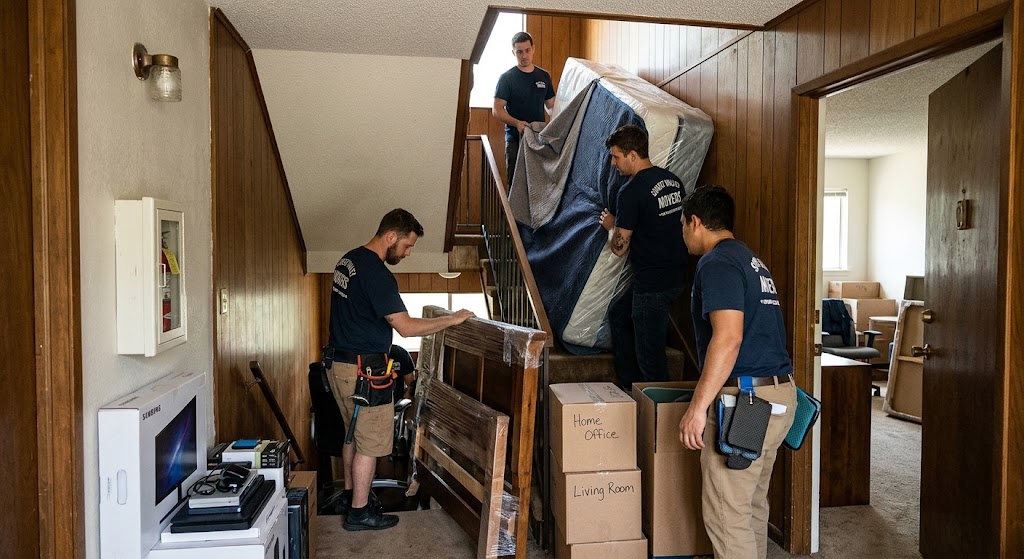
Ownership patterns add another layer. Owner-occupancy here sits at 89.16 percent, which is unusually high for Austin. That statistic translates directly into moving day reality: these are not light turnover moves with a few boxes and a mattress. These are households that have stayed in place long enough to accumulate finished basements worth of belongings, seasonal storage, workshop tools, and furniture collected over fifteen, twenty, or thirty years. A move like this needs a truck sized correctly the first time, a crew large enough to keep pace, and a plan that accounts for multiple trips or a larger vehicle rather than the compact loads typical of rental-heavy neighborhoods.
Home values here, with a median near 967,400 dollars, tend to correlate with larger and heavier furniture categories that require extra care and equipment. Home offices with built-in desks or multiple monitors, dedicated exercise rooms, and outdoor living sets with teak or wrought iron patio furniture are common in this price range. These pieces are often oversized, awkwardly shaped, or simply heavier than standard household items, and they benefit from movers who bring furniture dollies, protective wrapping, and disassembly tools as a default part of the job rather than an afterthought.
The hillside terrain surrounding the trail creates its own set of logistical demands. Sloped driveways, staggered curb access, and limited flat staging areas mean trucks cannot always park directly at the front door. In some cases, crews need to shuttle items down a driveway in stages or use a smaller vehicle to bridge the distance between the home and where the main truck can safely park. Planning for this ahead of time, rather than discovering it on moving day, keeps the timeline realistic and protects both the belongings and the property.
- Furniture disassembly and doorway measuring for homes built with narrower 1980s-era layouts
- Truck sizing planned around decades of accumulated belongings rather than light rental loads
- Extra padding and dolly equipment for oversized home office and outdoor furniture
- Shuttle loading plans for sloped or limited-access driveways near the trail
Frequently Asked Questions
How long does it take your crew to reach homes near Hill of Life?
Our crews reach the Hill of Life area in about 15 to 20 minutes from our MoPac office under normal traffic. During rush hour, congestion on Loop 360 and Camp Craft Road can stretch that to 35 minutes or more. We build that buffer into every move window so your start time stays on schedule.
Do older homes near Hill of Life create extra moving challenges?
Yes, homes here were mostly built around 1985, so staircases and hallway turns run narrower than in newer builds. Big furniture that clears easily in a modern house can jam in these older layouts. Our crews plan ahead, breaking down pieces and padding doorframes before anything gets stuck on a tight corner.
What should I know about parking and driveway access near Hill of Life on move day?
Steep, sloped driveways and gated entries are common near the Hill of Life trailhead, so we send a lead mover ahead to check the safest spot before the truck arrives. Streets near the greenbelt also fill with hiker parking, which can narrow lanes. Letting us know about gate codes ahead of time keeps things moving smoothly.