

Is $100,000 a Good Salary in Austin, TX in 2026? Cost of Living Breakdown



The Real Question Isn't the Salary Number - It's Who's Living On It
A $100,000 salary can feel like plenty for a single person in Austin, but tight for a family of four with childcare and debt. Household size, existing debt, and lifestyle habits change the math more than the number itself. Before you compare cities, figure out who's spending that paycheck.

Here's the thing nobody tells you when you're staring at a job offer. Two people earning the exact same $100,000 in Austin can live completely different lives. One might feel rich. The other might feel broke by the 20th of the month. The salary is the same. The situation is not.
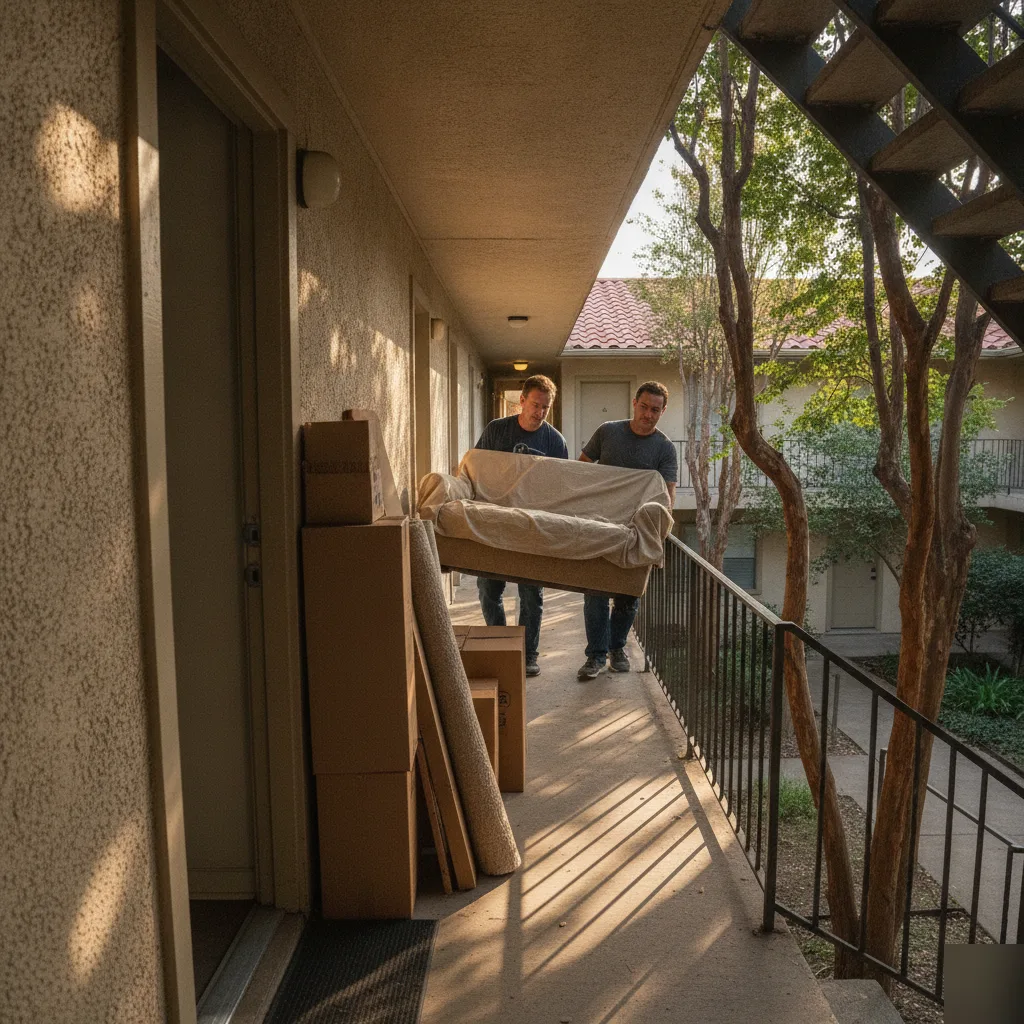
We've talked to many families relocating to Austin over the years, and this is the mistake we see most. Many of them end up working with local movers in Austin to make the transition easier. Folks compare the number to their old city's cost of living and stop there. But a single person renting a one-bedroom near Mueller has a totally different budget than a family of four buying a house in Circle C or Steiner Ranch. Kids add daycare bills. A second car adds insurance and gas. And debt from student loans or an old car payment eats into that paycheck before groceries even get bought.
- Household size - a single earner stretches $100K much further than a family of four
- Existing debt - student loans, car payments, and credit cards shrink take-home money fast
- Housing choice - renting in East Austin versus buying in Georgetown changes the monthly math
- Childcare needs - daycare in the Austin area can run close to a second rent payment
- Commute and car costs - Cedar Park and Pflugerville transplants often add a vehicle to the budget
So who thrives on $100,000 in Austin? Usually it's a single person or a dual-income couple without kids, renting instead of buying, and living somewhere like Bouldin Creek or East Austin where rent is a bit more reasonable than the pricier suburbs. Who struggles? A single-income family of four trying to buy in Steiner Ranch while paying off two car loans. Same salary, very different reality.
And this matters for one more reason people forget - moving costs money too. If you're relocating to Austin or Round Rock for that $100K job, you've got to budget for the actual move on top of first month's rent or a down payment. That's not a small line item when you're already stretching a paycheck.
Most people don't realize this until they're already unpacking boxes in a new apartment with less cash than they planned for.
What $100,000 Looks Like After Taxes
Here's the good news first. Texas doesn't take a state income tax bite out of your paycheck. That's a real edge over states like California or New York, where the same $100,000 salary shrinks a lot faster. But you still owe federal income tax, Social Security, and Medicare. Run the numbers and a single filer earning $100,000 in Austin typically takes home somewhere between $75,000 and $78,000 a year, depending on how you fill out your W-4 and what deductions you claim.

Break that down monthly and you're looking at roughly $6,300 to $6,500 in take-home pay. That's the number that matters. Not the $100,000 on your offer letter, the number that hits your bank account every month.
So what eats into that $100,000 before it even reaches you? Three things, mainly.
- Federal income tax takes the biggest chunk, usually 12-15% of your total pay once deductions and brackets are factored in
- FICA taxes for Social Security and Medicare pull out another 7.65% automatically, no way around this one
- Pre-tax deductions like a 401k or health insurance premium lower your taxable income but also shrink your paycheck up front
We hear this a lot from families relocating for a new job, and it's where the sticker shock happens. Someone sees $100,000 and mentally budgets like they have $8,300 a month. They don't. They have closer to $6,400. That gap trips people up when they're also trying to cover a moving budget, first and last month's rent, and a deposit all in the same 30 days.
Here's a real scenario we see often. A tech transplant takes a job in Austin, gets excited about the no-state-tax perk, and assumes their budget stretches further than it does. And it does stretch further than California or Illinois - just not as far as the raw salary number suggests. Once you subtract taxes, rent in a neighborhood like Mueller or Circle C, and a car payment, that $100,000 salary is a comfortable single-person income. It's not lottery money.
This matters for timing your move, too. If you're planning to relocate on a new salary, wait until you've seen at least one or two pay stubs before locking in a lease or a big spending decision. Numbers on paper and numbers in your account are two different things.
A $100,000 salary in Austin in 2026 puts you in a solid position, especially with no state income tax working in your favor. Just budget off the take-home number, not the headline one.
Breaking Down the Biggest Monthly Costs
Housing eats the biggest chunk of any Austin budget. A two-bedroom apartment in areas like Mueller or South Congress can run $1,800 to $2,400 a month. Move further out to Cedar Park or Pflugerville and you might save a few hundred bucks, but you'll spend more on gas getting into the city. And if you're buying a home instead of renting, property taxes here are no joke. Texas has no state income tax, but it makes up for it with some of the highest property tax rates in the country.
After housing, transportation is the next big hit. Austin traffic is rough, especially on I-35 and MoPac during rush hour. Most households need two cars here, since public transit doesn't reach every neighborhood the way it does in bigger cities. Gas, insurance, maintenance, and parking downtown all add up fast.
- Housing: $1,800-$2,400/month for a two-bedroom apartment inside the city, less in Round Rock or Pflugerville
- Transportation: $500-$700/month per household for gas, insurance, and upkeep on two vehicles
- Groceries and dining: $600-$900/month depending on how often you eat out
- Utilities: $200-$350/month, higher in July and August when the AC runs nonstop
- Property taxes: often $6,000-$10,000+ a year for homeowners, folded into your mortgage payment
Utilities deserve their own callout. Texas summers are brutal, and your electric bill in June through September will not look like your bill in March. Many families relocating from out of state budget for a $150 utility bill and get hit with $350 in August. That's just how it works here.
So where does this leave a $100,000 earner? After taxes, that's roughly $75,000 to $80,000 take-home, or about $6,300 a month. Subtract $2,000 for housing, $600 for transportation, $750 for food, and $275 for utilities, and you're looking at around $2,600 left for savings, healthcare, childcare, and everything else. It's workable, but it's not loose. One unexpected cost, like a moving bill you didn't plan for, can throw the whole month off.
This is exactly why we tell people to lock in a moving estimate before they commit to a lease or a closing date. If you're relocating for a job or just moving across Austin to a more affordable neighborhood, knowing your moving cost upfront protects the rest of your budget.
Frequently Asked Questions
How do I know if $100,000 is enough for my situation in Austin?
It depends on how many people rely on that paycheck. A single person renting near Mueller or East Austin usually lives comfortably on $100,000. A family of four with childcare, two car payments, and debt often feels squeezed on the same salary. Before you decide, list out your household size, debt, and housing plans. If you're relocating to Austin, budgeting for the move itself matters too, so check out our moving services page for planning help.
What's the difference between renting in East Austin versus buying in the suburbs?
Renting in East Austin usually costs less upfront and gives you flexibility, while buying in suburbs like Steiner Ranch or Georgetown means higher property taxes and a bigger monthly commitment. Renters in neighborhoods like Bouldin Creek often keep more cash free each month. Buyers in the suburbs get more space but face Texas's high property tax rates. Your choice should match your income stability and how long you plan to stay in the area.
Why does my take-home pay feel so much lower than my $100,000 salary?
Federal income tax, Social Security, and Medicare take a real bite before you ever see your paycheck. Most single filers in Austin end up with $75,000 to $78,000 after these deductions, even with no state income tax. That's roughly $6,300 to $6,500 a month, not the $8,300 you'd expect from the raw number. Budget off your actual take-home pay, not the salary on your offer letter, to avoid surprises.
Does Austin's lack of state income tax really make a big difference?
Yes, it helps more than people expect, especially compared to states like California. You keep more of your paycheck since Texas doesn't tax wages at the state level. But this benefit gets offset by high property taxes and rising rent in popular neighborhoods. So while your paycheck stretches further than in high-tax states, it still doesn't go as far as the headline salary number suggests once housing costs are factored in.
How much should I budget for a second car if I move to Cedar Park or Pflugerville?
Plan for at least $500 to $700 a month per vehicle once you add gas, insurance, and maintenance. Families moving to Cedar Park or Pflugerville often need a second car since public transit doesn't reach every neighborhood. This cost adds up fast and can turn a comfortable $100,000 salary into a tight one. Factor transportation costs into your budget before signing a lease or committing to a longer commute.
What's a common mistake people make when comparing Austin's cost of living to their old city?
The biggest mistake is stopping at the salary comparison without looking at household size and lifestyle. Two people earning $100,000 in Austin can have completely different financial lives depending on debt, kids, and housing choices. A single renter near South Congress lives differently than a family of four buying in Circle C. Always compare your full budget, not just the number on the offer letter, before deciding if the move makes sense.