

Movers Near Baylor Scott & White Medical Center, Austin




Moving Services for Renters Near Baylor Scott & White Medical Center
About 79 percent of homes near the medical center are renter-occupied. Most jobs here are apartment moves, not house moves. Our crews are set up for elevators, stairwells, shift-work schedules, and the nicer furniture that comes with well-paid medical staff and clinic workers living in the area.
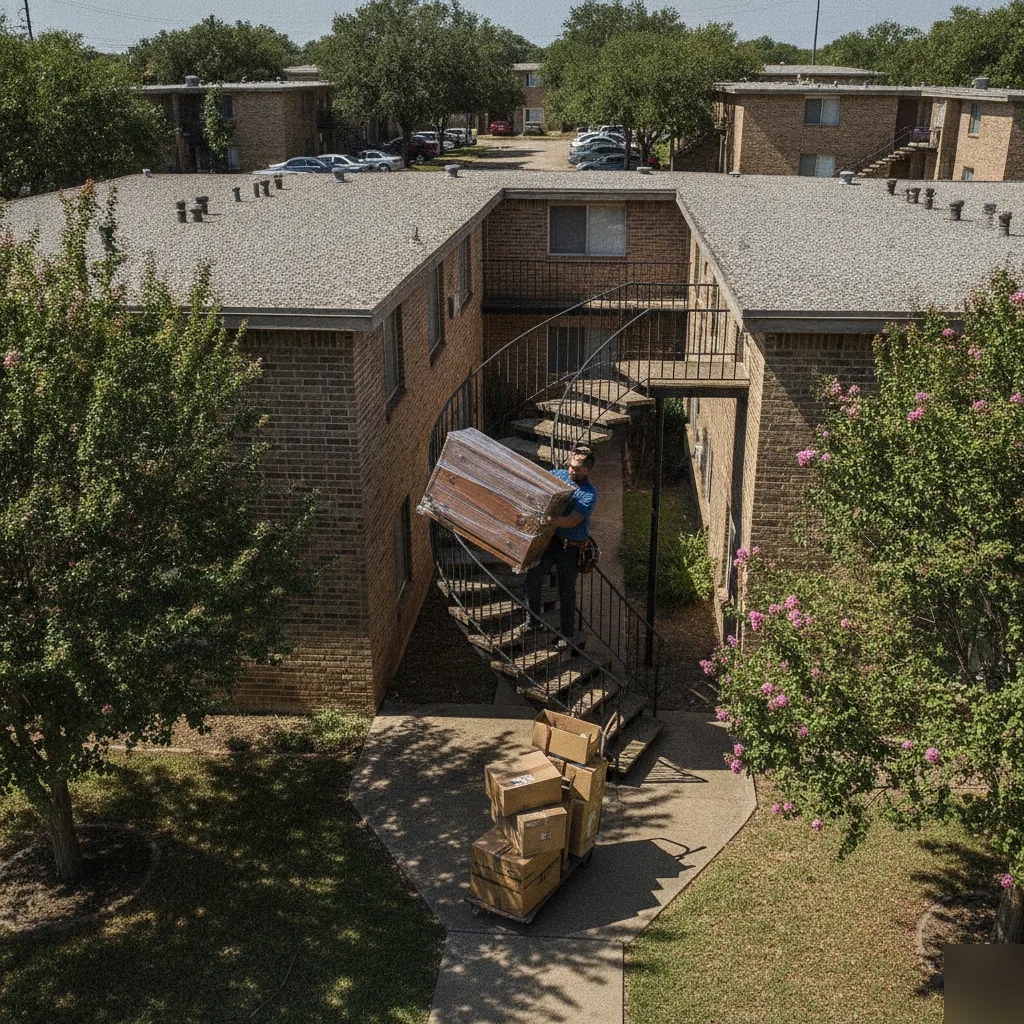
Housing around the medical center looks nothing like atypical Austin suburb. Single-family homes make up less than 1 percent of the local stock. Nearly every move in this tract is apartment-to-apartment. Crews who work this area regularly expect narrow hallways, secured entry systems, elevator reservations, and shared loading zones instead of driveways and front lawns. We plan for parking permits, loading dock windows, and building-specific move-in rules ahead of time skip that step and the job slows down fast
- Elevator and stairwell moves requiring furniture disassembly for tight turns and low clearances
- Coordination with property management for loading dock reservations and certificate of insurance requirements
- Protective wrapping for hallway corners, elevator interiors, and shared common areas
- Flexible arrival windows to work around limited street parking near medical campus buildings
So many residents here work rotating shifts, overnight schedules, or unpredictable on-call hours at nearby clinics and hospital departments. Standard nine-to-five slots don't cut it. Early morning, evening, and weekend moves are common requests. We build extra flexibility into the calendar for a nurse coming off a night shift or a physician squeezing a move between rounds.
Median house hold income near this tract sits around 101,936 dollars. Many renters are moving higher-end furniture, dedicated home office setups, and sometimes fully furnished units that need extra care. We blanket-wrap leather furniture, safely disconnect multiple monitors or standing desks, and secure glass tabletops or designer light fixtures - these show up a lot in the upscale apartment communities near the medical district.
- Padded moving blankets and corner protection for high-value furniture pieces
- Specialized boxing for monitors, electronics, and home office equipment
- Careful handling of furnished-unit inventories to avoid damage disputes with landlords
- Labeled, room-by-room unpacking to speed up settling into a new apartment before the next work shift
How Our Team Reaches the Medical Center Area
Our crews start most jobs from our staging point at 901 SMoPac Expy, Suite 300, Room 317. We run this route often. From there, drivers head north on South MoPac Expressway (Loop 1), staying on the main lanes past the Barton Creek and Zilker exits. The route continues through Central Austin, connects to West 35th Street, then turns onto surface streets leading right into the medical campus at 1201 W 38th Street. On a clear day, this trip runs15 to 22 minutes depending on signal timing near Medical Parkway and Burnet Road.
Timing matters more than distance on this route. MoPac gets rough between 7:30 and 9:00 a.m., and again from 4:00 to 6:30 p.m. Traffic backs up fast near the 35th Street and 45th Street interchanges. Our dispatch builds in extra buffer for moves scheduled during these windows. When we can, we push for late morning or early afternoon starts to keep loading and unloading on schedule. This matters even more for moves involving medical staff or patients with tight appointment windows at the hospital.
Once crews arrive, the neighborhood brings its own logistics. Hospital visitors, staff, and residents of surrounding multi-family buildings all share these streets. Street parking fills up fast, especially during weekday business hours. Our teams scout loading zones ahead of time and coordinate with building management on apartment or condo jobs, since a lot of these properties restrict curb access to certain windows or require notice for bigger trucks.
- Confirming freight elevator availability and reservation windows before move day
- Checking whether a building requires a certificate of insurance for elevator or loading dock use
- Identifying the closest legal parking or loading zone to minimize the carry distance
- Verifying gate codes, buzzer systems, or concierge check-in procedures for condo buildings
- Adjusting arrival times to avoid hospital shift-change traffic near the campus
Upfront planning saves real time on move day. Buildings in this area handle deliveries and freight elevators in wildly different ways, so we treat every job in this tract as its own thing rather than assuming one plan fits all. Crews show up with a plan for the drive and the walk-in both. That keeps things predictable for customers juggling schedules tied to the hospital itself.
What Older High-Density Buildings Mean for Your Move
Housing near the medical center skews older, most of it built around 1976. That vintage brings a specific set of headaches our crews run into almost daily in this tract. Hallways are often narrower than what you'd find in a newer downtown high-rise. Elevators run smaller and slower, with strict weight limits. Stairwells sometimes have tight turns that make a queen mattress or sectional sofa a genuine puzzle. A crew unfamiliar with these older layouts can burn real time just figuring out how to angle a couch through a doorway - local experience with this building era matters more here than almost anywhere else in the city.
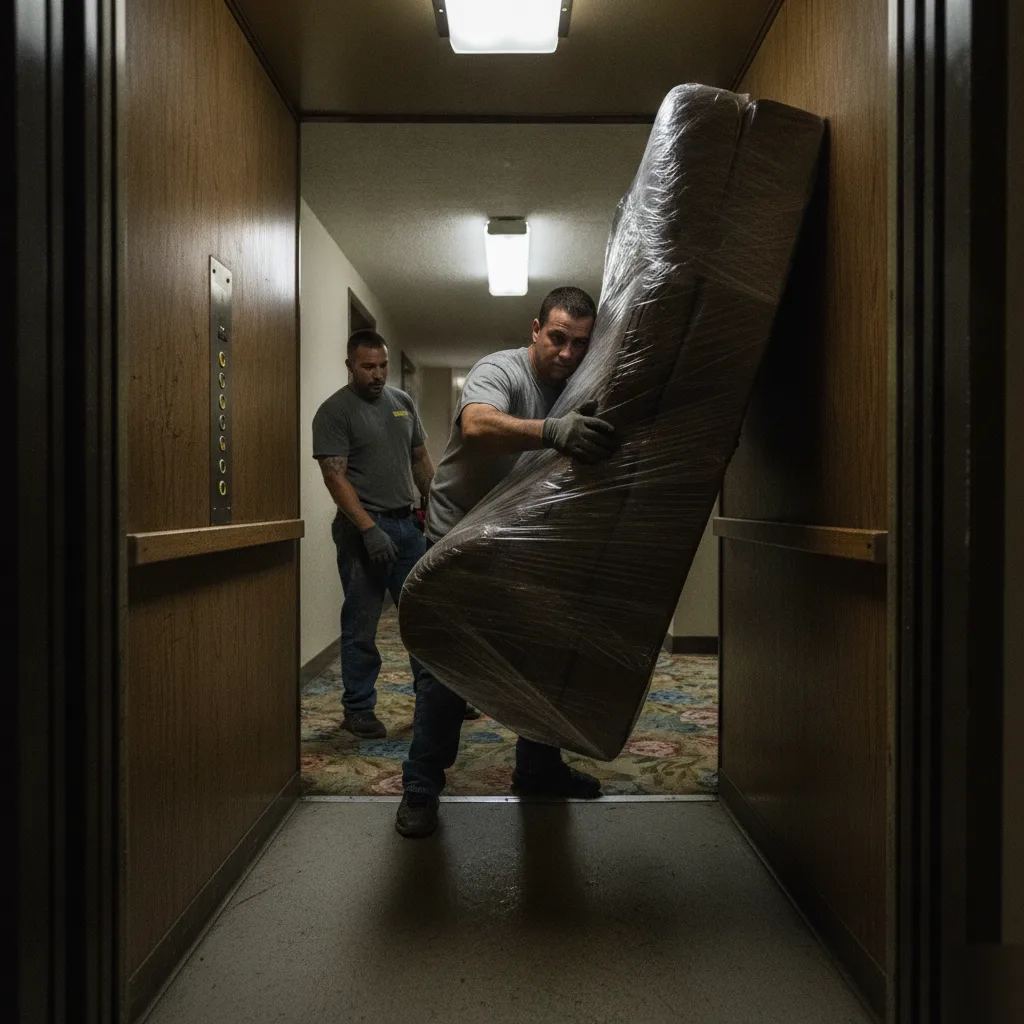
Renter-occupancy near 79 percent reshapes the whole scheduling picture too. Neighborhoods full of homeowners track move dates to closing timelines. This tract runs on lease turnover dates instead. Move demand piles up hard around the end and beginning of each month. Building management offices here enforce move windows, certificate of insurance requirements, and elevator reservation systems that homeowners almost never deal with. Booking a crew who already knows these protocols saves you the last-minute scramble for a loading dock slot or missing paperwork.
- Confirm your building requires a certificate of insurance and request one from your mover at least a week before move day
- Ask your property manager about elevator reservation windows, since many older buildings only allow one elevator to be blocked at a time
- Measure doorways and hallway turns in advance if you are moving large furniture through a pre-1980s building
- Reserve loading zone or freight elevator access early during month-end turnover periods when demand spikes
Single-family homes make up just 0.68 percent of the housing mix here. That number tells you almost everything about a typical job in this tract. Multi-unit apartments and high-rise condos aren't the exception, they're the standard. That shifts our whole approach toward gear built for vertical transport - dollies made for elevator use, furniture pads sized for tight stairwells, crews trained to talk to building staff instead of just backing a truck into a driveway.
Median resident age here is 34.8. Young professionals and hospital staff working irregular shifts make up a big chunk of that. This crowd asks for evening or weekend slots to work around demanding schedules, and plenty are moving in or out just to be closer to shift work at the medical center. Movers near Baylor Scott & White Medical Center, this area regularly keep evening and Saturday slots open. Defaulting to a strict nine-to-five weekday model works fine for suburban homeowners elsewhere in Austin. It doesn't work here.
Frequently Asked Questions
How long does it take your crew to reach an apartment near Baylor Scott & White Medical Center?
Most moves take 15 to 22 minutes from our staging point on South MoPac. That timing depends on signal traffic near Medical Parkway and Burnet Road. We avoid scheduling during the 7:30-9:00 a.m. and 4:00-6:30 p.m. windows when MoPac backs up near the 35th Street interchange, keeping your loading time predictable.
Why do movers near the medical center need special equipment for older buildings?
Most housing near the medical center was built around 1976, meaning narrower hallways and smaller, slower elevators. Our crews carry furniture disassembly tools and corner protection for tight stairwell turns. A queen mattress or sectional sofa often needs extra maneuvering that newer downtown high-rises don't require.
Can you schedule my move around lease turnover dates near the medical center?
Yes, we build our calendar around lease deadlines since about 79 percent of homes in this area are renter-occupied. Demand spikes at month-end and month-start here, unlike homeowner neighborhoods tied to closing dates. We also coordinate elevator reservations and certificate of insurance paperwork your building management may require.