

Movers Near Baylor Scott & White on US-290, Austin





Movers for Apartments Near Baylor Scott & White on US-290
Movers near Baylor Scott & White on US-290 work an apartment corridor that's mostly mid-rise and garden-style rentals Our crews spend most of their time managing elevator bookings, staggered move-in windows, and studio or one-bedroom loads for hospital staff. Owner-occupied houses barely register in this tract, so nearly every job is renter-to-renter, timed around shifts schedules instead of a house closing.
This stretch of US-290 near the medical campus runs on apartment living, not single-family blocks. Mid-rise buildings with shared elevators, garden-style complexes spread across a dozen walk-up buildings -that's the housing stock here. It shapes almost every part of how a move gets planned. Our crew reserves freight elevators ahead of time, confirms loading dock access with property management, and builds in extra time for buildings where one elevator serves an entire wing.
- Elevator reservations and loading dock coordination get handled ahead of time, since most buildings in this tract are mid-rise or garden-style, not houses with driveway access
- Move windows are often staggered by the property. We confirm exact start and end times instead of assuming an all-day slot - high-density rental turnover makes that a must
- Studio and one-bedroom moves are the most common job size here, which tracks with how many hospital staff and clinical residents want compact units close to work
- Move timing frequently follows night, day, or rotating shift schedules, since many renters work at or near the medical campus and can't be home during a standard weekday window
- Owner-occupied homes make up only a small share of this tract. We rarely deal with closing-day contingencies and focus instead on lease start and end dates for both units
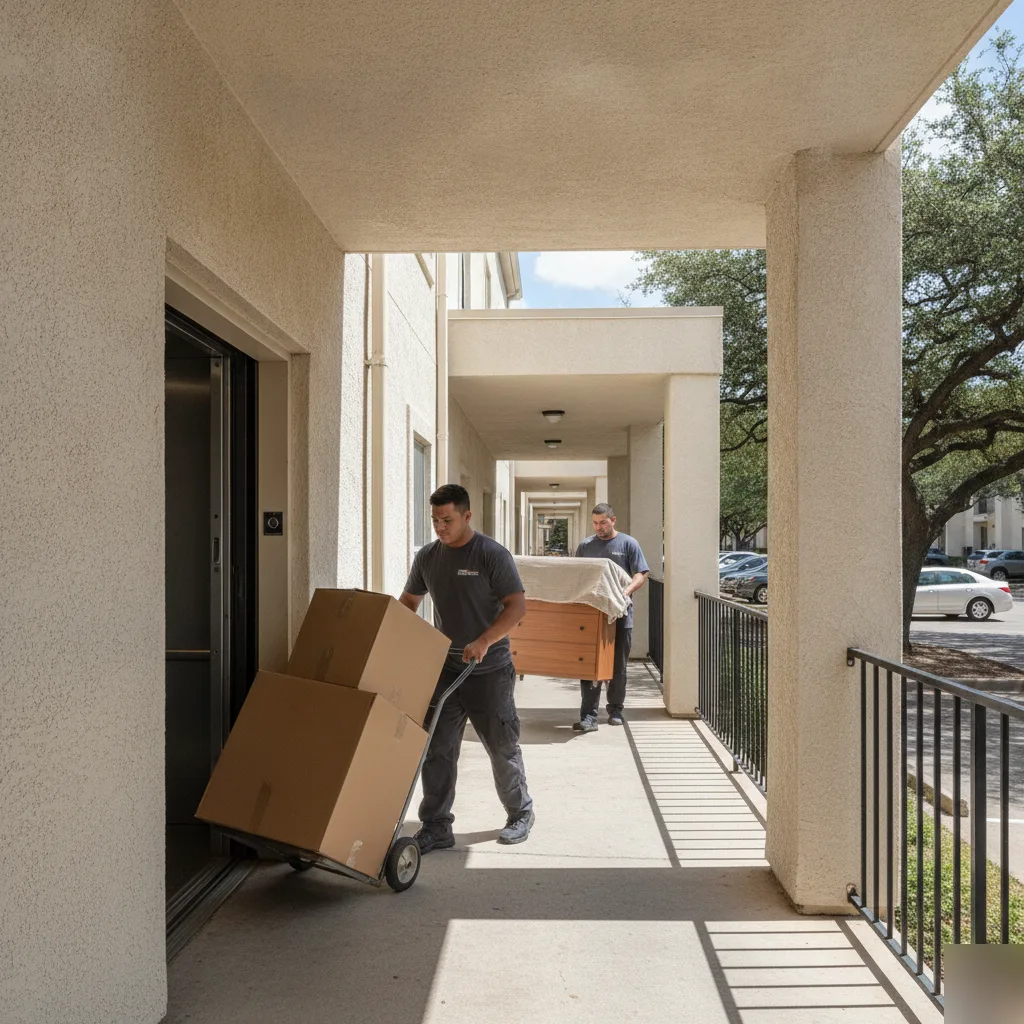
For clinical staff moving into a new unit near the hospital, the scheduling conversation usually starts with the shift calendar, not the date on a calendar. A nurse coming off a stretch of night shifts might need an afternoon load-in so they can sleep first. A resident starting a new rotation might need everything wrapped before an early morning shift begins. We build flexible arrival windows and talk directly with building staff most complexes want certificates of insurance and advance notice before any move-in or move-out gets scheduled at all.
Renter-to-renter transitions dominate this tract, so the paperwork and logistics look different from a typical house move. There's rarely a truck idling in a driveway overnight or a garage full of storage boxes to sort through. Usually it's a compact one-bedroom or studio load, moved between two apartment buildings a few miles apart, often on a tight same day turn around dictated by lease overlap and work schedules.
How Our Team Reaches the Baylor Scott & White Area on US-290
Our office sits over on South MoPac. Getting to this stretch of US-290 is a drive by feel, not by GPS voice. We've run this route enough times to know exactly when the highway backs up and when it doesn't.
The trip usually means cutting across town toward the 290 corridor, then working through the access roads near the medical center. Traffic here shifts fast depending on the hour shift changes at the hospital push extra cars onto the frontage road right around 7am and 7pm.
- Leave South MoPac and head toward US-290 West, timing around hospital shift changes when we can
- Merge onto the US-290 frontage road near the medical center exits
- Cut through side streets when the main corridor backs up during peak hours
- Pull into apartment complexes and condo lots near the hospital - most have tight turn radius, so we plan the truck angle before we arrive
- Confirm loading dock or curb access ahead of time for the taller buildings near the medical center
Parking around the hospital corridor is its own puzzle. A lot of the buildings close to campus went up when this area filled in with apartments and mid-rise complexes, so curb space is tight and loading zones fill fast on weekday mornings. We've learned which lots have room for a full-size truck and which ones need a smaller box truck instead.
We also watch for construction along the frontage road. It pops up without much warning some months and adds ten or fifteen minutes if you're not ready for it. Our crew builds that buffer into the schedule so your move window doesn't slide because of a lane closure near the hospital exit.
If you're in one of the renter-heavy buildings near the medical center, we plan the truck spot before we load the first box. That's part of why moves in this corridor go smoother with a crew that's driven this stretch of 290 more times than we could count.
What Renter Heavy Apartment Communities Need From Movers
The apartment corridor around Baylor Scott & White onUS-290 looks nothing like a typical suburban moving job. Close to 79 percent of households in this tract rent rather than own, so the standard playbook - load the truck in a driveway, unload at another house - almost never applies here. Movers work almost entirely within lease turnover cycles, coordinating around move-out inspections, elevator reservations, and the tight windows that come with a management office instead of a private homeowner.
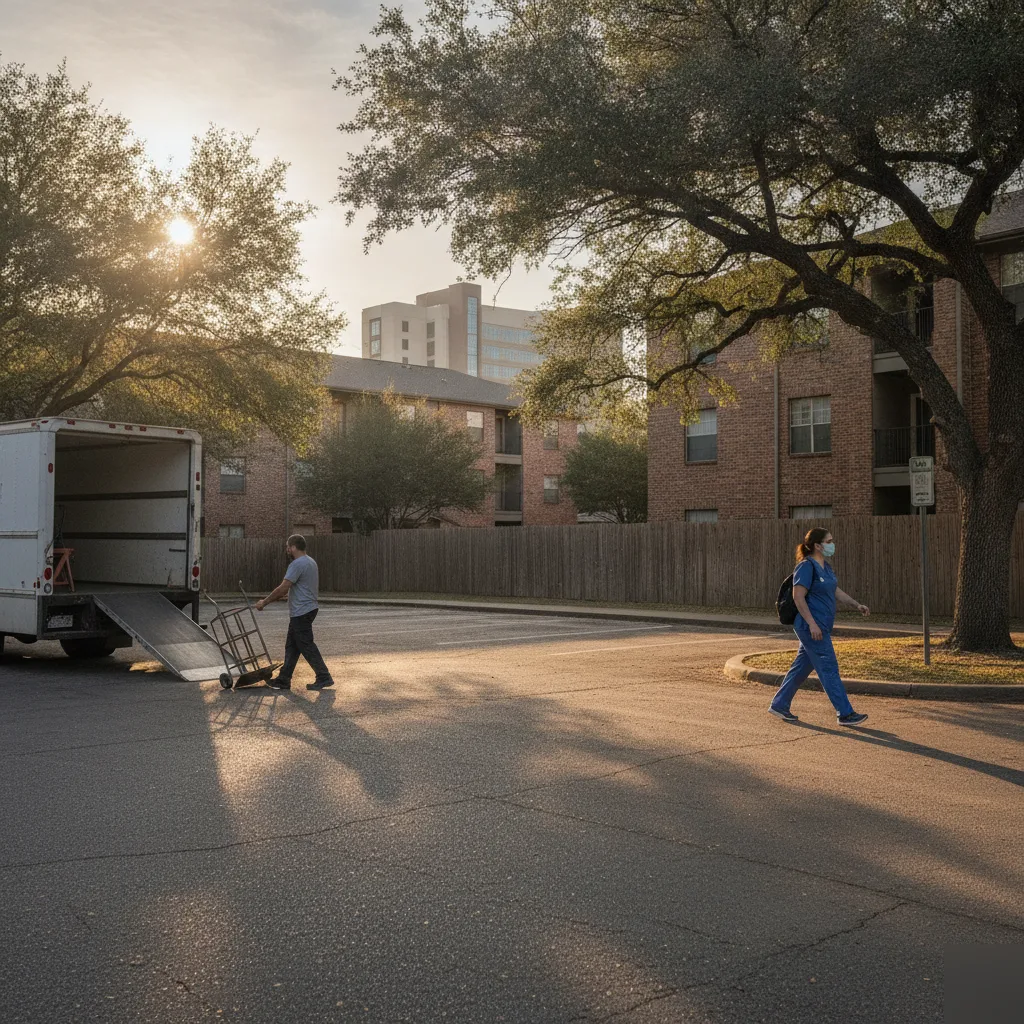
Median household income in the area sits near 101,936 dollars. That points to working professionals, many tied to shifts and appointments at the medical campus or nearby employers along US-290. That income doesn't buy flexible schedules. A nurse finishing a twelve hour shift or an administrator squeezing a move into lunch needs a crew that shows up on time, works fast, and skips the hand holding. Movers who get this rhythm build tighter, faster loading windows instead of the open-ended half-day blocks common with single-family moves.
Building age changes the job too. Median construction year here runs around 1976 - a lot of these complexes near the hospital went up before anyone designed for modern moving equipment. Elevators are smaller and slower than what newer buildings offer. Stairwells can be narrow with tight turns, and loading docks or service entrances might be limited or missing entirely. A couch that glides through a new-construction hallway can need disassembly, careful angling, or a totally different carry strategy in one of these older buildings.
- Crews familiar with older elevator cab dimensions and weight limits common to 1970s era buildings
- Furniture disassembly skills for tight stairwells and narrow door frames
- Coordination with property management for elevator holds, loading dock access, and parking permits
- Flexible scheduling that respects shift-based work hours rather than assuming a weekday
- Experience with multi-unit buildings where there's no driveway or direct curb access
Maybe the most telling number here single-family detached homes make up less than 1 percent of this tract. Nearly every move is vertical: stairs or elevators, shared hallways, building rules, not a straightforward house-to-house transfer. Movers who mostly handle suburban homes often underestimate how much longer a third-floor walk-up takes compared to aground-level house, or how much coordination goes into reserving a freight elevator days in advance.
For residents near the hospital, the practical move is picking a company that treats apartment logistics as a specialty, not an afterthought. The difference shows up directly in how long the job takes and how much stress it adds to an already busy week.
Frequently Asked Questions
Do you coordinate elevator reservations for buildings near Baylor Scott & White on US-290?
Yes, we book freight elevators ahead of time for mid-rise and garden-style buildings near the hospital. Most complexes in this tract are apartments, not houses, so shared elevators and loading docks need advance coordination. We confirm access with property management before your move date so your window doesn't get delayed.
How do you handle moves for renters near Baylor Scott & White who work hospital shifts?
We build move times around your shift schedule instead of a standard weekday slot. Nearly 79% of households in this tract rent, and many work at the medical campus. A night-shift nurse might need an afternoon load-in, while a resident needs everything finished before an early shift starts.
What should I know about truck parking near Baylor Scott & White apartment complexes?
Curb space and loading zones fill fast on weekday mornings near the hospital corridor. Many buildings here went up decades ago with tight turn radiuses, so we plan the truck angle and confirm dock or curb access before we arrive. Some lots need a smaller box truck instead of a full-size one.