

Movers near Bee Cliffs in Austin




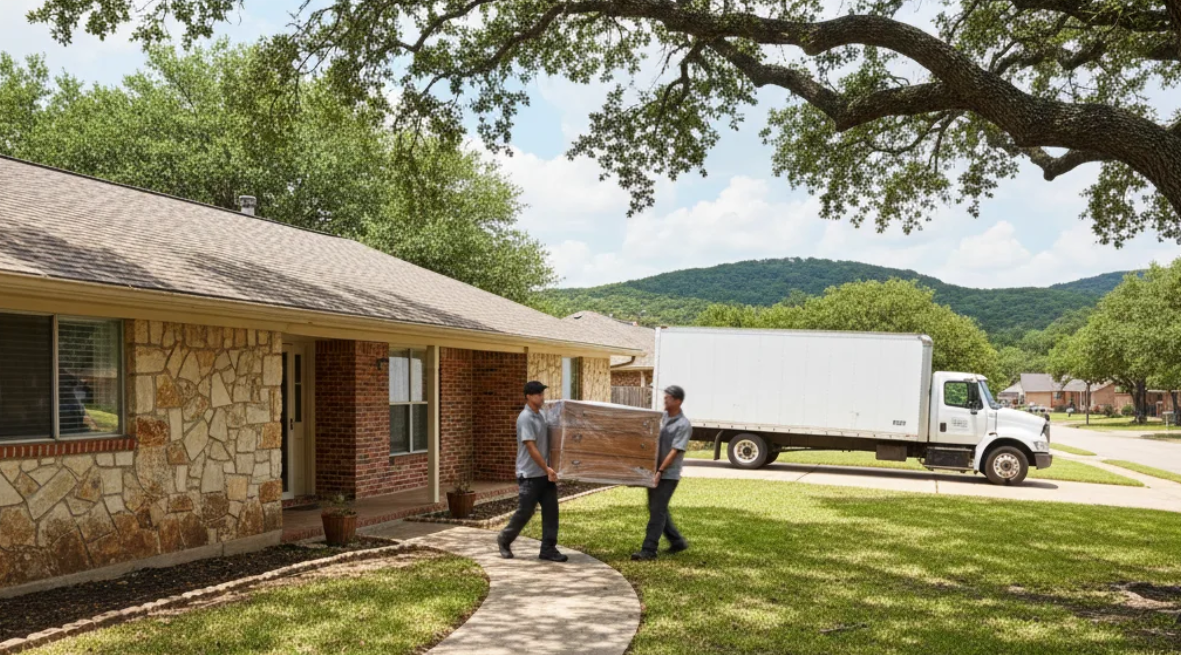
Austin Mover near Bee Cliffs: Serving West Austin's Hillside Homes
Moving Services for Homes Near Bee Cliffs
Bee Cliffs homes near Bee Caves Road often sit on steep, hillside lots with split-level layouts that make moving day more complex than a standard flat-lot relocation. An experienced Austin Mover near Bee Cliffs plans truck placement, staffing, and equipment around narrow roads, steep driveways, and multiple staircases. So many Ad jobs also involve downsizing decades of belongings for longtime residents ready for a smaller home.

Bee Cliffs sits just off Bee Caves Road in West Austin, tucked close to Lake Austin among winding streets and wooded hillsides. The neighborhood's terrain is part of its charm, but it also creates real logistical hurdles on moving day for any Austin mover near Bee Cliffs. Most homes here were built in the late 1970s and 1980s, when builders favored split-level designs that follow the natural slope of the land rather than fighting against it. That means movers frequently encounter homes with three or four short staircases connecting living areas, bedrooms, and garages, all within a single structure.
Because so many Bee Cliffs properties are built into a hillside, driveways tend to be steep, curved, or unusually narrow. Some homes have driveways that drop sharply from the street level down to a garage or carport below, while others rise upward toward a hidden entry point. A crew unfamiliar with these layouts can lose significant time trying to figure out where a truck can safely park and how far furniture will need to be carried. A mover experienced with Bee Cliffs typically scouts the route in advance, decides whether a shuttle vehicle is needed for tight turns, and positions the truck to minimize the distance crews must haul heavy items uphill or downhill.
- Pre-move driveway and street assessment to plan safe truck placement on sloped lots
- Extra crew members assigned to homes with multiple staircases between living levels
- Furniture pads, dollies, and stair straps suited for split-level floor plans
- Careful handling of heavy items like pianos, china cabinets, and sectional sofas on tight stairwells
- Flexible scheduling for narrow roads where parking permits or temporary loading zones may be needed
Another common thread among Bee Cliffs moves is longevity. So Many Ad homeowners have lived in the same house for twenty, thirty, or even forty years, which means a move often involves far more than boxing up a typical household. Crews regularly help sort through furniture, appliances, and stored belongings that have accumulated over decades, coordinating donation pickups or disposal for items that won't make the trip. This kind of downsizing move takes patience and clear communication, since sentimental attachments often complicate decisions about what stays and what goes.
Because of these combined factors, hiring an Austin Mover near Bee Cliffs who understands hillside properties can make a noticeable difference in how smoothly the day goes. Crews familiar with the area know which streets get tight during school pickup hours, which driveways require a two-person carry team, and how to protect banisters and walls in homes with narrow stairwells. That local knowledge translates into fewer surprises, less strain on the crew, and a faster overall moving timeline for residents.
How Our Team Reaches the Bee Cliffs Area
Our crews leave from 901 S MoPac Expy Suite 300 in Austin and head straight into the hill country corridor that leads to Bee Cliffs. The route starts by merging onto South MoPac Expressway heading south, a stretch of road that moves quickly outside of peak hours. From there, the truck exits onto Bee Caves Road and follows it west as the terrain shifts from flat commercial blocks to the rolling limestone hills that define this part of Austin. The final leg winds off Bee Caves Road into the smaller residential streets that climb toward the Bee Cliffs neighborhood itself, where switchbacks and tree cover start to narrow the road considerably.

Under normal traffic conditions, this trip takes well under twenty minutes, making it one of the more convenient hillside routes we service regularly. That said, MoPac and Bee Caves Road both see heavy commuter volume during the morning and evening rush windows, roughly 7 to 9 a.m. and 4 to 6:30 p.m. on weekdays. During those hours, the same drive can stretch by an extra ten to fifteen minutes as traffic backs up near the Loop 360 interchange and the Bee Caves Road stoplights. Our dispatch team factors this into scheduling so your move window accounts for realistic arrival times rather than case estimates.
Bee Cliffs presents a different driving experience than most in town neighborhoods once the truck leaves Bee Caves Road. The interior streets are narrow, winding, and often lack shoulders, which means our drivers slow down well before reaching a client's block and communicate with arAd support vehicles by radio to coordinate safe passage. Blind curves and limited sightlines are common, so we schedule extra buffer time for larger trucks to navigate carefully rather than rushing the final stretch.
- Steep driveways in Bee Cliffs often require trucks to park on the street and use hand carts or dollies for the final approach
- Gated entries at several properties mean crews confirm access codes or gate schedules before the move date
- Limited street width in some sections restricts where a full size truck can safely stop, so smaller shuttle vehicles are sometimes used
- Curbside parking near hillside homes can be scarce, especially on move days that overlap with neighborhood deliveries or landscaping crews
Because of these conditions, our team typically does a quick review of the delivery address ahead of time, checking for gate codes, driveway grade, and available parking before the truck ever leaves the MoPac office. This upfront planning cuts down on delays once the crew arrives and keeps the move running smoothly despite the tighter geography of the area.
What Split-Level and Hillside Homes Need During a Move
Bee Cliffs is a pocket of West Austin where the housing stock tells a story. So Many Adhomes here date to the late 1970s, built during a wave of construction that favored split-level and multi-tier designs suited to the area's rolling terrain. These layouts often include staggered staircases, half-flights between living areas, and garages set below or beside the main floor rather than in front of it. For a moving crew, this means every job requires a walk-through before the truck ever backs into the driveway. Furniture that moves easily through a single-story ranched home can become a genuine puzzle in a split-level house, where a sofa might need to travel up one short staircase, across a landing, and down another before it reaches the family room.
About nine in ten homes in this part of West Austin are single-family houses, and a large share are owner-occupied for long stretches of time. That combination matters on moving day. Long-term residents tend to accumulate substantial furniture collections: solid wood dining sets, pianos, built-in cabinetry that has been retrofitted as freestanding pieces, and decades of belongings stored in attics or under-stair closets unique to split-level construction. A crew unfamiliar with this pattern may underestimate the labor and packing materials needed. Experienced local movers plan for extra wrapping supplies, additional dollies rated for heavier loads, and enough crew members to marage multi-level carries without excessive backtracking.
Terrain adds another layer of complexity. So many Bee Cliffs properties sit on sloped yards that lead down toward Lake Austin, and grading rules often keep driveways narrow or steeply pitched. This limits where a moving truck can safely park, which in turn shortens the practical carry path from the truck to the front door. Crews familiar with the area typically scout the property in advance to identify the flattest, most direct route, sometimes using ramps or extra padding on steps to protect both the belongings and the landscaping.
Homes closer to the Loop 360 corridor bring a different challenge: street parking. Curbside space is often limited by curves in the road, mailbox clusters, or homeowners association guidelines, so a truck may need to park farther from the house than usual. This makes clear communication about arrival windows and driveway access especially important.
- Request a pre-move walk-through so the crew can map staircases and landings in advance
- Ask about extra dollies and furniture pads suited to heavier, long-owned pieces
- Confirm truck parking options early if the home sits along the Loop 360 corridor
- Flag sloped or narrow driveways so the crew can plan a shorter carry path
- Mention arAdbuilt-in storage areas unique to split-level layouts that may hold overlooked items
For homeowners weighing whether now is the right time todbuy or sell in this hillside market, Bloomberg's analysis of why today's housing math favored buying in Austin offers useful context.
Frequently Asked Questions
How long does it take your crew to reach Bee Cliffs on moving day?
Under normal traffic, our trucks reach Bee Cliffs in well under twenty minutes from our MoPac office. During weekday rush hours, roughly 7-9 a.m. and 4-6:30 p.m., add ten to fifteen minutes for backups near Loop 360 and Bee Caves Road. We build this into your scheduled window so arrival times stay realistic.
Do the split-level homes near Bee Cliffs cause extra work for movers?
Yes, most Bee Cliffs homes were built in the late 1970s and 1980s with split-level designs that follow the hillside. This often means three or four short staircases inside one house. We assign extra crew members and use stair straps to move heavy furniture safely between levels.
What should I know about parking and access before my Bee Cliffs move?
Narrow, winding streets in Bee Cliffs limit where a full-size truck can stop, so we sometimes use a smaller shuttle vehicle. Steep driveways may require parking on the street and hand-carrying items down. If your home has a gated entry, let us know the access code or gate schedule beforehand.