

Movers near Southwest Austin




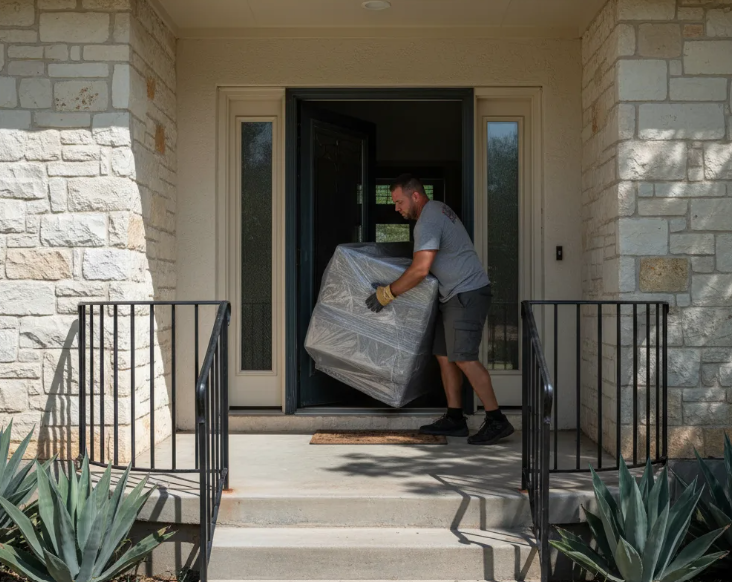
How Movers Handle High-Turnover Rental Communities
Southwest Austin's rental-heavy tracts, where nearly 79% of units are renter-occupied and the median age sits at 34.8, create a steady stream of complex-to-complex moves for movers near Southwest Austin. Movers who specialize in this corridor build their schedules and equipment around garden-style buildings, tight leasing windows, and renters who expect their furniture and electronics handled with care despite a fast turnaround.

Southwest Austin's apartment corridors, stretching along Brodie Lane, William Cannon, and the Escarpment area, see constant movement as leases end and residents relocate to a different unit in the same complex or a nearby property. With a median age of 34.8 and renters making up close to 79%of households in this tract, moving companies here are accustomed to serving young professionals who move more frequently than typical homeowners. This isn't the occasional cross-town move; it's a recurring pattern tied to twelve-month leases, job changes, and roommate shuffles.
Because so many of these moves happen between garden-styleunits, often within walking distance of each other, movers have adapted their approach. Instead of loading a truck for a long highway haul, crews frequentlyuse smaller box trucks or cargo vans that can navigate narrow parking lots and loading zones common at Southwest Austin complexes. Elevators are rare in thesetwo- and three-story buildings, so stair-carry experience matters more than dolly access. A well-prepared crew will scout unit numbers and building layoutsahead of time to avoid wasted trips during a tight moving window.
The median household income of $101,936 in this area also shapes how movers operate. Renters here often own higher-end furniture, large televisions, and home office equipment worth protecting, even during a short-distance move. Experienced movers bring furniture pads, corner protectors, and TV boxes as standard equipment rather than optional add-ons, because a five-minute drive across a complex still carries the same risk of dents and scratches as a longer haul if items aren't wrapped properly.
- Coordinating move-out and move-in times with property management to avoid overlapping elevator or loading dock reservations
- Using compact trucks suited for tight complex parking lots and narrow drive lanes
- Wrapping electronics, mattresses, and upholstered furniture even for short ntra-complex moves
- Building buffer time into the schedule for peak turnover months when multiple units in the same complex are moving simultaneously
- Confirming unit access codes, gate codes, and guest parking rules in advance to prevent delays on moving day
Peak lease-turnover season, typically late spring through early fall, puts extra pressure on scheduling. A renter moving from one Southwest Austin complex to another might find that both their old and new buildings have several units turning over the same week, which means loading docks and elevators get booked quickly. Movers who work this area regularly plan around these bottlenecks by locking in arrival windows early and communicating directly with on-site staff, helping renters avoid late fees or lockouts tied to strict move-out deadlines.
How Our Team Reaches the Southwest Austin Area
Our dispatch office sits at 901 S MoPac Expy, Suite 300, rightalong the MoPac corridor near Rollingwood and West Lake Hills. From there, ourcrews head south on MoPac Expressway, staying on the highway as it curves pastthe Loop 360 interchange and continues toward the US-290/71 split. Depending onthe exact Southwest Austin neighborhood, teams either exit onto William CannonDrive, Slaughter Lane, or Escarpment Boulevard to reach communities near CircleC Ranch, Shady Hollow, Legend Oaks, or the Manchaca Road corridor. This routekeeps crews on major arterials the entire way, which means fewer surprises andmore predictable arrival windows for customers.
Under normal traffic conditions, this drive typically takesaround 18 to 22 minutes, making Southwest Austin one of the more accessibleservice areas from our home base. During rush hour, especially the morning pushbetween 7:30 and 9:00 a.m. or the evening slowdown from 4:30 to 6:30 p.m., thatsame trip can stretch to 35 to 45 minutes as MoPac and the surrounding feederroads fill up with commuter traffic. We factor these fluctuations directly intoscheduling, and dispatch always builds in buffer time for any move bookedduring peak congestion windows so your crew still shows up within the agreedarrival slot.
Once crews arrive in Southwest Austin, the neighborhoodlayout itself adds a few extra steps that first-time visitors sometimesoverlook. Many condo complexes, townhome communities, and gated subdivisions inthis part of the city share common parking areas or require a call box orresident code to get past an entry gate. Because of this, our team routinelybuilds in extra check-in time before the scheduled start, rather than assuminga truck can pull straight up to the front door the moment it arrives.
- Crews confirm gate codes or call-ahead instructions with the customer the day before the move
- Extra time is scheduled for signing in with on-site property management where required
- Drivers scout shared lots in advance to identify the closest legal spot to the unit or entrance
- Loading zones and visitor spaces are used whenever available to minimize walking distance
The good news is that once inside a complex or subdivision, most Southwest Austin properties offer generous driveway space, wide streets, or dedicated loading areas, so trucks can usually park close to building entrances rather than blocks away. This is a real advantage compared to denser parts of central Austin, where street parking and permit restrictions often force longer carries. Shorter distances between the truck and the front door translate directly into faster unloading and a more efficient move overall.
Why Southwest Austin Has Almost No Single-Family Moves
If you are moving into or out of this part of Southwest Austin, chances are you are not backing a truck up to a garage. Local housing data shows that only 0.68% of homes in this tract are single-family detached houses, which means the overwhelming majority of moves here happen inside condo buildings, garden-style apartments, or converted multi-unit properties. Movers who work this zip code regularly know that the driveway-to-garage move is the exception, not the rule.
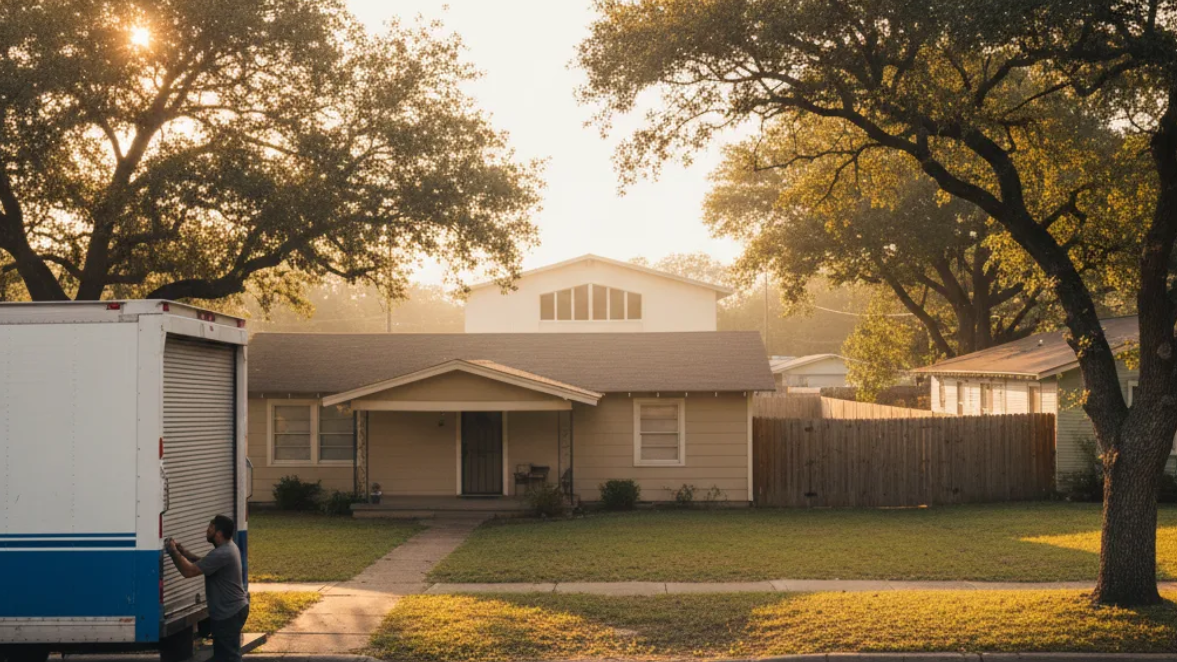
This matters because the moving process itself changes shape. Instead of loading a truck straight from an open garage, crews are shared entryways, numbered parking spots, and sometimes a single loading zone shared by dozens of units. A move that would take two hours in a detached home can stretch longer here simply because of building layout, not because of how much furniture is involved.
The financial picture adds another layer. Median home value in this tract sits at $462,500, a number that might suggest a neighborhood of owners protecting their property investment. Yet owner-occupied households makeup just 21.02% of the area. In practical terms, this is a rental-dominated pocket of Southwest Austin, where most moves are tenant turnovers rather than homeowner relocations. Movers often deal with property management offices, building access rules, and move-in or move-out windows dictated by a lease rather than a closing date.
Building age plays a role too. Typical housing stock here dates back to 1976, which means many structures were built before modern accessibility and elevator standards became common. Stairwells tend to be narrower, elevators smaller or nonexistent, and hallway turns tighter than what you would find in a property built in the last decade. Furniture that fits easily through a modern doorway can become a genuine challenge in a older building corridor.
- Expect a walk-through of stairwells and hallways before move day, not just the unit itself
- Ask whether the building has a freight elevator or if furniture will need to go up stairs
- Confirm shared loading area rules, including time limits and reserved parking for movers
- Measure doorways and hallway turns in advance for oversized items like sofas or dressers
- Plan for extra labor time rather than assuming a standard hourly estimate will apply
For anyone hiring help in this part of town, the practical takeaway is simple: the move is won or lost in the hallway, not the driveway. Am over experienced in this specific tract will ask about stairwell width, elevator availability, and loading dock access before ever discussing furniture inventory, because those details drive both the time and the price of the job far more than they would in a typical single-family neighborhood.
Frequently Asked Questions
How long does it take movers to reach Southwest Austin complexes near William Cannon?
Under normal traffic, crews reach Southwest Austin in about 18 to 22 minutes from our MoPac dispatch office. During rush hour, that trip can stretch to 35 to 45 minutes as feeder roads near Loop 360 fill up. We build buffer time into every schedule so your crew still arrives in your booked window.
Do movers handle stairs in the older garden-style buildings near Southwest Austin?
Yes, stair-carry experience is essential here since most buildings in this area are two- and three-story garden-style units without elevators. Many of these complexes date back to the 1970s, so crews are trained to navigate narrow stairwells and tight landings while protecting furniture and electronics along the way.
How do movers coordinate access at gated Southwest Austin rental communities?
We confirm gate codes and call-ahead instructions with you the day before your move. Since renters make up nearly 79% of households here, many complexes require sign-in with on-site management or a call box entry. Scouting parking and access points early keeps your move on schedule during busy turnover weeks.