

Movers Near the Barton Creek Greenbelt Trailhead in Austin




Moving Apartments and Condos Built in the 1970s
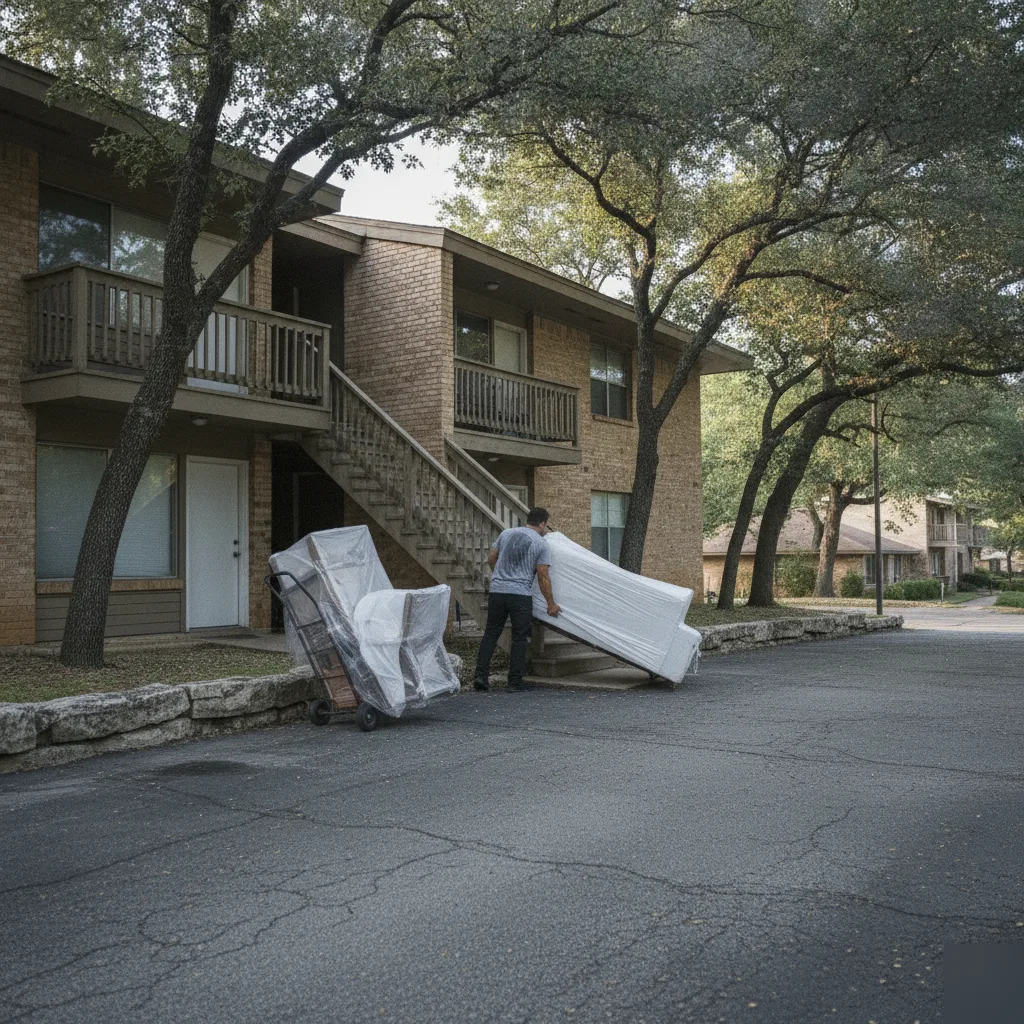
Most buildings near this trailhead went up around 1976. Almost none are single-family houses. Narrow stairwells, older parking layouts, units where a couch just won't fit through the front door the easy way. We've hauled enough furniture through these complexes to know which building has the tight turn on the second floor.
Drive the loop around the Greenbelt and you'll notice something right away. These aren't newer builds. The median year built here is 1976, and it shows in the bones of these complexes. Low-rise brick buildings with outdoor stairs. Units stacked two or three high. Hallways built for smaller furniture than what people move in today.

Less than one percent of homes in this tract are single-family houses. So when we get a call from someone near the trail, we already know what we're walking into before the truck leaves our lot. It's almost always a condo or apartment move, not a driveway-and-garage situation.
And that changes how we plan the job. Older 1970s stair wells don't always give you a clean path for a dresser or a sectional sofa. Some buildings nearby have shared parking lots with no dedicated loading zone, so our crew shows up knowing to grab a spot early and move fast. We've learned which complexes have elevators and which don't. That matters a lot on the third floor.
- Low-rise condo buildings from the mid-1970s with outdoor stairwells
- Tight interior hallways not built for modern furniture sizes
- Shared parking lots with limited loading space near unit entrances
- A mix of long-term renters and owners who've held units for years
- Units with original closets and layouts smaller than newer Austin builds
Nearly 79 percent of homes around here are renter-occupied. That tells us something too. Moving day often comes with a tighter dead line than a home owner move. Lease dates don't bend. We work around that.
One thing we hear a lot near the trail is worry about scratching walls in these older hallways. Fair concern. The paint and trim in a lot of these buildings has been through decades of move-ins and move-outs. Our crew pads corners and door frames before anything heavy comes through - we've seen how easily a 1970s hallway wall dents if you're not careful.
We handle apartment moving and furniture moving jobs in this stretch of South Austin every week. That's not a sales line. It's just where our schedule keeps landing us.
How Our Team Reaches the Barton Creek Greenbelt Area
Our crews start every job in this area from our office at901 S MoPac Expy Suite 300, room 317, in Austin. From there, the fastest route heads south on MoPac Expressway (Loop 1) toward Barton Skyway, then exits toward Loop 360 or Camp Craft Road depending on the drop-off point. Crews merge onto Barton Skyway, follow it to Zilker Park or the Spyglass Drive access points, then turn onto the smaller residential streets that lead to the trail itself. The drive stays under fifteen minutes in most non-peak conditions - the route avoids downtown congestion and sticks to arterial roads that move steady through South Austin.
Because the trip stays short, our dispatch team can give customers a real arrival window instead of a vague estimate. MoPac south bound can slow near the Barton Skyway interchange during rush hour, so jobs scheduled for early morning or midday run closest to the quoted time. For afternoon moves, we build in a small buffer for typical South Austin commuter flow. We'd rather pad the estimate than over-promise a tight window.
Once crews approach the greenbelt area, the terrain changes. Wide arterial roads give way to narrow residential streets and older apartment complexes, many built before modern loading zones were standard. Driveways near Spyglass, Barton Hills, and the streets closest to the main trail access points are often tight, curved, or shared with multiple units. Drivers watch for low-hanging tree limbs, tight turning radii, and shared driveways that need careful backing instead of a straight pull-in.
- Crews scout narrow apartment driveways and shared loading areas before backing in the truck
- Drivers identify the nearest legal curb space when a dedicated loading zone is not available
- Teams check trail parking lot activity, since overflow trail traffic can spill into nearby residential streets
- Dispatch confirms drop-off spots with the customer ahead of time to avoid last-minute circling
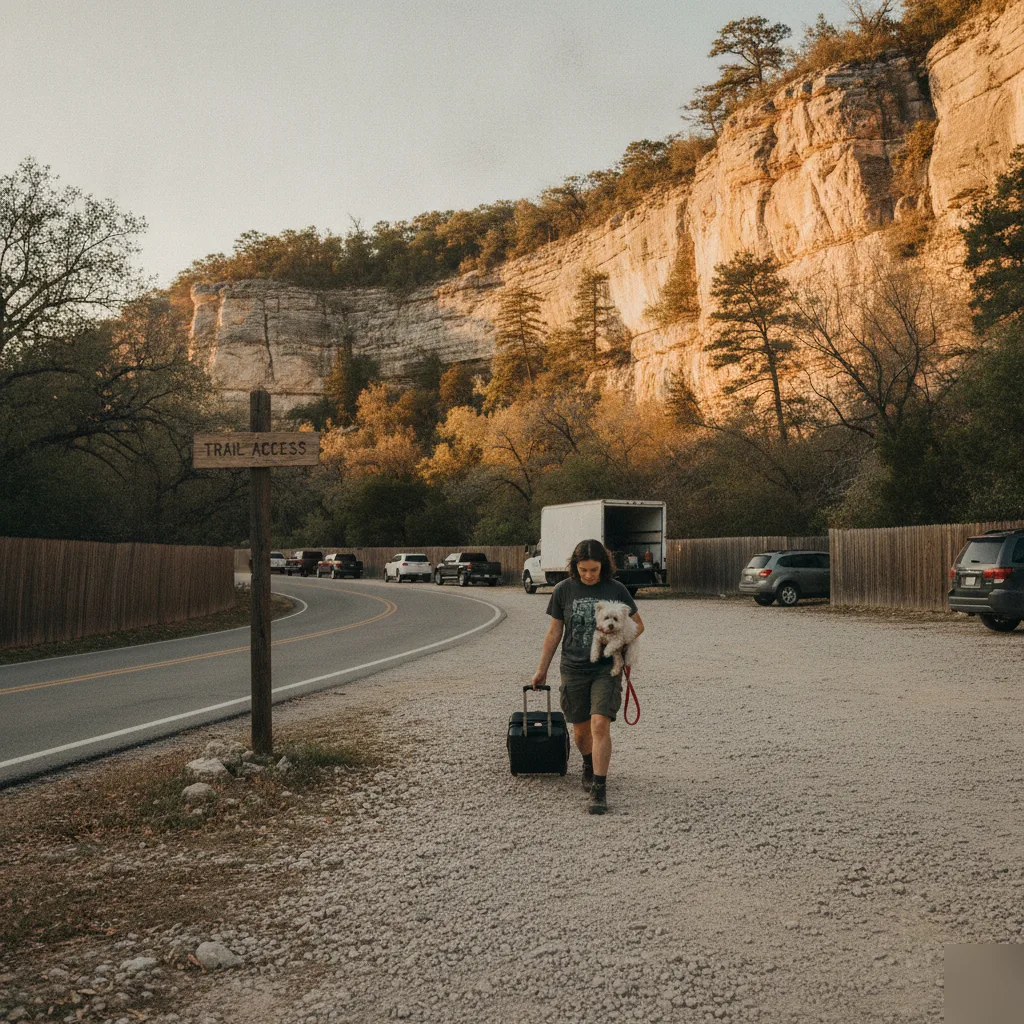
Weekend moves take extra planning. The Greenbelt pulls heavy foot and vehicle traffic from hikers, climbers, and swimmers heading to Twin Falls or Sculpture Falls. Street parking near the main trail can fill up by mid-morning on Saturdays and Sundays, which limits where a truck can safely stage. Crews call ahead or check the location the day before to confirm whether a driveway, loading zone, or side street will work for that address. That advance planning keeps the move on schedule even when trail visitors crowd the block.
What Renters Near the Greenbelt Should Know Before Moving
The neighborhoods around this stretch of the Greenbelt look and feel different from a typical Austin subdivision. That difference matters when you're planning a move. Nearly 79 percent of homes in this pocket of the city are renter-occupied, which means most moving days here involve a lease, a property manager, and a move-out deadline rather than a flexible closing date. Movers who work this area regularly know to ask about lease terms first. A missed move-out window can mean daily penalty fees from a landlord who already has the next tenant lined up.
Local home values tell part of the story too. The median home value here sits around 462,500 dollars, a figure that reflects the newer condo and apartment developments filling in the area over the past two decades. These newer buildings often have modern freight elevators, wide hallways, and dedicated loading zones - that makes a move noticeably smoother than older properties nearby.
Not every building near the Greenbelt is new construction, though. Some properties still standing were built around 1976. Many of those older structures were never updated with resident sized elevators. In several cases, movers near the Barton Creek Greenbelt handle stairwell only access, tight hallway turns, and doorways that weren't designed with modern furniture in mind. If you live in one of these older buildings, tell your moving company in advance. way they bring the right dollies, straps, and crew size instead of finding out on move day.
- Confirm whether your building has a passenger or freight elevator, or if movers will need to use stairs
- Ask your property manager about reserved loading zones or required move-in and move-out time windows
- Check your lease for move-out penalty clauses tied to specific dates or times
- Measure doorways and stairwells in older buildings before moving day to avoid last-minute furniture disassembly
Timing your move around neighborhood traffic is another local detail worth planning for. Streets near the trail see heavy foot and bike traffic from hikers and cyclists heading into the Greenbelt, especially Saturday and Sunday mornings. That congestion can slow loading and unloading on narrow residential streets with limited curb space. Scheduling a weekday move, or a weekend move that starts in the early afternoon after the morning trail rush thins out, can shave real time off your crew's hours and keep your bill lower.
So many moves here are lease-driven, timelines run tighter than in owner-occupied neighborhoods where sellers and buyers negotiate flexible closing dates. Renters typically have a hard move-out date set by one lease and a hard move-in date set by the next, leaving little room for delays. Booking movers familiar with this Greenbelt corridor, its building quirks, and its weekend trail traffic gives renters a better shot at hitting both deadlines without added stress or fees.
Frequently Asked Questions
How long does it take your crew to reach the Barton Creek Greenbelt Trailhead area?
Most jobs near the trailhead take under fifteen minutes from our South MoPac office. We head south on MoPac to Barton Skyway, then into the residential streets near the trail. That short drive lets our dispatch team give you a real arrival window instead of a rough guess, even during typical South Austin traffic.
What should renters near the Greenbelt know before their move?
Nearly 79 percent of homes in this area are renter-occupied, so lease deadlines matter more than closing dates. We recommend confirming your move-out date with your property manager early. Most buildings here date to1976, with narrow stairwells and hallways, so we plan furniture routes ahead of time to avoid delays.
Where do you park the truck when moving near the Greenbelt trail?
We scout each address ahead of time since parking near the trailhead fills fast on weekends. Hikers and swimmers headed to the falls often crowd the streets by mid-morning. Our crew confirms a driveway, loading zone, or nearby curb spot with you the day before, so the truck has room to load without circling the block.