

Local Moving Services in Austin TX Stress-Free Relocation Across Every Neighborhood
In Austin, moving between neighborhoods often involves navigating steep hills, narrow streets, and unpredictable weather. We provide local moving services for homes, apartments, and condos within Travis County. Same-day quotes are available, and most local moves get scheduled within 3–5 days. Our professional moving company ensures safe transport of your belongings across Austin's diverse residential areas.




Google Reviews
518 Reviews | 4.9 Avg Rating
Austin Homes Require Different Packing Approaches Based on Room Function
Kitchen and garage spaces contain the most items requiring specialized packing materials. Families moving from single-family homes in Circle C, Avery Ranch, or Mueller benefit from a room-by-room packing strategy that protects belongings and saves time. Experienced local movers understand how to tackle these spaces efficiently.
Austin's limestone soil means basements are rare here. Most storage happens in garages where heat affects what can be stored. We organize packing by room function so fragile kitchen items get wrapped separately from garage tools and sporting equipment.
Living rooms and bedrooms need fewer boxes than kitchens. Dishes, glassware, and small appliances require bubble wrap and divided boxes. Clothing and linens can go into wardrobe boxes or large cartons without much protection.
Garage items like paint cans and chemicals cannot travel in moving trucks. We help you identify what needs separate transport before moving day. This approach prevents delays and keeps your move on schedule.


Starting Your Packing Timeline Protects Fragile Items in Texas Heat
Residents scheduling summer moves when Austin temperatures exceed 100°F need to plan packing carefully. Early packing prevents last-minute rushing that damages belongings. Our residential moving service helps you protect your items and reduce stress by starting weeks before moving day.
Boxes left in garages or storage units during Austin summers can weaken. Cardboard loses strength when exposed to heat and humidity. Pack temperature-sensitive items closer to move day so they stay in climate-controlled spaces.
Begin with items you rarely use. Storage areas and seasonal decorations can be packed 6–8 weeks out. Main living spaces should be packed 2–3 weeks before your move date.
Save daily essentials for the final 48 hours. Medications, toiletries, and phone chargers stay accessible. We recommend keeping one set of dishes and basic cooking tools until the last day.
How soon before a move should you start packing in Austin TX?
Most Austin residents should begin packing 4–6 weeks before moving day to account for Texas heat and scheduling demands during peak season.
- Start with storage areas and seasonal items first (8 weeks out)
- Pack main living spaces 2–3 weeks before your move date
- Leave daily essentials and temperature-sensitive items for final 48 hours
Professional Movers Handle Stairs and Narrow Spaces in Older Austin Neighborhoods
Residents moving to or from historic homes in Hyde Park, Clarksville, or Bouldin Creek face unique challenges. Many Austin bungalows built before 1950 have narrow doorways and steep front steps that require furniture disassembly. Trained crews protect walls, railings, and hardwood floors during furniture removal.
DIY moves in these neighborhoods often result in scratched floors or damaged door frames. Original hardwood and plaster walls are expensive to repair. We bring padding, dollies, and furniture sliders designed for tight spaces.
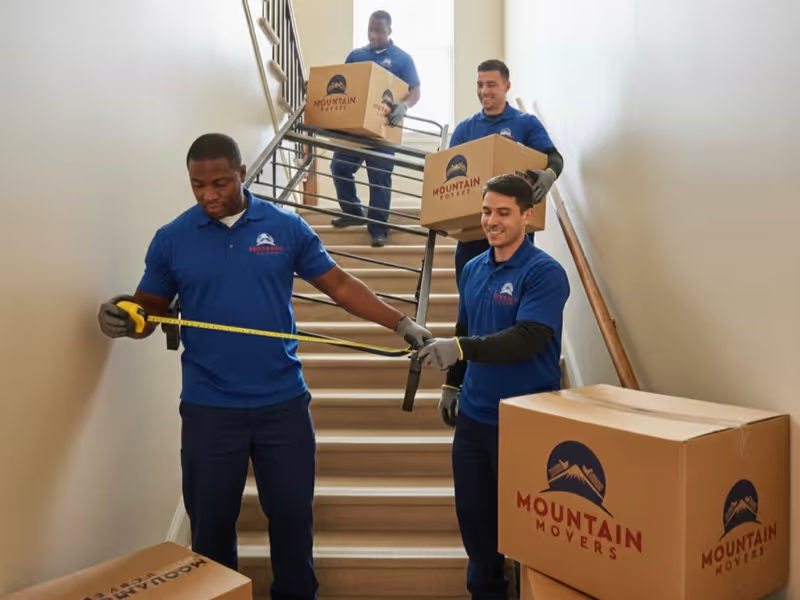
Staircases in older homes were built for smaller furniture. Modern couches and mattresses often won't fit around corners without professional maneuvering. Our team measures doorways and stairwells before moving day to plan the safest route.
We disassemble bed frames, dining tables, and large dressers when needed. This protects both your furniture and your home's interior. Everything gets reassembled at your new location so you can use it right away.
Proper Packing Order Speeds Up Loading Day in Austin's Multi-Story Buildings
Apartment and condo residents in downtown Austin, Domain, or South Congress need strategic packing to reduce elevator reservation time and building access conflicts. High-rise buildings in downtown Austin often require certificate of insurance and advance scheduling for freight elevator use.
Pack by room and label every box with its destination. This system helps movers load the truck efficiently and unload faster at your new place. Clear labels prevent confusion when multiple boxes look identical.
Heavy items go on the bottom of each stack. Books, dishes, and small appliances should be in smaller boxes. Lighter items like bedding and pillows can fill larger boxes without becoming too heavy to carry.
Reserve your building's elevator as soon as you have a moving date. Many downtown properties require 48-72 hours notice. We coordinate with building management to meet their insurance and timing requirements.
Keep one box of essentials separate from the truck load. Include items you need immediately like toilet paper, soap, and phone chargers. This box travels with you so you have necessities before unpacking begins.
Certain Household Items Cannot Travel in Moving Trucks Under Texas Regulations
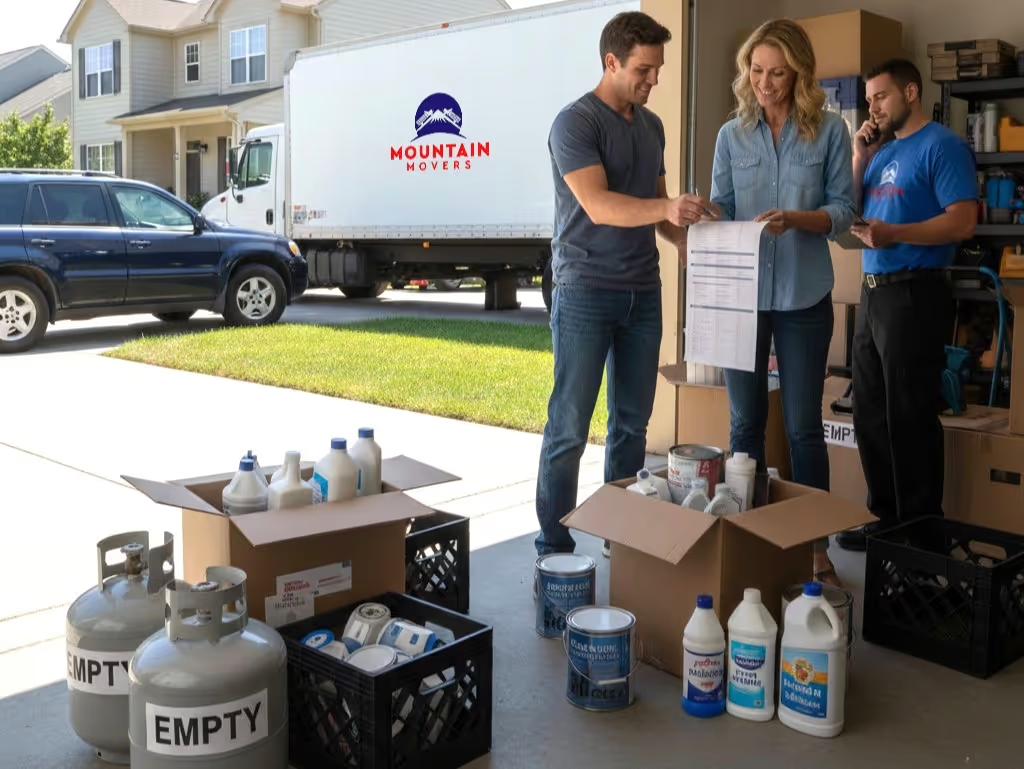
All Austin residents preparing for local moves need to know what to transport separately to prevent delays on moving day. Texas heat intensifies hazards for propane tanks, cleaning chemicals, and aerosols that cannot ride in enclosed trucks. Understanding these restrictions helps you plan ahead.
Propane tanks for grills must be emptied and disconnected. Even small amounts of propane become dangerous in hot, enclosed spaces. We recommend using up or donating propane before your move.
Paint, solvents, and household cleaners fall under hazardous material rules. Partially used cans should be disposed of properly or moved in your personal vehicle. Hardware stores and recycling centers accept many of these items.
Firearms and ammunition require separate transport by the owner. Texas law prohibits moving companies from handling weapons. Pack these items securely in your car with proper safety measures.
Perishable food spoils quickly in Texas heat. Empty your refrigerator 24 hours before moving day and plan meals accordingly. Non-perishable pantry items can go in boxes, but cold items need coolers for transport.
Frequently Asked Questions
What room should Austin residents pack first when moving?
Austin residents should pack seldom-used rooms first, such as guest bedrooms, storage areas, or garages, to maintain daily routines during the moving process.
Starting with rooms you use least frequently allows you to make progress without disrupting everyday life. Guest rooms, storage closets, garages, and seasonal item areas are ideal starting points. Next, tackle formal dining rooms, home offices, and decorative spaces. Save essential areas like kitchens, bathrooms, and primary bedrooms for last so your household can function normally until moving day arrives.
Do moving companies in Austin pack kitchen items?
Yes, most moving companies in Austin offer full or partial packing services that include kitchen items like dishes, glassware, and appliances.
Professional Austin movers provide packing services tailored to your needs, from full-service packing to kitchen-only assistance. They use specialized materials like dish boxes, cell dividers, and cushioned wrapping to protect fragile items such as glassware, china, and small appliances. Hiring professionals to pack your kitchen saves time, reduces breakage risk, and ensures items are organized for easy unpacking at your new home.
How much advance notice do Austin movers need?
Austin movers typically need 2-3 weeks advance notice for weekday moves during off-peak months, while peak season from May through August requires 4-6 weeks notice.
Booking timeframes for Austin movers vary significantly based on season and demand patterns. For weekday moves during off-peak months (September through April), booking 2-3 weeks in advance usually provides good availability and competitive rates. However, peak moving season from May through August requires substantially more planning, with 4-6 weeks advance notice recommended in Austin as families coordinate relocations around school schedules and summer weather. Weekend moves always require earlier booking regardless of season since Saturdays represent the highest-demand moving days. Last-minute bookings during peak season often result in limited availability, higher prices, or settling for less-reputable companies. Early booking secures your preferred date, better rates, and ensures you work with established, professional Austin moving companies.
How does Austin heat affect moving day scheduling?
Austin's extreme summer heat causes most local movers to start before 8 AM to avoid dangerous midday temperatures above 95°F that threaten both crew safety and belongings.
Austin's intense summer heat significantly impacts moving day scheduling and timing strategies. Most professional Austin movers schedule starts before 8 AM during summer months (June through September) to complete the majority of heavy lifting before temperatures soar above 95°F. Early morning starts protect your belongings from heat damage, particularly temperature-sensitive items like electronics, artwork, candles, and vinyl records. More importantly, early scheduling protects moving crews from dangerous heat exhaustion and heat stroke conditions that make physical labor hazardous during midday hours. Some movers may even recommend splitting large moves across multiple early-morning sessions during peak summer heat rather than risking afternoon work in extreme temperatures exceeding 100°F.
What items cannot go in a moving truck in Texas?
Propane tanks, paint, firearms, ammunition, and perishable food cannot go in Texas moving trucks due to safety hazards, especially during hot weather when truck temperatures can exceed 120°F.
Texas Department of Transportation rules prohibit certain items from being transported in moving trucks due to significant safety risks. Propane tanks, paint, cleaning chemicals, aerosols, firearms, ammunition, and perishable food must be transported separately in your personal vehicle under Texas regulations. These items pose serious safety hazards in enclosed truck environments, particularly during Austin's hot weather when interior truck temperatures can exceed 120°F, creating explosion or fire risks with flammable materials. Perishable foods spoil quickly in these conditions and can contaminate other belongings. Additionally, hazardous materials like gasoline, pesticides, and explosives are strictly forbidden. Always transport these prohibited items yourself and consult your mover's specific restricted items list during the estimate.
Which Austin neighborhoods have the most moving restrictions?
Downtown Austin, historic districts, and HOA-governed neighborhoods like Tarrytown, Hyde Park, and West Lake Hills often have the most moving restrictions.
High-density areas such as downtown Austin condos and apartments frequently require elevator reservations, loading dock scheduling, and specific moving hours. Historic neighborhoods like Hyde Park and Tarrytown may have street parking limitations and permit requirements. Suburban communities with HOAs, including those in West Lake Hills, Circle C, and Steiner Ranch, often enforce move-in windows, noise restrictions, and common area usage rules that require advance coordination.