

Business Relocation Services in Austin Commercial Moves That Keep Your Company Running
In Austin, business relocation means moving your entire operation. This includes equipment, inventory, furniture, and files. We help you move with minimal downtime. This page covers office moves, retail relocations, warehouse transfers, and equipment transport across Travis County. Professional movers plan your move timeline, protect your assets, and set up operations quickly. Expert planning keeps your business open to customers and employees during the move.





Google Reviews
518 Reviews | 4.9 Avg Rating
Business Relocation Requires Detailed Pre-Move Planning and Asset Documentation
Office managers, retail owners, and warehouse operators in Austin need a clear plan before moving day. Professional assessment creates a move timeline. Our Austin Movers identify high-value items and coordinate with building management. This includes elevator reservations and loading dock access. You get a detailed list that tracks every desk, file cabinet, and piece of equipment.
Austin's multi-story downtown buildings require advance scheduling. Freight elevators need reservations. Weekend moves avoid disrupting other tenants during business hours. Austin Movers work with property managers to reserve loading zones on Congress Avenue or in the Warehouse District. Street access fills quickly in these areas. Pre-move planning accounts for parking restrictions near Rainey Street offices. We also plan for tight alley access behind South Congress retail spaces.
Asset documentation protects your investment. We record the condition of furniture and equipment before transport. Photographs and written notes create a baseline for insurance purposes. Your team can verify that everything arrives intact. This process identifies items that need custom crating. Conference room displays or medical imaging equipment get special protection. Movers arrive prepared with the right materials.


Commercial Moving Protects Critical Equipment and Maintains Business Continuity
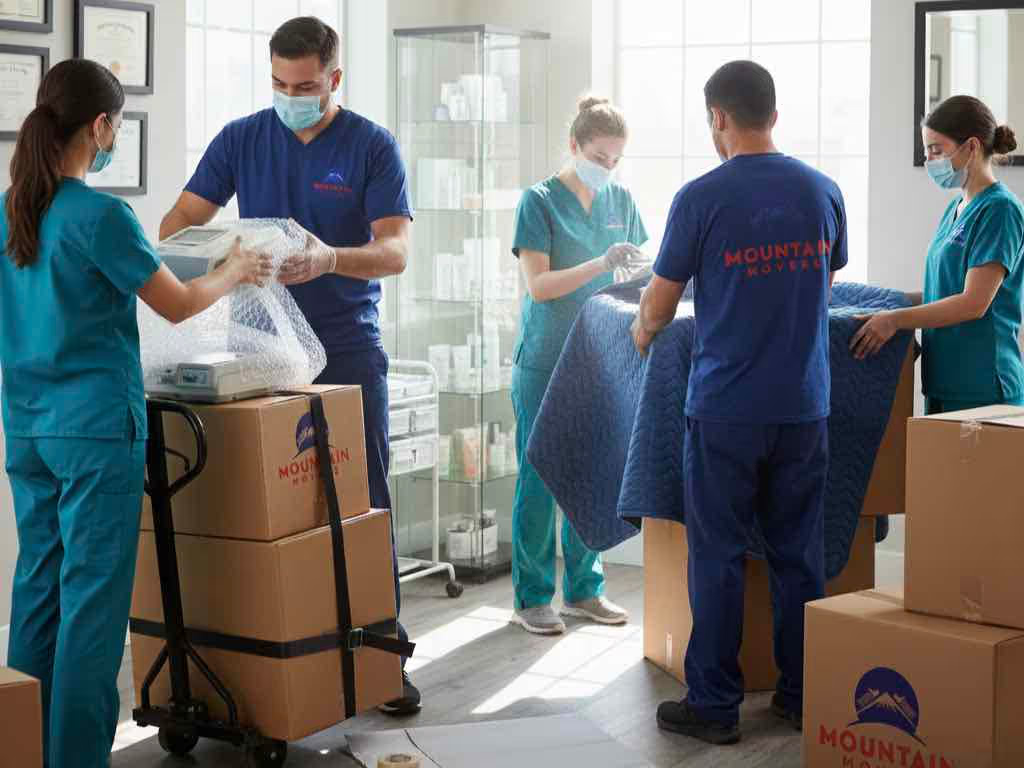
Tech companies, medical offices, and restaurants in Austin cannot afford equipment damage. Extended closures cost money and customers. Our commercial moving services Austin use specialized packing materials to protect your items during transport. Climate-controlled trucks keep electronics safe. Trained crews handle servers, medical devices, and commercial kitchen equipment carefully. Our commercial moving services Austin movers use anti-static wrap for electronics. Padded blankets protect glass displays. Secure strapping systems prevent shifting during transit.
Austin's summer heat requires special care. Days reach 100°+ from June through September. Temperature-controlled vehicles protect electronics and sensitive inventory. Standard moving trucks get too hot inside. Server racks and computer systems need stable temperatures. The drive from your Domain office to downtown Austin stays cool. Medical equipment with sensors needs climate control. This maintains accuracy after the move.
Business continuity planning keeps your company running. Movers schedule transport in phases. Critical departments stay operational while others relocate. Your customer service team continues taking calls. Warehouse staff oversees the loading process. This works well for growing businesses. Moving from smaller East Austin spaces to larger airport facilities takes time. Operations cannot pause for multiple days.
Pre-Move Audits Identify Items That Need Special Handling or Temporary Storage
Growing businesses in Austin often face timing challenges. Gap periods between spaces require planning. Downsizing square footage needs organization. Pre-move audits help with these situations. We separate immediate-need items from archive materials. Storage solutions get coordinated. Organized labeling systems make unpacking easy. You decide which furniture moves to the new location. Other items go into short-term storage until needed.
East Austin's industrial warehouse districts offer short-term storage options. Businesses move between South Congress retail spaces and Domain office locations. Your new lease starts two weeks after your current space ends. Secure storage bridges the gap. You avoid rushing the move or paying double rent. Climate-controlled units protect sensitive documents, electronics, and inventory. Standard storage gets too hot during Austin summers.
Special handling identification prevents damage to valuable items. Restaurant owners learn which kitchen equipment needs custom crating. Other pieces only need standard padding. Medical offices relocate diagnostic machines. These require specialized transport certifications. Retail businesses protect display cases and point-of-sale systems. These cost thousands to replace. Each item gets appropriate packing materials.


Professional Movers Disassemble Workstations and Label Every Component for Quick Setup
Office relocations in Austin's downtown, Barton Creek, and Northwest Hills need quick turnaround. Same-week operational status minimizes revenue loss. Systematic disassembly uses photo documentation. Labeled hardware bags keep parts organized. Numbered components ensure correct rebuilding at the new location. Movers photograph each workstation before taking it apart. Your team sees exactly how the setup looked at the old office.
Austin's tech sector uses modular workstations and standing desks. Proper disassembly prevents damage during transport. Narrow office building corridors require careful handling. Adjustable-height desks have motors and control panels. These disconnect carefully to avoid electrical issues. Cubicle panels stack securely on dollies. This protects fabric surfaces and mounting hardware. Every screw, bracket, and connector goes into a labeled bag. The bag tapes to the corresponding furniture piece.
Color-coded labels match workstations to new floor plan spots. Your office manager provides a layout. The layout shows where each desk belongs. Movers mark components accordingly. This prevents confusion when reassembling 20 workstations. A new Arboretum office space needs organization. Employees return to find desks in the right locations. Monitors, keyboards, and personal items are ready for immediate use.
Post-Move Setup Includes Furniture Assembly and Basic Connectivity Checks
Businesses in Austin need functional workspaces from day one. New Arboretum, Mueller, or Riverside locations require quick setup. Movers reassemble furniture per floor plan. Basic equipment gets connected. Workstations match pre-move configuration before final walkthrough. Desks go back together with all hardware secured. File cabinets return to designated spots. Conference room tables sit level and stable.
Austin's coworking spaces require precise furniture placement. Shared office environments maximize square footage. Accessibility compliance must be maintained. Movers position desks to allow clear pathways between workstations. Emergency exits remain unobstructed. Conference rooms get tables centered under lighting fixtures. Reception areas get furniture arranged for professional first impressions. Clients visiting your new location see quality.
Basic connectivity checks confirm proper setup. Computers power on correctly. Phones have dial tones. Printers connect to networks after reassembly. Movers do not handle complex IT setup or software configuration. Physical connections get verified as working correctly. You discover any damaged cables or loose connections during the walkthrough. This happens before employees arrive Monday morning. This final step gives you confidence. Your business opens on schedule without technical surprises.

Scheduled Maintenance Moves Help Growing Companies Expand Without Long Closures
Expanding businesses in Austin benefit from flexible moving services. Planning phased moves or adding satellite locations requires coordination. Recurring moving services happen during off-hours or weekends. This allows gradual expansion into larger spaces. Daily operations continue normally. Your company adds a second location in Round Rock. The original South Austin office keeps running. You can move one department at a time. This avoids shutting down completely.
Austin's rapid commercial growth creates relocation demand. Areas like Cedar Park and Round Rock see company upgrades. Businesses move from startup spaces to established offices. Tech companies outgrow original 2,000-square-foot spaces. They lease 10,000-square-foot buildings nearby. Moving everything in one weekend risks chaos. Scheduled moves transfer accounting one week. Sales moves the next week. Operations moves last. Each department settles into the new space before the next group arrives.
Maintenance moves handle seasonal inventory transfers. Retail businesses with multiple Austin locations need flexibility. You move excess stock from a busy Domain shopping center store. It goes to a quieter South Lamar location during slow months. The process reverses before holiday shopping peaks. Restaurant groups relocate kitchen equipment between locations. This helps with renovations or menu changes. These planned transfers use professional coordination. They happen on a smaller, more flexible schedule. This fits your business rhythm.
Frequently Asked Questions
How long does a business relocation take in Austin?
Most Austin office moves under 5,000 square feet complete in 1-2 days including setup, while larger warehouses or multi-floor operations may need 3-5 days depending on inventory volume and equipment complexity.
Business relocation timelines in Austin vary significantly based on office size, equipment complexity, and operational requirements. Small professional offices with 10-15 workstations often finish in a single day when movers start early and your team prepares properly by backing up data and organizing items. Most Austin office moves under 5,000 square feet complete within 1-2 days including furniture setup and equipment placement. Larger warehouses, multi-floor operations, or businesses with extensive inventory may require 3-5 days for safe, organized relocation. Retail relocations take longer due to extensive inventory that must be packed, transported, and merchandised at the new location. Professional Austin movers provide realistic timeline estimates during the planning phase based on your specific business needs.
When is the best time to schedule a business move in Austin?
Weekends and after-hours moves minimize business disruption in Austin, while avoiding August for electronics-heavy moves and December for retail relocations ensures better conditions and availability.
Timing your Austin business move strategically minimizes operational disruption and takes advantage of favorable conditions. Weekend moves and after-hours relocations allow businesses to move without interrupting daily operations or losing revenue. Avoid August for electronics-heavy moves since peak heat season creates risks for sensitive equipment during transport. Retail businesses should skip December relocations as holiday sales drive critical revenue during this period. Friday evening through Sunday afternoon provides the longest moving window for businesses that need extended time. Office moves work well during this timeframe since most operations pause for the weekend. Restaurants often relocate on Mondays when they're traditionally closed. Consider your specific business cycle, customer impact, and seasonal factors when scheduling with your Austin moving company to ensure minimal disruption.
Do I need special insurance for commercial moves in Austin?
Moving companies provide basic coverage for business relocations, but businesses with high-value equipment, sensitive documents, or specialized assets should purchase additional commercial moving insurance beyond standard limits.
Standard moving company coverage for Austin business relocations may not adequately protect high-value commercial assets and specialized equipment. Moving companies provide basic liability coverage, but businesses should carefully check coverage limits against their actual equipment value, particularly for expensive computers, servers, medical equipment, or manufacturing machinery. Sensitive documents, proprietary materials, and irreplaceable business records require special attention and possibly separate insurance riders. Consider purchasing additional commercial moving insurance or verifying whether your existing business property insurance extends coverage during relocation. High-value items like specialized medical equipment, laboratory instruments, or expensive technology may need declared value coverage or third-party insurance policies. Discuss your specific assets and coverage needs with both your moving company and insurance agent before the relocation to ensure adequate protection.
Do Austin moving companies handle IT equipment during business relocations?
Yes, professional Austin movers transport computers, servers, and electronics safely using anti-static materials and climate control, though businesses should back up data first and have IT staff handle sensitive disconnections and reconnections.
Professional Austin moving companies are experienced in handling IT equipment during business relocations with specialized care and materials. Movers use anti-static packing materials, climate-controlled trucks, and custom crating to protect computers, servers, monitors, desktop towers, and peripherals during transport. However, businesses must back up all critical data before the move as a precaution against any potential issues. Your IT staff should handle sensitive server disconnections, cable labeling, and network configurations, providing documentation for proper reconnection at the new location. Movers carefully pack monitors, desktop equipment, and peripherals, ensuring everything arrives safely. This collaborative approach between your technology team and professional movers protects your valuable IT infrastructure while maintaining data security throughout the relocation process.
Can movers relocate a business across Austin in one day?
Same-day business moves work for small Austin offices under 2,000 square feet with minimal equipment, while larger operations or cross-town relocations typically need 2-day schedules for safe transport and proper setup.
Whether Austin movers can complete your business relocation in one day depends on several critical factors. Small offices under 2,000 square feet with minimal equipment can often complete same-day moves, especially for shorter distances within downtown Austin that take less time for transport. However, larger operations with extensive equipment require more time for safe packing, transport, and setup. Cross-town moves from South Austin to Round Rock typically need 2-day schedules to ensure safe transport and proper setup without rushing. Distance significantly affects timing—moving three miles within downtown Austin takes considerably less time than a 25-mile relocation from Lakeway to Pflugerville. Your professional mover provides realistic timeline estimates during planning based on your specific situation, square footage, equipment volume, and distance requirements.
What Austin neighborhoods require special permits for business moves?
Downtown Austin, South Congress, and East Sixth Street often require special parking permits for business moves due to limited street access, metered parking, and high traffic congestion in commercial districts.
Certain Austin neighborhoods present permitting challenges for business relocations that require advance planning and coordination. Downtown Austin, South Congress, and East Sixth Street frequently need parking permits to reserve street space for moving trucks, as these areas feature metered parking, limited loading zones, and constant traffic congestion. The Warehouse District and Rainey Street also require permits for commercial moves due to narrow streets and parking restrictions. Your moving company should handle permit applications with the City of Austin, typically requiring 48-72 hours advance notice. Some buildings in these areas have specific loading dock hours or require certificate of insurance documentation before allowing moving trucks on property. Providing your mover with complete building and location details during the estimate ensures they secure all necessary permits and avoid delays or fines on moving day.