

How to Pack Lamps for Moving





How to Pack Lamps for Moving: The Austin Mover’s Guide to Protecting Fragile Lighting

Lamps combine glass, fabric, metal and electrical parts — which makes them easy to damage during a move. This practical guide walks you through the supplies, step-by-step packing methods, and simple rules for when to call in professionals so your sentimental or valuable lighting arrives safely. You’ll learn what to buy, how to disassemble and protect bases, harps, shades and bulbs, and how to label and load boxes to reduce breakage and wiring issues. If you’d rather have pros handle it, Mountain Movers ATX is a family-owned Austin mover that offers packing services and can provide a free quote. Read on for risk-reduction tips, checklists, detailed packing sequences for table and floor lamps, and advice on contacting local packers when items are irreplaceable.
Why Is Proper Lamp Packing Essential for Your Austin Move?
Packing lamps correctly reduces breakage, prevents wiring damage, and avoids costly replacements. Lamps combine parts that respond differently to shock — glass shades, ceramic or metal bases, and exposed bulbs — so the right packing isolates each component and limits movement. Spending a little time and using proper materials saves money, reduces last-minute repairs, and lowers the chance of unsafe exposed wiring during unloading. Knowing the common risks and how to mitigate them sets you up for a smoother, safer move.
Careful packing matters — research on household goods shipments shows how packing choices impact loss and damage during transport.
Household Goods Moving: Reducing Loss & Damage Claims
This study compares the code 4 shipping method used for overseas household moves with commercial industry practices. It finds that adding the loose-stow seavan option could lower loss and damage claims by improving how items are stowed and secured. The paper notes benefits such as shipping cost savings, fewer damage claims, better customer satisfaction, and more leverage over carriers when quality falls short.
The Household Goods Shipment and Storage Program: The Problem of Loss and Damage Occurring in Code 4 Shipments., 1995
What Risks Do Fragile Lamps Face During Moving?
Lamps face several common hazards on moving day. Direct impacts and compression can shatter glass shades or crack ceramic bases. Long drives and vibration can loosen harps, finials and sockets, stressing internal wiring. Secondary risks include rain or moisture during loading and abrasion from unprotected surfaces that damage finishes or fabric shades. Even a small crack near a socket can make a lamp unsafe. The best defense is careful disassembly, targeted cushioning, and clear labels so each piece gets the right protection.
How Does Professional Packing Ensure Lamp Safety?
Professional packers use repeatable steps — disassembly, custom cushioning, crating when needed, and smart truck placement — to cut risk beyond typical DIY methods. They pick materials and techniques that limit point loads and movement (layered protection, boxes sized to the item, internal bracing) and load the truck to avoid crushing. Trained crews also inventory and label items to speed safe unpacking. For antiques or very valuable lamps, professional packing can be worth the cost because it combines the right materials with consistent handling that’s hard to match at home.
What Are the Essential Packing Materials for Safely Moving Lamps?

A compact kit will protect a lamp from base to bulb: sturdy boxes, layered cushioning, secure closures, and tools for disassembly. Balance rigidity (double-wall boxes or lamp boxes) with flexible cushioning (bubble wrap, foam) and finish supplies (packing tape, labels, small bags for hardware). Match materials to components — rigid support for bases, acid-free paper for fabric shades, dividers for bulbs — to reduce surface damage and internal stress. Below is a quick checklist and a compact table linking items to their purpose and suggested specs.
Essential packing materials for lamps and why each matters:
- Double-walled boxes: Rigid protection that resists crushing when boxes are stacked.
- Bubble wrap (varied thickness): Cushions impacts and protects curved surfaces.
- Packing paper (acid-free for fabrics): Prevents creases and keeps fabric shades from staining.
- Foam inserts or packing peanuts: Fill voids so parts don’t shift in the box.
- Packing tape, labels, and small plastic bags: Keep hardware together and identify contents and orientation.
Use this list to layer protection so each lamp component gets the right treatment before you move on to the step-by-step packing instructions.
Packing materials mapped to purpose and specification:
Start with a sturdy box and add cushioning layers tailored to each lamp part.
Which Packing Supplies Are Best for Lamps and Lampshades?
Match supplies to the part to get the best protection for the least cost. For bases, wrap tightly with paper and bubble wrap and use a snug box to prevent tipping. For glass or delicate shades, use multiple bubble-wrap layers and foam rings or inserts to support the rim and crown. Fabric shades do best with acid-free paper inside and out and breathable bags to avoid trapping moisture — never stick tape to fabric. Pick the right box orientation to reduce shocks and protect finishes during handling.
How Do Packing Materials Protect Different Lamp Components?
Each material plays a role: bubble wrap absorbs shocks and protects curves, packing paper prevents surface marks and keeps fabric shapes, and foam/dividers stop compression and spread pressure across solid parts. For cords, sockets and small hardware, use labeled plastic bags and padding so screws and connections stay with their matching pieces. Treat each component — base, shade, harp, bulb — separately so one damaged part can’t ruin the whole fixture.
This mapping helps you focus materials where they matter most.
How to Pack Different Types of Lamps Step-by-Step
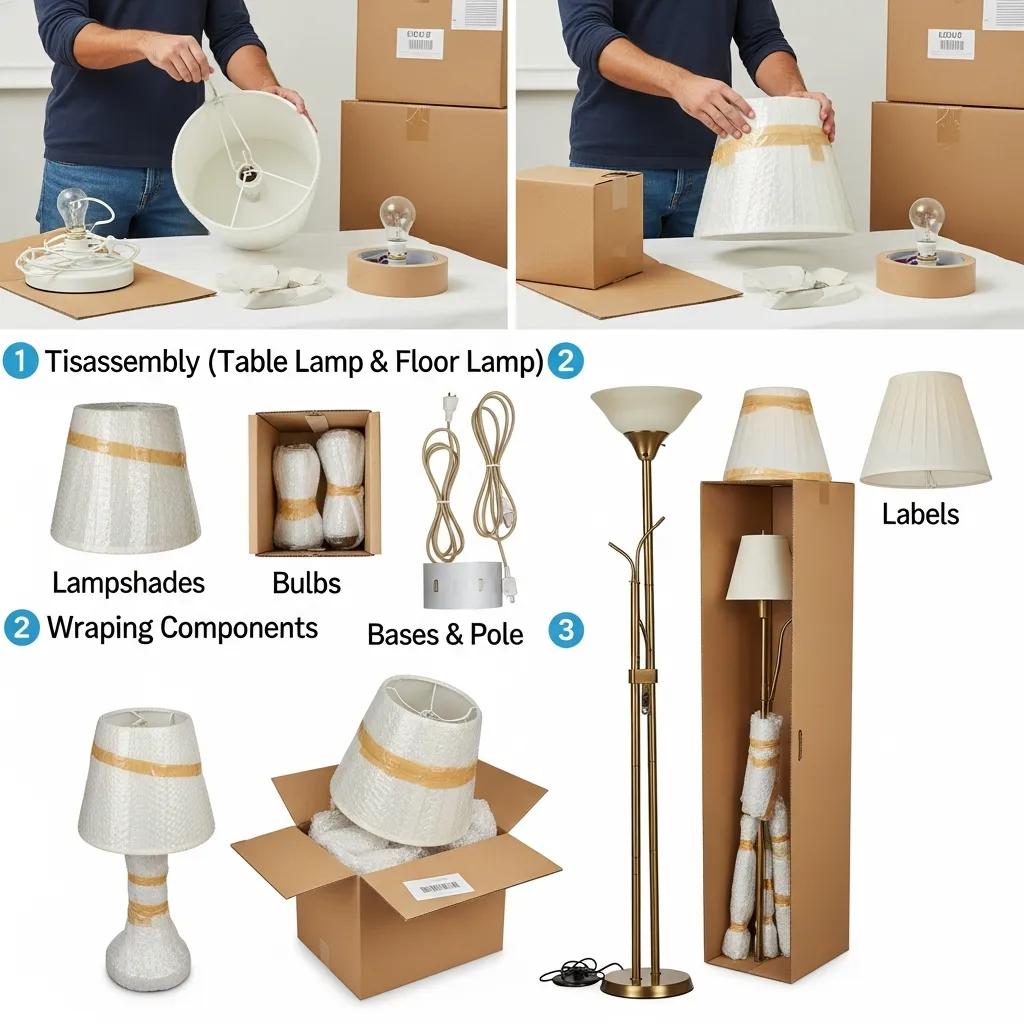
Packing table lamps, floor lamps and antiques follows the same basic flow: disassemble what you can, protect each piece, and box or secure the parts so they don’t move. Unplug and remove bulbs and shades first, bag small parts with labels, then wrap the main pieces in layered cushioning. Choose a box that limits movement and note orientation for loading. Below are clear, repeatable sequences for common lamp types.
Step-by-step packing for table lamps:
- Remove the bulb, shade, harp and finial; place small pieces in labeled plastic bags.
- Cover the base with packing paper, then wrap in bubble wrap; tape only to the wrap — not the finish.
- Set the wrapped base upright in a snug double-walled box with 2–3" of foam or crumpled paper around it.
- Label the box “Fragile — Lamps — Upright” and note where the bulbs and hardware are packed for easy reassembly.
These steps protect finishes and delicate parts while making unpacking straightforward.
How Do You Pack Table Lamps for Moving?
Table lamps pack best when disassembled and kept upright. Remove shade, bulb, harp and finial, bag and label small parts, then wrap the base with a paper barrier followed by two layers of bubble wrap. Place the base upright in a double-walled box and fill voids so the lamp can’t lean. Load the boxed lamp upright in the truck and surround it with softer items to reduce side-to-side movement.
What Is the Best Way to Pack Floor Lamps?
Floor lamps often need sections removed to control length. If yours comes apart, wrap each section in blankets and bubble wrap and pack long pieces horizontally with supports to prevent bowing. If the lamp doesn’t disassemble, wrap the whole unit in a moving blanket and plastic, pad the base thoroughly, and either secure it flat in the truck with straps or transport it upright in a braced corner. Proper placement prevents rolling, bending or socket damage.
How Should You Pack Lampshades to Prevent Damage?
Lampshades need both internal and external support. For fabric shades, stuff the interior with acid-free paper to hold shape, then wrap the outside with paper and bubble wrap — avoid tape on fabric. For glass or delicate shades, use two to three layers of bubble wrap plus foam rings or custom inserts to protect rims and crowns. Nest smaller shades inside larger ones only with padding between them. Use rigid boxes that support the edges and label them as fragile shaped items.
How Do You Safely Pack Light Bulbs?
Wrap each bulb individually in tissue or bubble wrap and place them point-to-point in a box with dividers or an egg-crate insert so bulbs don’t touch. Clearly mark the box “Light Bulbs — Fragile” and keep it with lighting items instead of heavy tools. Protected bulbs cut replacement costs and simplify reassembly at your new home.
Use this comparison to pick the right method quickly when you’re packing multiples.
When Should You Choose Professional Lamp Packing Services in Austin?
Hire professional packers when lamps are high-value, irreplaceable, complicated to disassemble, or when you don’t have the time or materials to pack safely. Pros bring training, consistent techniques, and access to specialty materials like custom crating and rigid inserts that reduce transit risk. Mountain Movers ATX — a family-owned Austin company that offers packing services — can be a good option when you want a single local team to pack and move your items. The table below helps you decide when pro help is worth it.
When to hire professionals — scenarios and recommended actions:
- Antique or high-value lamps: Use professional packing to avoid irreversible damage.
- Large volumes of fragile lighting: Professionals work faster and maintain consistent protection.
- Long-distance or commercial moves: Professional packing reduces cumulative vibration and handling risk.
Use these guidelines to weigh time, cost and risk before move day.
Scenario analysis for DIY vs pro decision:
This quick analysis helps you pick the most cost-effective protection for your lamps.
What Are the Advantages of Hiring Mountain Movers ATX for Lamp Packing?
Mountain Movers ATX is a family-owned Austin moving company that includes packing services in its offerings and leans on local trust values like honesty and reliability. A local team familiar with Central Texas logistics can plan for common handling challenges — traffic, multiple stops, and weather — when packing and loading. Using one vendor for packing and transport reduces handoffs, simplifies communication, and keeps labeling and inventory consistent to speed unpacking. If you’d rather not tackle delicate packing yourself, Mountain Movers ATX can coordinate packing and moving in the Austin area.
How Can You Request a Free Quote for Professional Lamp Packing?
To get a useful free quote, have a few basics ready: your move date, origin and destination ZIP codes, how many and what types of lamps you have, and whether you want full packing or only fragile-item packing. Reach out by phone or reference the company name online and share photos of antiques or complex fixtures so estimators can judge fragility and recommend crating or special materials. The more detail you provide, the more accurate the preliminary quote will be.
What Are Common Questions About Moving and Packing Lamps?
People often ask whether movers will pack lamps, what boxes to use, and how to protect delicate shades and bulbs. Clear answers make it easier to choose between a DIY approach and hiring pros. The short Q&A below covers common questions, confirms that local Austin movers offer packing services, and gives quick material recommendations.
Below are quick answers to common lamp-packing questions:
- Do movers pack lamps and fragile lighting items?
- What kind of boxes and materials are recommended for lamps?
- How should I label lamp boxes and store bulbs?
Each answer is concise and actionable so you can pack confidently or share the info when requesting a free quote.
Do Movers Pack Lamps and Fragile Lighting Items?
Yes — many moving companies, including local Austin firms that list packing services, will pack fragile items like lamps as part of their packing packages. Professional packers separate components, use appropriate cushioning and crate especially fragile or valuable pieces to lower transit risk. If you choose pro packing, tell the crew about provenance or special fragility so they can match materials to value. When contacting a local company, provide counts and photos to speed the assessment.
What Kind of Boxes and Materials Are Recommended for Lamps?
Match boxes and materials to each component’s vulnerability: double-walled boxes for bases and shades, dividers or foam inserts for bulbs, and acid-free paper for fabric shades. Use moving blankets and foam for long poles and small labeled bags for hardware to avoid loss. Label boxes with orientation and contents so movers and family members handle them correctly. These choices reduce breakage and make reassembly faster.
Conclusion
Packing lamps correctly protects delicate parts and helps your lighting arrive ready to use. With the right materials and a clear plan, most lamps can be packed safely at home — but if you want extra assurance, consider professional packing from a local team like Mountain Movers ATX. If you’d like help, reach out for a free quote and let us handle the delicate stuff so you can focus on the move.