

How to Pack Paintings for Moving




How to Pack Paintings for Moving: A Practical Guide to Keeping Artwork Safe
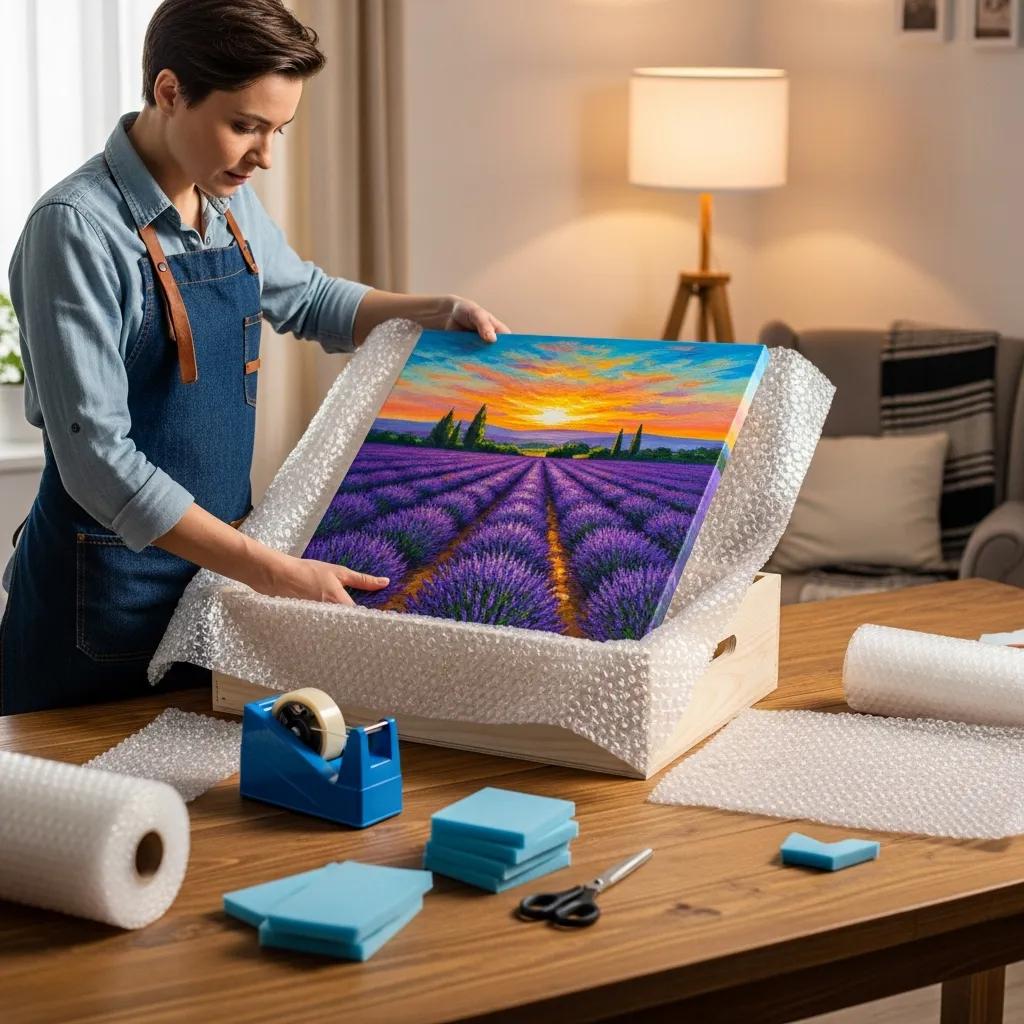
Paintings are fragile — canvases, frames, and glazed surfaces can be damaged by bumps, abrasion, moisture, or temperature changes during a move. Good packing protects both the money and the memories tied to your pieces. This guide shows museum-minded techniques for packing framed and unframed works, the right materials to use, how to decide between rolling or laying flat, and when it’s smarter to call the pros. Early sections explain the main hazards and quick protective steps you can take. Later sections walk you through step-by-step packing for framed works, safe handling for unframed canvases, and a checklist to get organized before moving day. You’ll find clear lists, comparison tables, and quick decision rules so you can act with confidence. If you’d rather have a local team handle delicate items, Mountain Movers — a family-owned moving company serving Austin and Central Texas — offers Austin packing services and free quotes to help evaluate professional packing and transport needs.
Why Is Proper Packing Essential for Paintings During a Move?
Proper packing creates layers of protection that isolate artwork from shock, abrasion, and moisture. Done well, it cuts the risk of broken glass, punctured canvases, warped frames, and flaking paint — all damage that can be costly or impossible to fully repair. Conservation best practices like using acid-free interleaving and rigid backing reduce long-term risks such as warping and off-gassing. Following these methods lowers restoration costs and helps preserve both aesthetic and monetary value. The sections below break down the specific risks and show how professional packing lowers stress and liability when moving valuable pieces.
Using established best practices in fine art transport helps overcome common logistical hurdles and keeps valuable pieces safe in transit.
Best Practices for Fine Art Transportation
Examines gaps in current art-transport practices and outlines solutions and best practices tailored to different organizational needs.
Art in Transit: Overcoming Logistical Barriers and Implementing Solutions, 2025
What risks do paintings face without correct packing?
What Risks Do Paintings Face Without Correct Packing?
Without the right protection, paintings face several immediate threats: shattered glass, broken frames, punctured canvases, scraped paint, and warping from moisture or uneven pressure. For example, a glazed oil painting dropped during loading can shatter its glass and let shards cut the canvas or abrade paint — a repair that often costs more than proper packing. Humidity swings can make stretcher bars expand or contract, causing paint to crack or the canvas to sag. That’s why layered, conservation-minded packing — face interleaving, corner guards, and rigid backing — should come before any move of valuable art.
How does professional packing reduce moving stress?
How Does Professional Packing Reduce Moving Stress?
Hiring professionals transfers responsibility to trained hands and proven methods. Experienced art movers use the right materials — acid-free glassine, foam corners, custom crates — and follow routines that reduce handling errors and speed loading, which lowers exposure to risk. A local team also simplifies insurance and claims handling and adds accountability if something goes wrong. For many owners, predictable handling and less hands-on work make professional packing the practical way to protect both sentimental and monetary value.
How to Pack Framed Paintings for Moving Safely?
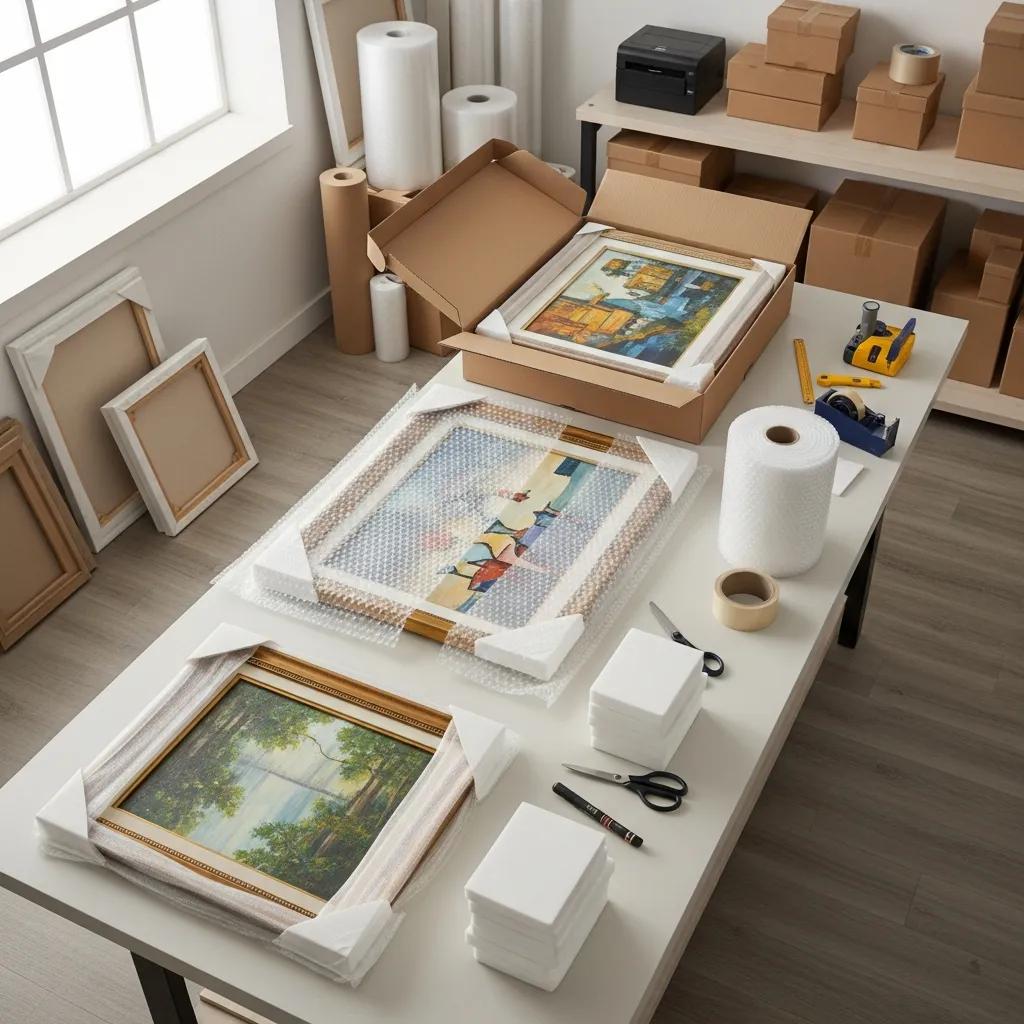
Packing framed paintings safely is about layers: protect the surface, guard the corners, add cushioning, and lock everything in a rigid box or crate. Start by gently cleaning the frame, tape glazed surfaces to keep shards in place if they break, add foam corner protectors, place acid-free glassine over the face, wrap in bubble wrap, and put the piece into a fitted picture box or custom crate. That order — surface barrier, corner protection, cushioning, and structural support — gives redundant protection that reduces force transfer and abrasion. Below are recommended materials and a step-by-step technique to follow reliably.
What materials are best for packing framed art?
What Materials Are Best for Packing Framed Art?
Focus on materials that protect the surface, absorb impact, and avoid chemical damage: glassine or acid-free paper for direct contact with the painted face, foam corners and rigid backing boards to protect frame edges, and bubble wrap or moving blankets for shock absorption. Corrugated picture boxes or custom crates protect against crushing and moisture. For glazed works, low-tack tape in a crisscross over the glass reduces shard scatter if breakage occurs. When possible, choose conservation-grade supplies to limit long-term chemical risks and meet insurance requirements for higher-value pieces.
What are step-by-step techniques for wrapping and boxing framed paintings?
What Are Step-by-Step Techniques for Wrapping and Boxing Framed Paintings?
Use this practical sequence for museum-minded packing of framed paintings to lower handling risk and make truck loading safer.
- Surface prep and tape: Dust the frame lightly; apply low-tack tape in an X over glazed surfaces to hold glass if it breaks.
- Face protection: Lay acid-free glassine over the painted face and smooth it flat without creasing.
- Corner and edge guards: Add foam corner protectors and fit a rigid backing board cut to the frame size.
- Cushioning layers: Wrap once in bubble wrap, then cover with a moving blanket; secure tape only on the blanket, not the wrap touching the artwork.
- Boxing and labeling: Stand the piece upright in a picture box or crate with at least 2" of padding; mark orientation and label “Fragile — This Side Up.”
These steps add layered protection against impact and abrasion. Clear labeling makes sure movers keep the orientation correct during loading and unloading. Use the quick-reference table below for common frame types and recommended protection.
How to Pack Unframed Canvas Paintings for Relocation?
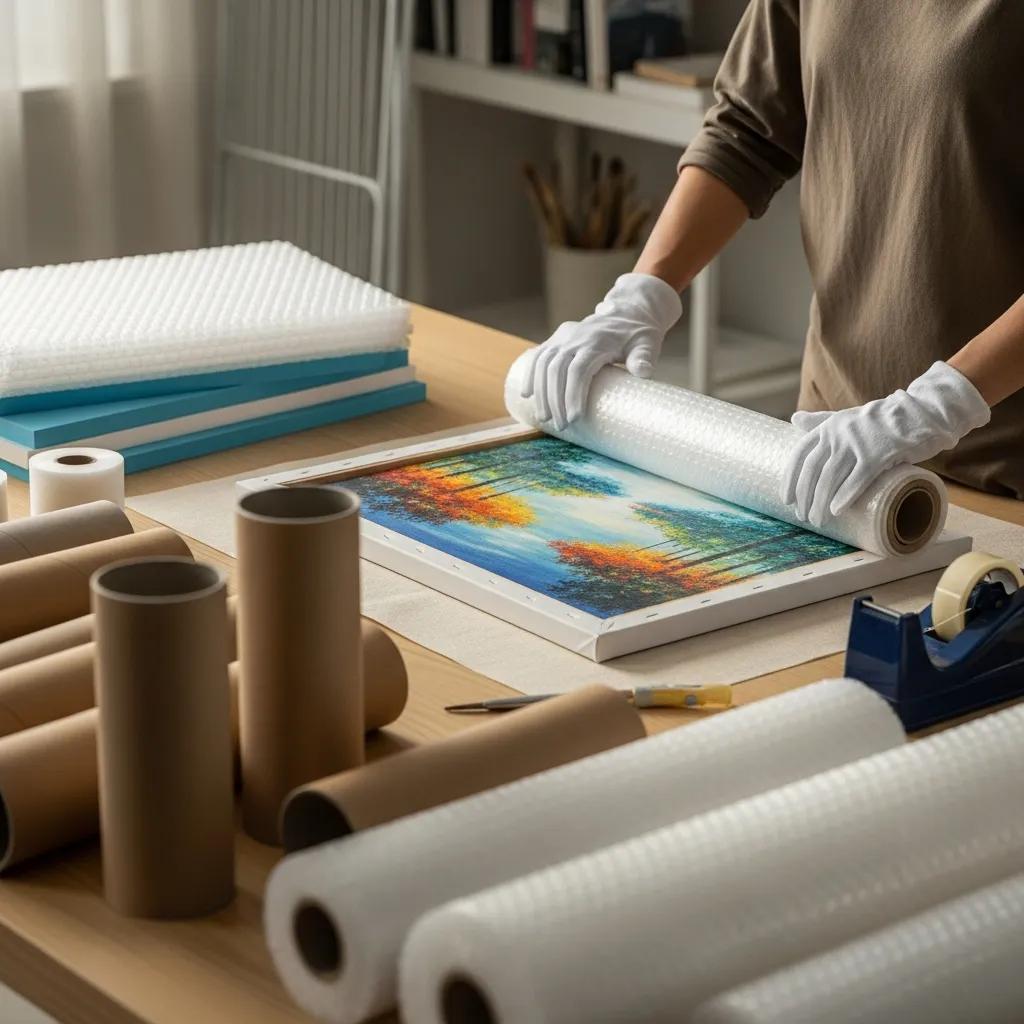
Packing unframed canvases means protecting the paint surface and the stretcher bars. The main choice is rolling versus laying flat — and that depends on size, paint thickness, and fragility. Use glassine or acid-free interleaving to prevent paint-to-paint contact. For long trips or when compression and bending are a risk, use rigid panels or custom crates. Rolling saves space but only works if the paint is dry, thin, and the canvas can flex; it also requires proper interleaving and a padded core. If in doubt, transport flat — it’s the safer option for textured or large works. The rules and material list below will help you choose the right approach.
When should you roll vs. lay flat unframed canvas art?
When Should You Roll vs. Lay Flat Unframed Canvas Art?
Roll only for small-to-medium canvases with thin, fully dry paint and flexible stretcher bars. Rolling requires acid-free interleaving and a padded tube to avoid sharp bends. For large canvases, heavy impasto, delicate varnish, or unstable stretchers, always transport flat on rigid panels or in a custom crate to avoid creases, cracking, or edge damage. As a simple rule: if the longest side is over ~36–40 inches or texture is obvious, choose flat transport to protect the surface.
Which protective materials are essential for unframed paintings?
Which Protective Materials Are Essential for Unframed Paintings?
Key supplies include glassine or acid-free paper for face protection, rigid backing panels or foam-core sheets for flat support, museum-grade stretch film for perimeter protection, and padded shipping tubes for safe rolling when appropriate. Use wide low-tack tape so edges aren’t damaged. For long-distance or high-value shipments, consider wooden or foam-lined crates to reduce vibration and compression. If a work has sensitive media, add a thin spacer between faces before rolling and avoid over-tightening the tube to prevent pressure points.
What Are the Best Materials for Moving Artwork?
Balancing conservation-quality protection with cost is important. Prioritize acid-free interleaving, foam corners, rigid backing boards, and custom crates for valuable pieces; use corrugated picture boxes and bubble wrap for less fragile items. Unlike packing clothes, where flexibility matters most, artwork demands a layered approach — surface barrier, edge protection, cushioning, rigid support — to address abrasion, impact, and compression. High-grade materials reduce chemical interactions and add shock absorption. Below are top materials and a short comparison to help you choose.
Which packing supplies ensure museum-quality protection?
Which Packing Supplies Ensure Museum-Quality Protection?
Museum-level protection uses conservation-grade materials: glassine or acid-free paper for surface contact, archival backing boards for rigidity, polyethylene foam for shock absorption, and custom wooden crates for structural protection. Climate-controlled transport and expert handling are key when moving very valuable works to limit temperature and humidity swings. Choosing these supplies matters especially for insured pieces or moves between different climates. Museum-grade materials also support better restoration outcomes and meet many insurance requirements.
Sourcing the right conservation-grade materials can be a logistical challenge but is important for protecting valuable work during transport.
Sourcing Conservation-Grade Art Packing Materials
Notes the difficulty of finding conservation-grade supplies locally and the potential delays when ordering from abroad, with practical guidance for field decision-making.
Conservation decision-making in the field: a case study, 2021
How to choose the right boxes and protective layers for paintings?
How to Choose the Right Boxes and Protective Layers for Paintings?
Match the box and layers to the painting’s size, fragility, and value: small prints can share reinforced picture boxes with padding; medium framed works do well in a single fitted box with foam corners; large or high-value pieces usually need custom crates with internal bracing. A sensible layering order is: glassine on the face, foam corners, rigid backing board, bubble wrap or foam padding, an outer blanket, then a box or crate. For long-distance moves, add desiccant packets or climate-control options when you expect big temperature or humidity swings. The table below summarizes materials and when to use them.
When Should You Hire Professional Art Packing Services?
Bring in professional packers when pieces are high-value, oversized, glazed, part of a large collection, or when long-distance transport and insurance rules raise the stakes. Professionals have the right equipment, packing standards, and claims processes to limit owner liability and increase the odds of flawless delivery. For a few small prints on a local move, DIY can work. But for fragile glazing, heavy frames, or irreplaceable originals, get a professional assessment. The table below outlines common scenarios, levels of risk, and recommended actions to help you decide.
What are the benefits of using Mountain Movers for art relocation?
What Are the Benefits of Using Mountain Movers for Art Relocation?
Working with Mountain Movers gives you hands-on care from a family-owned team serving Austin and Central Texas. We handle delicate items carefully and offer transparent pricing so you know what to expect. Our services include local and long-distance moves, residential and commercial moves, and Austin packing services — so we can tailor packing and transport to your job. We also have experience with other delicate items like pianos and operate with TXDMV# 008843498C and USDOT# 3352346, giving you documented credentials and clear accountability. That combination reduces your logistical burden and provides a practical path for insured transport and claims if anything happens.
Which paintings require professional movers?
Which Paintings Require Professional Movers?
Move these pieces with professional help or under professional oversight: oversized glazed oils, artworks with fragile or ornate frames, pieces with heavy impasto or unstable varnish, irreplaceable originals, and full gallery inventories that need coordinated logistics. When you have multiple high-value items, pros help with packing order, load balance, and climate control, lowering collective risk. If your insurance policy specifies professional crating or certified handlers, hiring professionals is not just recommended — it’s required. Use these thresholds to decide when DIY protection isn’t enough.
How to Prepare and Organize Paintings for a Stress-Free Move?
Good preparation reduces moving-day confusion and speeds safe packing. Start by inventorying and photographing each piece, note dimensions and condition, and group works by fragility to plan packing order. Label boxes with orientation arrows and short handling notes, and make a load-order list so fragile items are loaded last and unloaded first. Talk with your movers a week before the move — confirm insurance details, stair or elevator access, and any tight clearances to avoid surprises and wasted handling time. The checklist below lays out a practical timeline to follow in the days before your move.
What is an effective art moving checklist?
What Is an Effective Art Moving Checklist?
An effective checklist covers pre-move inventory, buying supplies, the packing timeline, and on-the-day coordination to minimize mistakes and keep accountability clear. Before the move: photograph each piece, record dimensions and condition, get conservation-grade packing materials, and schedule crate fabrication or escorts for large items. On moving day: assign a single point of contact to oversee the crew, check orientation labels, and confirm insurance declarations for high-value items. These steps standardize the process and cut last-minute choices that often lead to mishandling. The next section explains how to share these instructions with your movers.
How to coordinate with movers for safe artwork transport?
How to Coordinate with Movers for Safe Artwork Transport?
Talk clearly and briefly with your movers so they know which pieces are fragile, the correct orientation, and the insurance status before lifting anything. Prepare a short handout for the moving foreperson with priorities like “load last / unload first,” crate needs, and whether climate control is required. Ask the crew to document each item’s condition with photos before loading to speed any potential claims. If you’d like a professional assessment, request a free quote from Mountain Movers — our Austin packing services and credentials can help match packing and insurance needs to your move.
Agreeing on methods with fine art transport firms in advance is key to avoiding conservation issues during exhibitions and transit.
Collaborating with Fine Art Transport Firms
Notes that methods with fine art transport firms should be agreed in advance to prevent conservation problems during exhibitions and transport.
Conservation problems related to fine art exhibitions and their transport, 1983
- Inventory: Photograph and note dimensions and condition for every piece.
- Supply prep: Stock up on glassine, foam corners, backing boards, and boxes.
- Scheduling: Order crate fabrication or book professional packing for complex items.
- On-day actions: Assign a coordinator, label orientation, and confirm insurance details.
Following this checklist clarifies responsibilities and cuts handling risk by making sure everyone understands priorities, materials, and accountability before a painting is moved.
Use the table and checklist together as a practical roadmap to lower stress and protect artwork during transit. If you want a professional assessment, Mountain Movers offers free quotes and can advise on packing, crating, and transport options for Austin and Central Texas moves; our local experience helps match resources to the complexity of each project.
Conclusion
Protecting your paintings during a move preserves their look and value. Following practical, museum-minded packing steps and using quality materials will greatly reduce the chance of damage. When pieces are valuable, oversized, or fragile, professional packing and crating are worth it for the added protection and peace of mind. If you’d like help, contact Mountain Movers for a free quote — our experience handling delicate items can make your move smoother and more secure.