

How to Pack Mattress for Moving: Step-by-Step Guide





How to Pack a Mattress for Moving — A Step-by-Step Guide for a Safe, Stress-Free Move

Moving a mattress is more than tossing it into a truck. Pack it right and you’ll avoid dirt, moisture, tears and structural damage — and you’ll likely skip an early replacement or a deep clean. This guide walks you through the supplies you’ll need, step-by-step wrapping and sealing, safe lifting and loading techniques, and specific tips for memory foam, innerspring and hybrid mattresses. You’ll also find advice on choosing the right mattress bag, how to secure the load in the truck, and when calling in pros makes sense. We wrote this to be practical and searchable, with common search phrases like packing a mattress, mattress protection for moving, how to move a king size mattress, and memory foam mattress moving tips woven in where helpful.
Mountain Movers ATX is a local option for Austin and Central Texas residents who want stress-free packing and clear, upfront pricing. Later in the guide we explain how to request a quote or call for packing help. The rest of this article focuses on straightforward, actionable steps you can use whether you DIY or hire help.
Why Is Proper Mattress Packing Essential for Moving?
Good packing keeps contaminants out and preserves the mattress’s shape and support. Left unprotected during loading, transport or storage, a mattress can pick up dirt, soak up moisture, rip or get compressed — all of which shorten its life and can affect your sleep. Taking a little time to pack properly saves cleaning, replacement costs and headaches at your new place. Below are the main risks and the benefits of doing it right.
Common problems from poor packing include tears from snagging on door frames or straps, moisture that leads to mold, and structural harm from folding or stacking heavy items on top. Those problems increase replacement and cleaning expenses and can create health issues if allergens or mold develop. A careful pack job is a simple, cost-effective way to protect your mattress investment.
What Risks Does Improper Mattress Packing Pose?
When a mattress rubs against rough surfaces or gets caught on edges, punctures and tears happen fast. Sealing up a mattress that’s damp or packing it while wet can trap moisture and lead to mildew or mold, which often needs deep cleaning or replacement. Folding or over-compressing a mattress — especially ones with springs or layered foam — can permanently harm support and cause sagging. Avoiding these mistakes preserves comfort and extends usable life.
How Does Mattress Protection Prevent Damage and Dirt?
A proper barrier keeps dirt, spills, pests and scrapes away from fabric and internal layers. Heavy-duty mattress bags and moving blankets resist punctures and absorb shocks; they also stop road grime from embedding in fibers so you won’t spend hours cleaning later. Choosing moisture-resistant materials and making sure the mattress is completely dry before sealing greatly reduces mold risk. With the right protection, your mattress arrives clean, intact and ready to sleep on.
What Essential Supplies Are Needed to Pack a Mattress for Moving?

A small kit makes the job fast and safe: the correctly sized mattress bag, durable packing tape, moving blankets for padding, a dolly or hand truck, moving straps, and a pair of gloves. The table below helps you match supply types to recommendations so you can pick what fits your move.
How to Choose the Right Mattress Bag and Protective Materials?
Pick a bag by mattress size, fabric sensitivity and whether you’ll reuse it. Vinyl and heavy polyethylene resist punctures and water; zippered reusable bags are best if you plan to store or move more than once. For thick pillow-tops or king sizes, choose a bag with extra depth and wider seams so closures don’t get stressed. Cloth or composite reusable covers breathe better and cut condensation risk, while single-use plastic bags work for one-time moves — choose based on your budget and storage plans.
Which Moving Equipment Helps in Safe Mattress Handling?
The right gear lowers injury risk and protects the mattress surface. A dolly or hand truck with straps makes longer carries easier and reduces drops. Moving straps let two people share the load through tight halls. Moving blankets cushion impacts, and cardboard corner guards protect pillow-top seams. If you don’t own these tools, renting them for the day is usually cheaper than risking damage or an injury.
What Are the Step-by-Step Instructions to Pack Your Mattress Safely?
Packing a mattress safely follows five simple steps: clean, dry, encase, reinforce and label. Remove any dirt, isolate the mattress with protective materials, pad vulnerable spots and secure closures so nothing shifts during transit. Follow the numbered steps below to get it done efficiently.
- Vacuum and spot-clean the mattress, then let it air completely dry to prevent mold.
- Slide the mattress into the right-sized bag — have a helper hold the bag open to make it easier.
- Seal the bag seams and any zipper openings with heavy-duty packing tape to keep dirt out.
- Wrap the bagged mattress in moving blankets, pad the corners, and secure blankets with tape or straps to prevent slipping.
- Use moving straps and a dolly to move the mattress to the truck, keeping it upright when recommended for the mattress type.
- Secure the mattress in the truck to avoid bending, heavy compression, or contact with wet surfaces.
How to Clean and Prepare Your Mattress Before Packing?
Start by vacuuming the surface and seams to remove dust and debris. Treat stains sparingly with a mild upholstery cleaner — don’t soak the mattress. Blot stains and let the mattress dry fully in sunlight or a well-ventilated area. Use baking soda to deodorize, then vacuum it up. Dryness before sealing is key to preventing mold while in transit or storage.
How to Encase, Seal, and Add Extra Protection to Your Mattress?
Work with a helper to slide the mattress into the bag without bending. Make sure seams line up and closures are fully engaged, then reinforce seams and zipper areas with tape, paying special attention to corners and pull points. Wrap moving blankets around the bagged mattress and secure them with tape or straps; add cardboard corner guards for pillow-tops or delicate edges. Finally, label the wrapped mattress with size and orientation so movers know how to load it properly.
How Should You Transport and Load Your Mattress Safely?
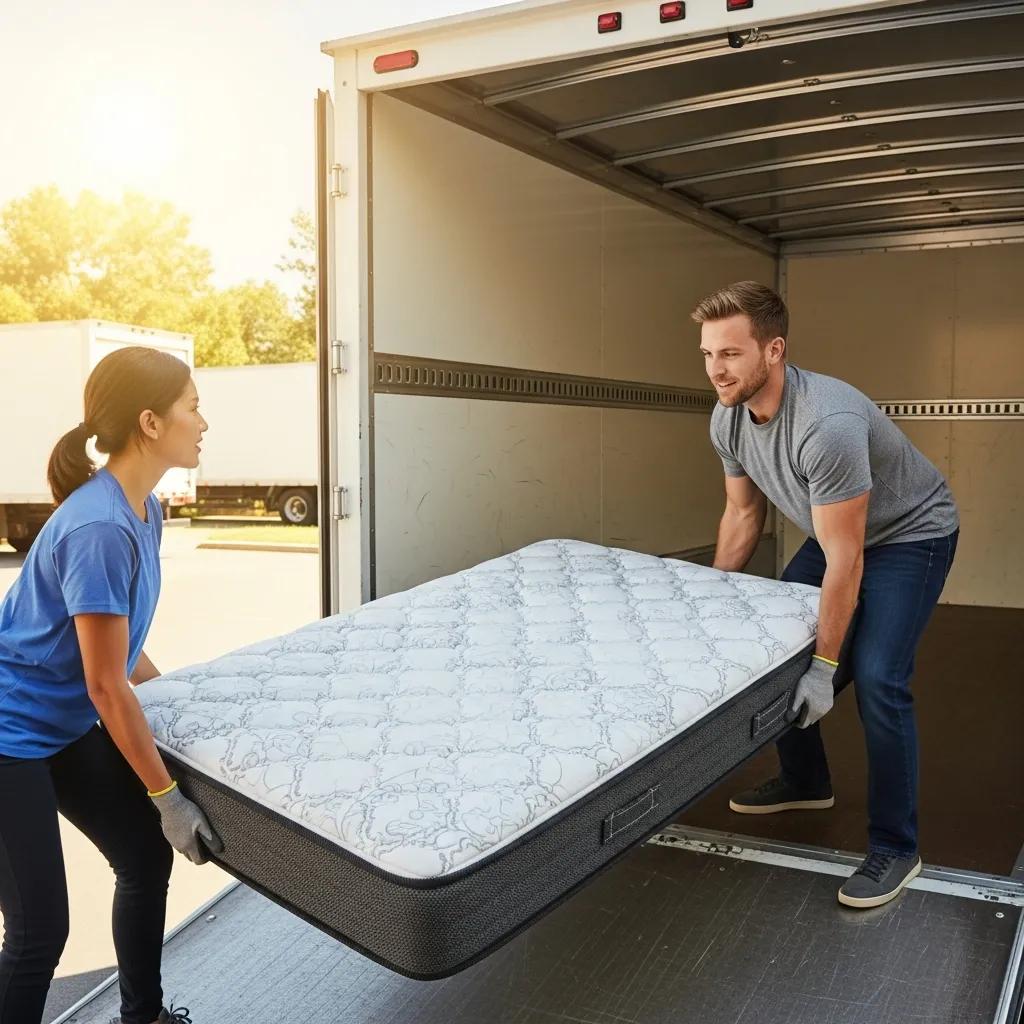
Safe transport comes down to good orientation, secure tie-downs and smart load planning so the mattress doesn’t bend or get compressed. Whether you lay it flat or stand it on edge depends on the mattress type and truck space — the goal is to avoid stress on internal layers and keep it away from wet surfaces. Strap and pad the mattress to stop shifting, and plan the truck layout so heavy items aren’t placed on top. The list below highlights the key loading points to remember.
- Plan the truck placement so mattresses aren’t under heavy boxes or appliances that could compress them.
- Lay firm innerspring mattresses flat when possible; for memory foam, keep them flat or standing on edge but never folded tightly.
- Use ratchet straps or tie-downs to anchor the mattress to truck points and pad contact areas with blankets.
What Are Proper Lifting Techniques and Equipment Usage?
Lift with your legs, not your back: bend at the knees, keep a neutral spine and communicate every move with your partner. Moving straps help distribute the weight across shoulders and hips; use a dolly for long carries or stairs to reduce strain and risk. Clear walkways and decide placement before you move so you don’t have to set the mattress down in tight spots. Good technique plus the right tools prevents injuries and scuffs.
How to Secure Your Mattress in the Moving Truck?
Set the mattress against a flat truck wall or a firm surface to avoid bowing. If you’re moving more than one mattress, place them upright and alternate head-to-foot to balance the load. Secure with ratchet straps at two points to stop forward and sideways movement, and pad straps with moving blankets where they contact fabric. Don’t stack heavy furniture on top — instead distribute weight around the mattress and use blocking to prevent sliding.
How Do Mattress Types Affect Packing and Moving Methods?
Mattress construction matters because different materials react differently to bending, compression and moisture. Memory foam is flexible but doesn’t like sharp folds; innerspring needs even support to protect the coils; hybrids and pillow-tops have layered construction that benefits from extra corner and seam protection. Knowing these differences tells you whether to keep a mattress flat, add corner guards, or call for extra hands or equipment. The table below summarizes the main recommendations by type.
What Special Considerations Are There for Memory Foam, Innerspring, and Hybrid Mattresses?
Memory foam can crease if folded sharply, which may cause permanent deformation — handle it gently and keep it flat or upright. Innerspring mattresses need consistent support along their length so coils don’t shift; avoid placing heavy items on them. Hybrids and pillow-tops have delicate seams and thickness that benefit from cardboard corner guards and extra padding; for king-size or heavy models, arrange two-person or mechanical lifts. These small precautions protect the parts that deliver comfort.
Research on mattress materials highlights memory foam’s viscoelastic, temperature-sensitive nature and why handling guidelines differ by foam type.
Understanding Memory Foam Mattress Composition
This study compared exposure to a standard nonpressure-redistributing foam mattress (NPRFM) with a pressure-redistributing mattress made from viscoelastic, temperature-sensitive polyurethane memory foam.
Relationship between a pressure redistributing foam mattress and pressure injuries: An observational prospective cohort study, YL Hsu, 2020
How to Protect Delicate Mattress Components During a Move?
Sewn-on toppers, handles and reinforced edges need focused protection. Put cardboard corner guards under moving blankets to take pressure off seams, wrap handles with soft padding so tape won’t damage them, and avoid resting a mattress on sharp or uneven surfaces. Add “This Side Up” or “Do Not Fold” labels to steer movers. These small steps protect warranties and keep the mattress working the way it should after the move.
When Should You Choose Professional Mattress Packing Services?
Call professionals when logistics get tricky, the mattress is expensive or specialty-built, or you want to remove stress and save time. Pros bring trained crews, equipment and experience that help with stairs, narrow hallways, oversized king mattresses and heavy hybrid constructions while minimizing damage and injury risk. Decide based on factors like stairs, elevator limits, long-distance travel and the mattress’s replacement cost; the table below shows common scenarios where pros add clear value.
What Are the Pros and Cons of DIY Mattress Moving?
DIY moves can save money if you have helpers and the right tools, but they take time and carry some risk. Pros: lower out-of-pocket cost and control over handling. Cons: potential for poor sealing, moisture issues or back injuries with heavy or awkward mattresses. DIY is reasonable for small mattresses and short carries with trusted helpers; for stairs, long drives or high-value pieces, the risk often outweighs the savings.
How Does Mountain Movers ATX Provide Stress-Free Mattress Packing in Austin, TX?
Mountain Movers ATX is a full-service moving company in Austin, TX serving Central Texas. We handle local and long-distance moves, residential and commercial jobs, and offer Austin Packing Services. Our promise: stress-free moves, transparent pricing (no hidden fees), professional crews, and family-owned values. We make it easy to get a free quote or talk through packing options.
Our team brings trained crews, proper packing materials and the right equipment to reduce damage and injury risk on complicated moves. If you’d like a professional option for mattress packing and handling, call 737-302-6566 to request a free quote or discuss Austin Packing Services — telling us your mattress type, move complexity and any access issues helps us recommend the right level of service. Hiring pros often saves time and stress, especially for king-size, hybrid or hard-to-access moves.
Conclusion
Packing your mattress the right way protects its life, keeps it clean and makes your move smoother. With the right materials and techniques you’ll avoid damage, lower replacement costs and keep a healthy sleep space at your new home. If you want a hassle-free option, Mountain Movers ATX can handle mattress packing and moving for you — contact us to get started.