

How to Pack Wine Bottles for Moving: Protect Your Collection Like a Pro



How to Pack Wine Bottles for a Move — Practical, Proven Steps to Protect Your Collection

Moving a wine collection takes more than boxes — it requires attention to fragility, temperature, and record-keeping so bottles arrive undamaged and ready to cellar. In this guide we cover proven packing techniques, the right materials, and temperature-control tips that reduce the risk of broken corks, disturbed sediment, or bottle shock. You’ll learn how to choose supplies, inventory and prepare bottles, wrap and box step-by-step, pick transport options that minimize damage, and handle wines after arrival. If you’d rather have professionals handle it, Mountain Movers offers local packing and specialized handling — read on to decide whether to DIY or call in experts.
Why Is Professional Wine Packing Essential for Moving?
Professional wine packing cuts breakage and exposure by using purpose-built materials and careful handling that stabilize bottles during loading and transit. Experienced packers apply cushioning, cell partitioning, and balanced load distribution to limit shock and thermal exposure, protecting both the glass and the wine’s aromas. Pros also document high-value bottles and can arrange insurance, which lowers financial risk and smooths any claims process. For rare vintages, sparkling cases, or large cellars, the added cost of professional packing often outweighs the potential loss and stress. Knowing the specific risks bottles face helps you decide when professional help is the right call.
What Risks Do Wine Bottles Face During Relocation?
Wine bottles face three main risks during a move: physical, environmental, and sensory. Physical breakage is the most obvious—bottles can crack or shatter if they hit hard surfaces or one another during handling or sudden vehicle motion. Temperature and humidity swings can force corks, cause seepage, or speed spoilage; older, cellar-aged wines are especially vulnerable. Vibration and agitation create “bottle shock,” a temporary dulling of aromas and flavors, and can resuspend sediment in older bottles. Minimizing movement and controlling the microclimate during transit helps reduce these threats and guides choices about packing materials and transport.
Research shows that temperature swings and physical vibration during transit have measurable effects on wine quality.
Temperature & Vibration: Effects on Wine During Transport
Researchers simulated wine shipping in a climate cabinet to study how temperature and movement affect wine quality. They found that long periods of high or variable temperatures harmed wine characteristics, and that movement at higher temperatures had a negative effect. Transport at cool, stable temperatures showed far less impact on wine quality.
Potential wine ageing during transportation, 2014
- Physical collisions and glass breakage can destroy bottles instantly.
- Rapid temperature changes can push corks or accelerate oxidation.
- Vibration and constant motion can cause bottle shock and disturb sediment layers.
These risks show why packing technique and the transport environment must work together to protect a collection. Next we’ll cover the materials that make that protection possible.
How Does Proper Packing Preserve Wine Quality and Value?
Good packing stabilizes bottles, limits exposure to harmful conditions, and reduces agitation that downgrades flavor. Individual cushioning—foam sleeves or bubble wrap—keeps bottles from striking each other and spreads impact across the glass. Partitioned boxes and dividers maintain bottle orientation and prevent shifting, while insulated liners or climate-controlled vehicles reduce temperature swings that can damage corks and wine. For sparkling wine and pressure-sensitive bottles, transport upright with extra neck protection to lower the chance of cork failure. These steps protect drinking quality and resale value, so choosing the right supplies matters.
What Are the Best Materials and Supplies for Packing Wine Bottles?

Picking the right supplies is a balance of protection, cost, and convenience so bottles spend as little time exposed to risk as possible. Essentials include wine boxes with dividers, double-walled corrugated cases for extra strength, foam or molded inserts, bubble wrap and foam sleeves, quality packing tape, and clear labels for fragility and orientation. Specialty items—insulated liners, thermal blankets, and climate-control systems—are recommended for long-distance or high-value moves because they guard against heat and cold spikes that plain boxes can’t. Professionals can source the right boxes and inserts in the quantities you need, which simplifies planning for larger collections.
Further research highlights how thermal insulation can reduce temperature swings during shipping and protect wine quality.
Wine Shipping: Temperature Impact & Thermal Insulation
This study looked at realistic shipping temperatures and their effects on the chemical and sensory traits of Swiss wines bottled in glass with different closures. Conditions included optimal storage (15ºC), extreme heat (40ºC), and day/night cycles (15ºC–40ºC). The researchers tested a custom thermal insulation quilt and found it helped limit temperature fluctuations during shipping.
Impact of shipping and transporting conditions on Swiss wine, 2017
Different supplies play distinct roles when protecting bottles during a move.
Combining core and specialty supplies raises overall protection and helps you choose materials based on distance and value. Professionals can supply the right items and sizes to keep your packing consistent and efficient.
Which Wine Moving Boxes and Dividers Offer Optimal Protection?
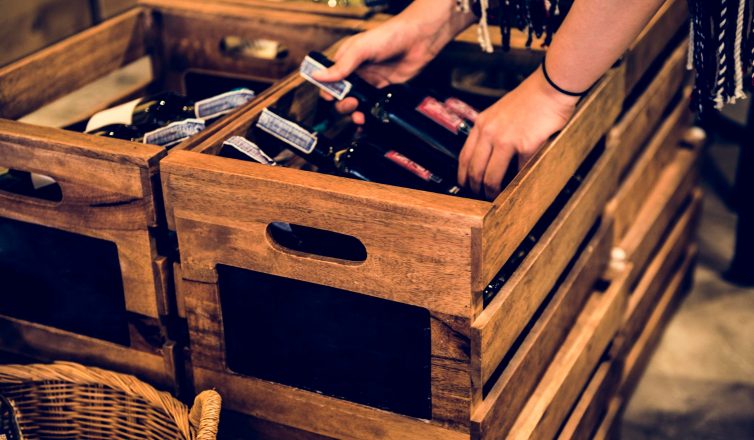
The right box and divider system keeps bottles isolated from impact and prevents lateral movement. Single-cell molded inserts cradle each bottle and offer the best individual protection—ideal for rare or expensive bottles. Corrugated cardboard boxes with removable dividers are versatile and cost-effective for mixed collections; choose double-walled boxes for heavier loads or long hauls. Standard 12-bottle case boxes are predictable for stacking and palletizing. For very large collections, modular divider kits let you customize cell sizes and replace damaged sections without reboxing everything.
- Single-cell molded inserts cradle fragile bottles and reduce point impacts.
- Corrugated dividers give modular protection for mixed vintages at lower cost.
- Double-walled boxes resist compression and are preferable for long-distance moves.
Match your box system to bottle shape and the expected level of movement to reduce both breakage risk and packing time.
How to Use Bubble Wrap, Packing Paper, and Foam Sleeves Effectively?
Layered wrapping combines materials to absorb shocks while keeping weight and wasted space down. Start by protecting the neck and base, then spiral-wrap the body with a 1–2 inch overlap so layers absorb impacts. Secure the wrap with tape so it won’t loosen. Foam sleeves are quick and protective for standard bottles; bubble wrap adapts to odd shapes and heavier bottles. For high-risk items use a foam sleeve inside and bubble wrap outside. Fill voids with crumpled packing paper or foam inserts to stop lateral movement and equalize pressure during stacking.
- Wrap neck and base first to protect the most vulnerable points.
- Apply overlapping spirals along the body for continuous cushioning.
- Fill voids to prevent lateral movement and bottle-to-bottle contact.
These layered techniques reduce the need for bulky external packing and keep boxes within safe handling weights.
What Is the Step-by-Step Process to Pack Wine Bottles for Moving?
A clear packing workflow prevents mistakes and speeds the process while protecting bottles at every stage. Start with an inventory and valuation, clean and inspect bottles, wrap each bottle, place them in dividers or molded cells, fill voids, seal and label boxes, and stage boxes for careful loading. This consistent sequence reduces handling time and documentation errors, and makes stacking and unpacking safer and faster. Below is a concise checklist you can follow.
- Inventory and document each bottle—photo labels and note vintage and value.
- Clean and check seals; make sure corks are secure and tops are dry.
- Wrap individually using foam sleeves or bubble wrap with neck and base coverage.
- Box with dividers and fill all voids with packing paper or foam inserts.
- Seal and label boxes with orientation marks and add contents to your manifest.
- Stage for loading place delicate boxes so they’re last on and first off the truck.
Follow these steps for a DIY move, or let Mountain Movers apply the same process with trained packers so you don’t have to manage the details.
How to Prepare and Inventory Your Wine Collection Before Packing?
A good inventory supports insurance and informs packing priorities. Create a spreadsheet or photo log with bottle name, vintage, size, condition, and estimated value, and photograph front and back labels. Group bottles by handling needs—sparkling upright, older vintages with extra padding—and note special instructions on the manifest to guide packers. For rare or insured bottles, keep copies of provenance and condition documents with you instead of packing them away.
- Photograph and log each bottle to build an auditable inventory.
- Note special handling needs (upright, extra padding, temperature sensitivity).
- Keep copies of important documentation separate from packed boxes.
Good preparation makes packing faster and helps avoid mistakes.
What Are the Techniques for Wrapping, Boxing, Sealing, and Labeling Wine?
Correct wrapping and labeling speed safe unpacking and prevent mishandling. Wrap every bottle individually, arrange bottles so necks alternate or sit snugly in dividers, and balance weight across boxes to avoid crushing. Reinforce box bottoms with good packing tape for heavy loads and seal seams thoroughly. Mark each box with contents, handling instructions like “THIS SIDE UP” and “FRAGILE,” and record the box number on your inventory manifest so you can locate bottles quickly at the destination.
- Wrap and protect each bottle individually to prevent direct impacts.
- Use balanced packing so boxes remain within safe lifting limits.
- Label and manifest boxes for fast identification and damage tracing.
These practices make handling predictable for movers and lower the chance of accidental damage during loading.
How to Ensure Temperature Control and Safe Transport of Wine Collections?
Temperature control and careful transport choices prevent thermal damage, which can be as destructive as breakage. Wine is sensitive to heat and freezing: prolonged heat accelerates oxidation and premature aging, while freezing can expand liquids and force corks or crack glass. For short local moves, insulated boxes or thermal blankets can blunt brief spikes, but for long-distance or high-value shipments a climate-controlled truck or trailer provides the most reliable protection. The table below shows trade-offs between cost, temperature consistency, and risk.
This comparison helps you decide when it’s worth upgrading to climate control: larger, more valuable, or climate-sensitive collections usually justify the extra cost. Next we cover target temperature ranges to aim for during transit.
What Temperature Ranges Are Ideal for Wine During a Move?
To limit thermal stress, aim to keep bottles between about 45°F and 65°F while moving, with an ideal target near 55°F for most still wines. Short exposures up to roughly 70°F may be acceptable if brief and insulated, but repeated or long heat spikes raise spoilage risk. Avoid freezing below about 30°F, which can push corks or crack glass. Keeping humidity around 50–70% also helps maintain cork integrity for long-stored bottles.
- Ideal transport target: ~55°F for still wines.
- Acceptable short-term range: 45°F–65°F, with caution up to 70°F briefly.
- Avoid freezing (below ~30°F) and rapid temperature swings.
Use these thresholds to pick insulation, schedule moves during cooler hours, or choose climate-controlled transport when needed.
How Can Climate-Controlled Transport Protect Your Wine?

Climate-controlled transport keeps temperatures within a narrow band and can regulate humidity, which stabilizes corks and prevents thermal shock. For valuable, aged, or temperature-sensitive collections, it limits peak temperatures and rapid swings that cause bottle shock and cork movement. Although more costly than standard trucks, climate control is often worth the price for high-value moves because the cost of damage or spoilage can be much higher. Local providers can coordinate packing and climate options to reduce exposure during loading and unloading.
When value, distance, or ambient extremes raise risk, climate-controlled transport complements professional packing methods and provides the best protection.
What Post-Move Care Is Needed to Prevent Bottle Shock and Preserve Wine?
Post-move care emphasizes inspection, rest, and correct storage so wines recover from transit stress and any damage is found early. After arrival, check bottles for leaks, cork creep, or label damage and note any boxes exposed to extreme temperatures. Let most wines rest undisturbed to recover from vibration—this reduces bottle shock and helps aromas return. Finally, move bottles into proper long-term storage with steady temperature, good humidity, and low light to maintain quality.
What Is Bottle Shock and How Does It Affect Wine Flavor?
Bottle shock is a temporary muting of aromas and flavors after a wine is agitated or experiences rapid environmental change. Movement displaces volatile compounds and upsets the wine’s aroma balance; sudden temperature swings make it worse. Symptoms include a dulled bouquet and muted palate. Most wines recover naturally as compounds rebalance, though older or fragile bottles may take longer. Knowing about bottle shock prevents you from misjudging a wine that just needs time to settle.
- Bottle shock causes muted aroma and flavor after agitation.
- It is triggered by shaking and rapid temperature changes during transit.
- Recovery is normal; time and gentle rest usually restore the wine.
Knowing how bottle shock works helps you set realistic rest timelines and avoid premature tasting or sale.
How Long Should Wine Rest After Moving and How to Store It Properly?
Give most wines at least seven days to rest after a move; older vintages or high-tannin wines often benefit from two weeks or more. Handle sparkling wines separately: transport them upright and allow 24–48 hours before opening so carbonation can stabilize. After resting, store still wines on their side to keep corks moist, aim for roughly 55°F and 50–70% humidity, avoid direct light and vibration, and use proper racking to protect labels and corks. Inspect immediately and unpack fragile boxes first to catch any problems early.
- Rest timeline: 7 days minimum for most wines; 2+ weeks for older vintages.
- Sparkling wines: upright, 24–48 hours rest before opening.
- Long-term storage: 50–58°F, 50–70% humidity, minimal light and vibration.
Following these timelines and storage practices helps wines recover and prevents long-term quality loss after a move.
When Should You Hire Professional Wine Movers and Packing Services?
Hire professional wine movers when collection size, value, or sensitivity make DIY too risky or time-consuming. Professionals bring trained teams, correct materials, climate-controlled transport, and clear pricing that reduce uncertainty for complex moves. Consider pros if you have irreplaceable bottles, a large cellar, tight timelines, or a long-distance move through variable climates. The comparison below helps weigh DIY versus professional approaches.
What Are the Benefits of Expert Wine Packing and Specialty Moving Services?
Expert packers reduce breakage and protect wine quality with trained handling, proper materials, access to climate-controlled vehicles, and insurance options. They know how to pack different bottle shapes, secure heavy cases, and load trucks to minimize movement and temperature exposure. Professionals also document inventories, simplifying claims if damage occurs, and provide transparent quotes so you know what’s included. For collectors who prioritize protection and peace of mind, hiring pros turns a complex move into a low-stress, organized process.
- Professionals use the right materials and methods to lower damage risk.
- They provide documentation and insurance support for valuable collections.
- Transparent quoting and packing plans simplify budgeting and expectations.
Those benefits explain why many collectors choose professional help for long-distance moves or when a large portion of their net worth is in bottles.
How to Request a Free Quote from Mountain Movers for Wine Collection Moves?
To get an accurate free quote from Mountain Movers, have these details ready: approximate bottle count and any high-value items, pickup and delivery addresses, preferred dates, and any climate-control or special handling needs. Tell us about access constraints like stairs, narrow streets, or elevators, and whether you want packing included or just transport. Mountain Movers provides clear, upfront quotes and tailored packing services for Central Texas residential moves — compile your inventory and contact us to start a quote so we can recommend materials, climate options, and transparent pricing.
- Gather bottle counts, special handling needs, and access constraints before requesting a quote.
- Expect a clear, upfront quote outlining packing, materials, and transport options.
- Request a free quote from Mountain Movers to compare professional packing and climate-controlled transport solutions.
This checklist helps you get the most accurate estimate and decide whether professional service fits your collection and budget.
Conclusion
Protecting your wine collection during a move preserves both quality and value. Using the right packing methods, supplies, and transport choices greatly reduces risk. Whether you pack yourself or hire professionals, following these steps will safeguard your bottles and give you peace of mind. Contact Mountain Movers to discuss tailored packing and transport options that fit your collection and timeline.