

Key Things to Consider When Moving Office Locations





Moving an Office? Your Practical Checklist and Planning Guide for Smooth Relocation

Moving an office means more than packing boxes — it’s about keeping your team working, protecting equipment, and getting back to normal fast. This guide breaks down why a step-by-step plan matters, how a clear timeline cuts downtime, and which people you’ll want on the team: project leads, IT, your broker, and a reliable commercial mover. You’ll find an actionable checklist, Austin-specific budgeting tips, IT move best practices, space-planning pointers, and permitting basics. We also explain what to look for when hiring commercial movers in Austin and when it’s smart to bring in professionals. Ready for a tailored estimate after you plan? Request a free quote for a clear, written moving proposal that fits your timeline and scope.
Seeing the whole picture — including when to use outside advisors — makes a big difference in how smoothly your move goes.
Office Relocation Management: Challenges & Advisory Services
Purpose — This paper aims to improve understanding of how office relocations are managed, focusing on the role and need for outside advisory services in organizations.
Office relocation management in Finland — challenges and service opportunities, 2015
What Are the Essential Steps in Planning an Office Move?
A successful move starts with a clear assessment, a single project owner, and a straightforward inventory and labeling system to prevent scope creep and confusion. Begin by mapping how you use today’s space, listing must-haves for the new location, and setting a working budget. Assign owners for procurement, IT cutover, and facilities coordination. Get vendor quotes after an onsite survey or a detailed inventory so estimates are accurate. Finish with a post-move punch list and scheduled reviews to close tasks and capture lessons for next time.
Below is a short, numbered checklist that lays out the main phases and who’s responsible — handy for quick reference and easy to share.
- Assess and Define Scope: Take inventory of space and equipment, set objectives, and note constraints and success metrics.
- Assign Project Roles: Name a project manager and internal owners for facilities, IT, and communications.
- Select Vendors and Schedule Surveys: Get written estimates and confirm what’s included and what’s not.
- Create Labeling & Inventory Systems: Tag assets and set packing priorities so setup is fast.
- Post-Move Review: Complete a punch list and validate systems before closing the project.
How Do You Create an Effective Office Relocation Timeline?
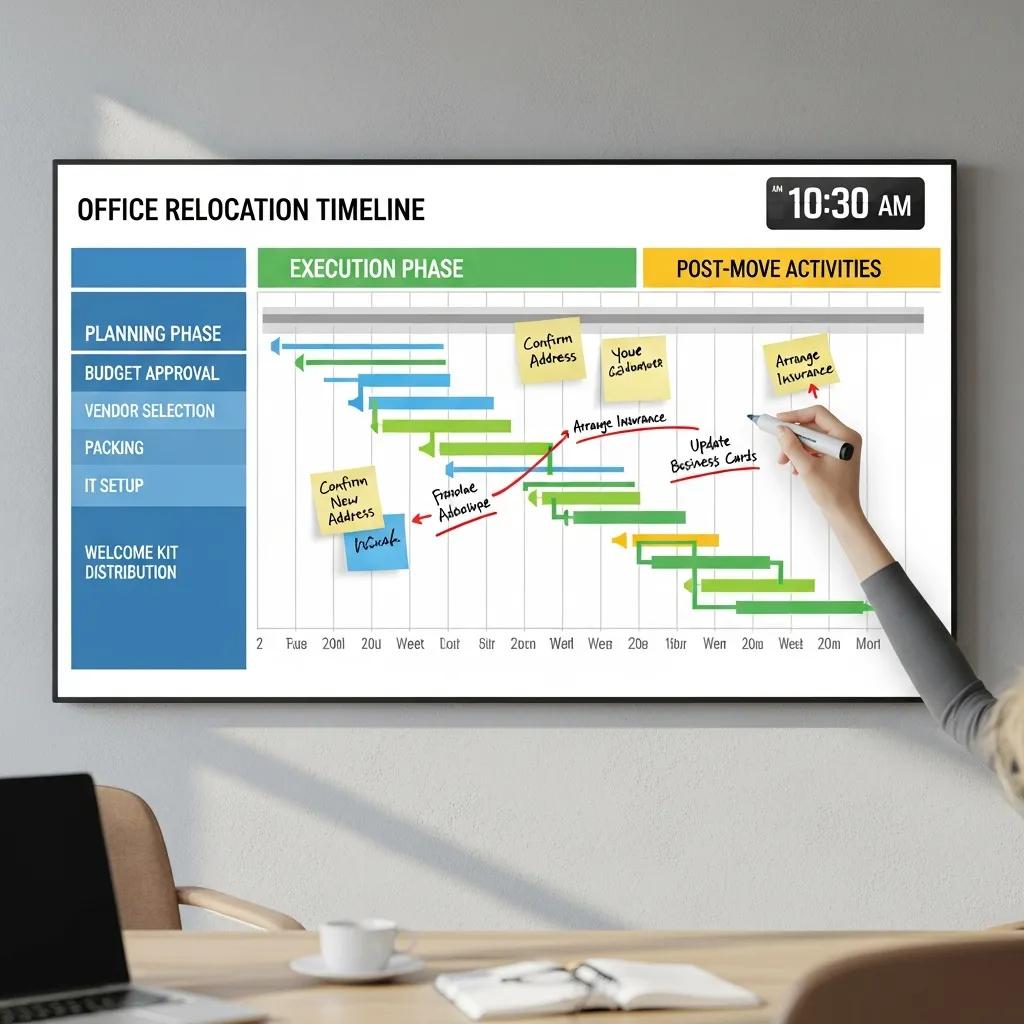
Break the move into phases so vendor lead times and business needs line up and surprises are minimized. Start with a 6–12 month strategic phase for site selection, lease negotiation, and major purchases. Follow with a 3–6 month operational phase for vendor contracts, furniture orders, and IT planning. Move into a 1–2 month execution window for packing, labeling, and pre-move tests, then focus on week-of and day-of tasks like elevator reservations, signage, and move-day staffing. Use milestone gates — for example, “IT test complete” or “furniture delivered” — to keep dependencies visible and avoid last-minute scrambling.
Create a one-page printable timeline with dates and owners to share with staff and vendors. Review it in weekly checkpoints and update it as lead times or permit windows change so the team stays coordinated during the final stretch.
What Should Be Included in a Comprehensive Office Moving Checklist?
A good checklist turns big milestones into specific tasks across pre-move, move-day, and post-move phases so owners know exactly what to do. Pre-move actions include confirming insurance and permits, compiling an asset inventory, scheduling vendor surveys, and notifying staff and external partners. Move-day items focus on floorplans, labeled shipments, fragile handling notes, and an on-site move coordinator to handle issues. After the move, verify IT systems, HVAC and utilities, signage, and run employee orientations to help everyone settle in.
Items that usually need pro movers include heavy furniture disassembly/reassembly and specialty equipment transport; your internal team can often handle desk-level packing and policy updates. Making these lines clear in the checklist avoids scope confusion when you compare written estimates.
How Can You Minimize Downtime During Your Office Relocation?
Cutting downtime starts with a phased plan that lines up physical moves with IT cutover windows and staff availability so core services keep running. Consider moving by department, pre-staging and testing IT gear, and hiring commercial movers who know office moves. Temporary remote work or staggered schedules can keep customer service steady while systems are offline. Tight coordination on facility access, elevator bookings, and vendor arrival times reduces wait time and keeps the schedule on track.
Good scheduling and project planning are the best tools for keeping disruption to a minimum.
Project Planning for Relocation: Minimizing Downtime
This case study focuses on designing a short-term relocation schedule — a three-month bridge plan — to ensure a smooth transition and reduce production downtime.
Project Management Schedule Planning for a Short-Distance Factory Relocation: A Case Study, 2023
- Phased Relocation: Move non-critical teams first to test your process without interrupting essential services.
- IT Pre-Testing and Staging: Configure and test network gear off-site when possible to speed onsite reconnection.
- Hire Experienced Commercial Movers: Trained crews move faster and handle specialty items safely.
- Staggered Work Schedules: Shift teams or allow remote work to keep operations running during cutovers.
What Strategies Ensure Efficient IT Relocation and Technology Setup?
IT moves work best when you follow a clear sequence: backup, inventory, label, disconnect, transport, reconnect, and test. Start with full backups and a documented network map so reassembly is straightforward. Assign specific responsibilities to the mover, IT vendor, and in-house staff so no steps fall through the cracks. Pre-stage critical equipment and run end-to-end checks right after reconnection to confirm everything performs before you hand systems back to users.
How Does Employee Communication Impact a Smooth Office Move?

Clear communication keeps people calm, informed, and productive. Put a communication plan in place with scheduled updates, reminders, and a day-of packet that includes maps, key contacts, and packing guidance. Appoint floor captains or departmental leads to answer questions and escalate issues — that spreads the load from the project manager. After the move, run orientation sessions and open feedback channels so issues land on the punch list and staff settle in faster.
Simple, consistent messages reduce last-minute mistakes and help your team get back to work sooner in the new space.
What Budget Considerations Are Critical for a Commercial Office Move?
Build your budget to cover the main cost groups — moving labor, packing materials, IT relocation, furniture, permits, insurance, and contingency — so surprises don’t derail finance forecasts.
Ask for written, itemized estimates that call out exclusions like elevator wait time or specialty handling so you can compare bids fairly. Plan a contingency — typically 5–15% of the total estimate — for unexpected charges such as expedited furniture delivery or permit delays. Clear scopes and transparent pricing make it easier to predict total project spend.
Use this table to flag which line items need written clarification in estimates. If uncertainty is high, request an onsite survey from qualified movers for a precise, transparent proposal rather than relying on verbal quotes.
How Do You Estimate and Manage Costs for Office Moving Services in Austin?
Local factors in Austin — labor availability, permit requirements, and building access — can change hourly rates and scheduling. Give prospective movers a detailed inventory, floor plans, and access notes so quotes match reality; when possible, request an onsite survey to remove guesswork. Control costs by phasing moves, slimming down furniture, and reusing packing materials. Lock expectations with written estimates listing inclusions, exclusions, and potential surcharges.
In Austin, a clear cost estimate and local market knowledge go a long way toward accurate budgeting.
Austin Commercial Moving Cost Estimation
This study adapts cost estimates to an Austin context and highlights how time and waiting affect total moving cost calculations.
Development of a tool for estimation of total cost of commute in Austin, 2015
If you need exact numbers, request a free quote so movers can evaluate specifics and give transparent pricing with clear disclosures — that avoids surprises later.
What Are Common Hidden Fees and How to Avoid Them?
Hidden fees often come from elevator wait times, stair carries, long carries from truck to office, specialty handling, or after-hours labor. Avoid them by asking direct questions and reviewing written estimates closely. Look for line items that mention stair carry, elevator reservation, building fees, or waiting time and confirm whether they’re included. Give bidders clear access details — loading dock availability, dock height, and carry distances — so estimates reflect real conditions. Whenever possible, schedule moves during standard building service hours to reduce after-hours premiums.
Getting inclusions written into the contract and listing assumptions upfront protects your budget and lowers the chance of surprise invoices after the move.
How Do You Plan Your New Office Space for Optimal Workflow?
Design the new office to support the way people actually work: balance collaboration zones, focused work areas, and shared resources, while planning for growth and accessibility. Start with a workflow map — seat teams who interact often near each other and put shared resources like printers and storage in central spots. Add flexible spaces for hybrid work, such as bookable rooms and touchdown areas. Factor in accessibility and code compliance early to avoid costly changes, and choose furniture that supports ergonomics and reconfiguration.
Use these practical rules to guide your floorplan decisions and keep daily operations efficient after the move.
- Group by Function: Seat teams together based on workflow to cut handoffs.
- Centralize Shared Resources: Place printers and storage in common areas to reduce interruptions.
- Design Flexible Zones: Include adaptable meeting rooms for hybrid collaboration.
- Plan Circulation Paths: Keep walkways clear and make sure routes meet ADA requirements.
What Are Best Practices for Office Space Planning and Layout?
Good layout planning balances ergonomics, team interaction, and future growth so the space works today and later. Do observations or stakeholder interviews to learn how people naturally collaborate and use that data to create team neighborhoods, quiet areas, and client-facing zones. Consider acoustics, daylight, and circulation to boost comfort and reduce distractions. Test the plan with small mockups or temporary furniture setups before committing to big purchases or builds.
Iterating plans with stakeholders early prevents costly rework and increases buy-in once you move in.
How Does Office Furniture Moving Affect Space Setup?
Furniture logistics shape installation order, IT reconnection timing, and the final look of the space; damaged or poorly fitted pieces can delay occupancy and add cost. Do a pre-move inventory with measurements and condition notes, then plan placement and reassembly so crews install large pieces before IT reconnects workstations. Coordinate delivery and assembly windows so furniture arrives in the sequence needed for quick workstation setup. Flag special-handling or disassembly needs in vendor scopes to avoid surprises on move day.
When furniture delivery and IT reconnection are synced, desks and networks come online together and your team gets productive faster.
Why Choose Professional Commercial Moving Services in Austin?
Professional commercial movers bring experience, the right equipment, and proven processes that lower risk, speed moves, and protect valuable assets. Movers who focus on office projects know how to handle building rules, elevator bookings, and staging in dense urban buildings. Look for experience with office moves, clear insurance and liability terms, and a written scope that lists included services and possible surcharges. Transparent pricing and timelines reduce disputes and keep your project on track.
When it makes sense to hire pros, they provide turnkey services — packing, transport, and specialty handling — so your team can focus on keeping the business running.
What Makes Mountain Movers ATX the Preferred Austin Office Mover?
Mountain Movers ATX is a family-owned, top-rated Central Texas mover focused on stress-free, turnkey commercial relocations backed by local know-how. Their promise — stress-free moves, upfront pricing, careful handling, and fast, efficient service — matches what businesses need during office relocations. If you want an Austin-based partner who can manage logistics end-to-end, Mountain Movers ATX presents itself as that local, dependable option. For clear, written pricing tailored to your scope, request a free quote to get an accurate estimate and a detailed scope of work.
This local-provider perspective shows how a nearby, experienced mover can fit into your plan when clear pricing and hands-on service matter.
How Do Local Expertise and Transparent Pricing Benefit Your Move?
Local knowledge helps avoid surprises by anticipating building rules, permit needs, and neighborhood logistics that affect timing and cost. Transparent pricing shows what’s included and what’s extra. Movers familiar with Austin can advise on elevator bookings, loading zone limits, and municipal nuances that save time and money. Ask for an itemized quote and check for exclusions — stair carries, long carries, or after-hours labor — so you can compare bids fairly. Verify crew hours, truck charges, insurance coverage, and specific exclusions in writing.
Confirming these items early protects your budget and speeds decision-making when reviewing proposals.
What Legal and Logistical Factors Should You Consider When Moving Offices?
Legal and logistical items include permits, building rules, parking/loading zones, insurance, lease requirements, and stakeholder coordination — all of which affect whether a move is feasible and how much it costs. Review your lease for termination clauses, move-out obligations, and required restorations to avoid unexpected liabilities. Talk to building management early to confirm loading dock rules, elevator reservation policies, and approved move windows — missing these can cause delays or extra fees. Keep proof of insurance and review mover liability terms so any transit or handling issues are covered.
Early stakeholder engagement and clear documentation of responsibilities cut risk and help keep the project on schedule and on budget.
What Are Austin-Specific Permits and Regulations for Office Relocation?
In Austin and Travis County, pay attention to loading zone rules, street permits for large trucks, and elevator reservations for multi-story moves — lead times vary by building and jurisdiction. Work with building management to reserve elevators and loading docks and learn about restrictions on after-hours moves that may add fees. For street staging or large trucks, contact local municipal offices early to confirm permit requirements and timelines. Clear communication with authorities and building staff prevents fines and scheduling conflicts that could derail your plan.
Confirming these items early makes sure your logistics match municipal and building expectations and protects your schedule and budget.
How Do You Coordinate with Real Estate Agencies and IT Service Providers?
Coordination works best when you establish one point of contact, hold regular status meetings, and share a common project plan so real estate, facilities, and IT vendors hit the same milestones. Define deliverables and sign-offs for critical tasks — lock changes, network handoff, punch-list acceptance — and set recurring check-ins to clear blockers. Share floor plans and access constraints with all vendors and use collaborative tools or a simple status dashboard to track progress. Clear contracts and acceptance criteria for each phase reduce disputes and create an auditable trail of responsibility.
A disciplined coordination approach keeps everyone aligned so the move stays on schedule and transitions between teams are smooth.
Conclusion
Moving an office takes planning, clear communication, and smart vendor choices to keep downtime low and the transition smooth. Follow a structured checklist and timeline to protect productivity and get your team settled quickly. Ready for help with numbers and logistics? Reach out for a free quote tailored to your move and timeline. Treat your relocation as an opportunity to improve your workspace and streamline how your team works.