

Moving In The Rain





Moving with Kids in Austin: Practical, Family-Friendly Steps for a Calmer Move

Moving with children brings both logistics and emotions. With a little planning, you can lower stress for the whole family. This guide walks Austin families through age-appropriate prep, moving-day routines, packing strategies for kids' rooms, and ways to help children settle in after the move. You’ll find checklists, labeling examples, safety reminders, and local resources that make transitions easier. We also outline how responsibilities can be split between parents, movers, and childcare providers so moving day runs smoothly. Toward the end, we explain how Mountain Movers ATX’s family-focused services can lift the heavy work so you can focus on your kids—and how to get a free quote or book help.
How can families prepare children for a move?
Start with clear, repeated explanations about what will change and what will stay the same. That predictability eases anxiety. Use age-appropriate language and give kids small, concrete tasks—pack a favorite toy, pick items to donate, or draw the new house—to give them control. Mark calendar deadlines for school records, pediatrician updates, and neighborhood visits so paperwork doesn’t pile up. Check in regularly about feelings; simple role-play or stories help kids name emotions and practice coping. These prep steps naturally lead into day-of planning, where clear roles and safety routines keep the move calmer for everyone.
Research shows that residential moves can affect early childhood development, so thoughtful preparation matters.
Relocation Effects on Early Childhood Development & Intervention
Residential relocation (RR) has been linked with behavior concerns and delays in some developmental areas among children. In particular, children who relocate three or more times showed higher odds of scoring in the bottom tertile for communication on screening tools. High levels of relocation were also tied to concerns about language development at a 24‑month follow-up in some models. Early intervention—when coordinated between primary care and community services—may help families at risk of frequent moves access support and resources.
Factors associated with residential relocation and effects on early childhood development in a low-income home visitation population, AA Parsons, 1999
Use this quick checklist to organize communication and tasks before moving day:
- Share the timeline: Tell kids when the move will happen and why, using simple, consistent language.
- Assign small tasks: Let each child pack a labeled box or choose items to donate.
- Prepare paperwork: Request school records and pediatrician summaries well in advance.
- Practice routines: Run through your moving-day plan and keep bedtime rituals familiar.
- Validate feelings: Name emotions and offer comforting rituals like a favorite toy or quiet time.
These steps build structure and emotional readiness and lead into age-specific strategies for toddlers, school-age kids, and teens.
Additional research supports these points, describing how frequent moves can affect children’s behavior and school performance.
Children's Mental Health & Relocation: Emotional & Behavioral Impacts
Frequent residential instability raises risks to children’s emotional and behavioral health. In studies of children aged 5–15, those who moved three or more times in five years showed higher rates of anxiety, depression, attachment difficulties, and both externalizing behaviors (like aggression) and internalizing behaviors (like withdrawal). Academic performance—particularly math and reading—was lower on average for frequently relocated children. These outcomes are influenced by factors such as parental support, community connections, and economic stability.
Residential Instability and Children's Mental Health: Emotional and Behavioral Consequences of Frequent Relocation, 2024
What works for toddlers, school-age kids, and teenagers?

Toddlers do best with short routines and familiar objects—keep favorite blankets and give simple reassurances that the family stays together. Pack one clear “first-night” bag with pajamas, a comfort item, formula or snacks, and a night light. School-age kids benefit from involvement: let them pack a personal box, map the new route to school, or visit local playgrounds to build excitement. Teenagers need respect and choice—offer input on room layout, social activities, and timelines for their belongings, and help them keep up with clubs or teams. These age-specific steps cut down on chaos and last-minute stress.
How do you keep moving day low-stress with kids?
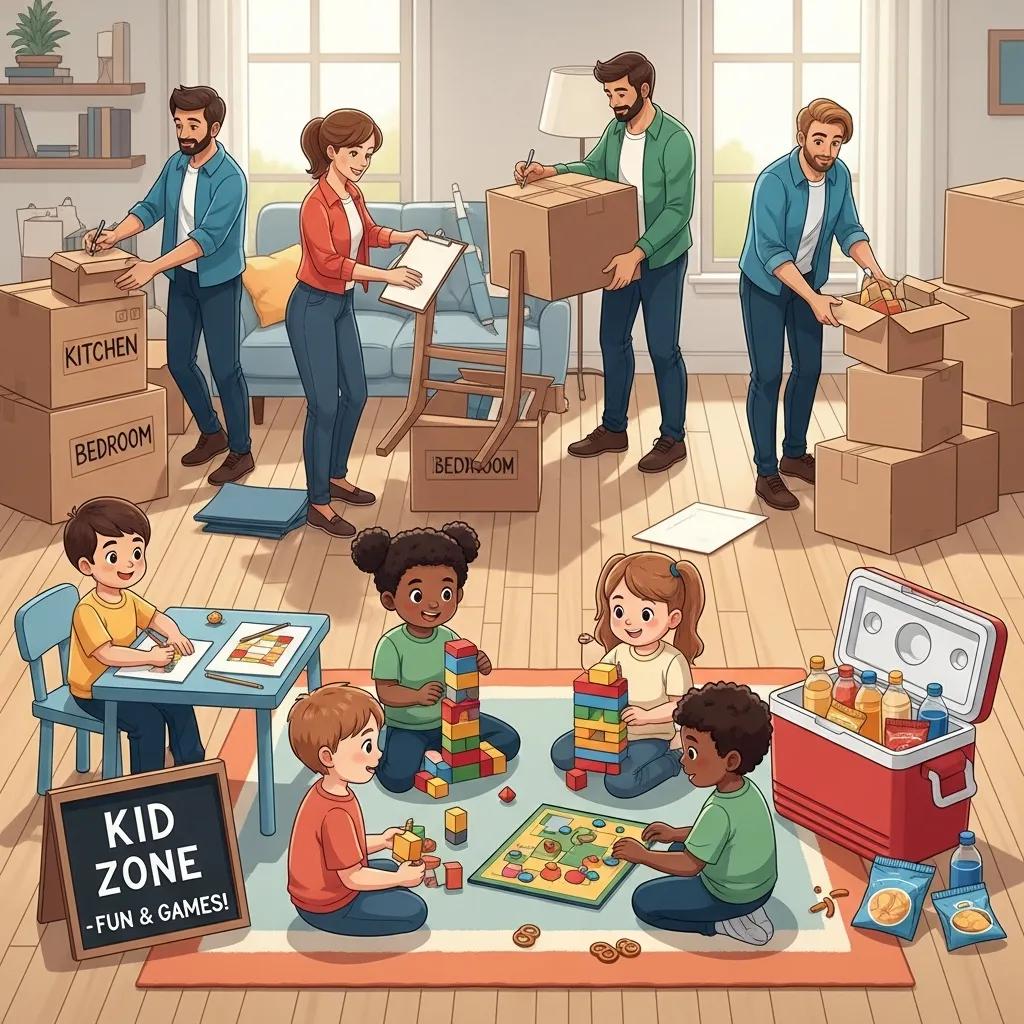
A calm moving day needs clear roles, a safe kid zone, and a simple timeline so parents can watch kids instead of lifting furniture. Create a supervised kid zone (a closed room with toys) or arrange off-site childcare so movers can work uninterrupted. Pack a moving-day essentials bag for each child with meds, snacks, a change of clothes, and a few activities. Assign one adult to coordinate movers and another to stay with children, and post a visible timeline with key tasks. Letting professional movers handle heavy items reduces safety risks and gives parents space to stay present with their kids.
Use these practical, step-by-step actions for moving day:
- Start early and confirm arrival times: Double-check movers and childcare before the kids are up.
- Set up a supervised kid zone: Keep children in one familiar space with activities and snacks.
- Use labeled essentials bags: Each child should have a small bag with meds, snacks, and comfort items.
- Designate an adult liaison: One parent manages movers; the other stays with kids and handles meals.
- Do a final safety sweep: Secure doors/windows and remove hazards from work areas.
These steps cut confusion and let parents support their children emotionally while professionals manage the heavy work.
Keeping kids entertained and safe on moving day
Pre-packed activity kits, clear supervision plans, and short breaks help avoid boredom and meltdowns. Quiet kits can include coloring pads, sticker books, simple games, or headphones and a tablet playlist—rotate activities every 20–30 minutes. Safety items to prepare: visible name tags for young kids, labeled medication with dosing notes, and a family liaison who knows where important documents and emergency contacts are kept. Plan brief outdoor breaks at a nearby park to burn energy, and keep a hydration/snack plan to prevent hunger-related upset. These small measures keep kids secure while movers do the heavy lifting.
Before moving day, draft a short roles table so everyone knows who handles what—this reduces overlap and last-minute decisions.
This quick reference helps families divide tasks clearly and supports a calm handoff to professional services.
How should parents pack kids' rooms to make unpacking easier?
Efficient packing uses priorities, consistent labels, and an unpack plan so first-night items are easy to find and keepsakes stay protected.
Start by decluttering with your kids: sort into keep, donate, and toss piles while explaining the why—this teaches decision-making and trims volume.
Use a color-coded or clearly labeled system that includes the child’s name, room, and priority level to speed unpacking and avoid confusion.
Pack essentials first—bedding, pajamas, a few outfits, and medications—then school supplies, toys, and seasonal clothes. Wrap fragile keepsakes and carry them personally in a marked keepsake box.
Consider hiring professional packing for fragile or high-volume items so families can manage sentimental pieces and first-night comforts themselves.
Use this simple guide to prioritize common children’s items:
This table helps parents decide what to pack first and what to open right away. With a packing system in place, use clear labels and checklists for children's belongings.
Essential packing checklists and labeling tips for children's things
A compact labeling system prevents lost items and makes first nights smoother. Use a label format like: ChildName | Room | Priority (example: "Ava | Bedroom | First-Night"). Put one label on the lid and one on the side for easy orientation during loading and unloading. Prepare an essentials box per child—bedding, meds, a couple of outfits, and a comfort item—and keep it in the car or clearly marked for last-to-load/first-to-unload. Photograph fragile artwork before packing, wrap items individually, and keep keepsakes with a parent when possible. These steps lower the emotional cost of unpacking and help kids feel secure when you arrive.
How can families help children adjust to a new home in Austin?
Adjustment starts with rebuilding familiar routines, exploring the neighborhood, and connecting to local programs that help kids make friends and feel rooted. Reinstate regular mealtimes, bedtime rituals, and weekend routines right away to give kids stability. Schedule short outings in the first week—parks, libraries, or family spots—so children can get to know the area. For school changes, gather enrollment documents early and reach out to teachers or registrars to ease the transition. Austin’s libraries, playgrounds, and community centers host storytimes and group activities that make it easy to meet other families.
Here’s a quick map of needs to local Austin options and simple actions to take:
Matching needs to local options gives parents clear first steps to build belonging. Once routines and supports are in place, hiring moving professionals can free up your time to focus on family and community integration—Mountain Movers ATX can handle the heavy lifting so you can be with your children.
Local Austin resources and family-friendly neighborhoods that help
Austin has many family-friendly parks, children’s programs, and neighborhoods with active parent communities that smooth transitions. A nearby playground or greenbelt offers a safe, familiar spot for kids to play and meet peers. Libraries host free storytimes and events that introduce children to routines and friends; community centers run classes and parent groups that speed social connections. When choosing a neighborhood, look for walkability, nearby schools with involved PTAs, and easy access to parks—these features make daily life easier and support kids’ social lives after a move.
Why choose Mountain Movers ATX for family moves in Austin?
Mountain Movers ATX is a family-owned Austin moving company built on trust, care, and respect. We treat customers like neighbors and focus on clear, upfront pricing with no hidden fees. Our services—local and long-distance moves, residential moves, and packing—are designed to reduce the unpredictable work parents face on moving day. Letting professionals handle heavy lifting, secure transport, and selective packing gives caregivers time for emotional support and routine setup, cutting stress and protecting keepsakes. We also offer a free moving-day survival checklist to help families prepare. If logistics feel overwhelming, request a free quote or contact our team to discuss family-focused moving options.
How professional packing and moving services lower parental stress
Professional crews take on the most time-consuming and risky tasks—itemized packing, secure wrapping, inventorying, and careful loading—so you can focus on your kids. Movers label boxes by child and priority so first-night essentials are easy to find. Teams handle bed disassembly, appliance moves, and fragile items, which reduces safety risks while parents supervise or take care of school and healthcare handoffs. To get a free quote or to schedule services that match your family timeline, contact Mountain Movers ATX for transparent pricing and tailored options.
Common questions about moving with children
Parents often ask how to prepare kids emotionally, what to pack in an essentials box, and when to transfer school records. Clear answers help you act quickly: include children in age-appropriate decisions, pack first-night essentials, and start school paperwork early. Many parents also ask about childcare on moving day—arranging a supervised kid zone or short-term childcare during loading/unloading keeps kids safe and reduces stress. Hiring movers for packing and furniture handling resolves the biggest logistical headaches and frees parents to focus on their children. Below are short Q&A responses for the most common concerns.
- How should I explain a move to my child? Keep it simple and honest, emphasize what will stay the same, and give them small tasks to help.
- What goes in an essentials box for kids? Pack pajamas, a change of clothes, medications, a favorite comfort item, snacks, and basic toiletries.
- When should I start transferring school records? Contact the new school several weeks before the move to allow time for enrollment and introductions.
- Should I hire professional movers for a family move? Yes—professionals manage heavy and fragile items, lowering physical risk and letting you care for kids.
How can parents make moving less stressful for their child?
Keep routines steady, offer choices when possible, and prepare emotionally with rehearsal and honest conversations. In the weeks before moving, use a visible countdown, involve kids in donation and packing choices, and set aside time to address feelings. On moving day, keep a dedicated kid zone, labeled essentials, and one point person for children’s needs so logistics don’t disrupt caregiving. After the move, restore daily routines quickly—meals and bedtime first—and schedule neighborhood outings to help kids orient. If the load still feels heavy, consider hiring packing or moving help so you can focus on emotional support and building local connections.
This guide covered planning, moving-day logistics, packing systems, Austin resources, and how family-focused movers can ease transitions. With predictable routines, clear roles, and local supports, relocation can be manageable—and even a positive new chapter—for your children.
Conclusion
Moving with children in Austin becomes easier with thoughtful planning, clear communication, and local supports. Use age-appropriate strategies and stick to routines to lower stress and help kids feel secure. If you’d like to offload the heavy lifting, Mountain Movers ATX is here to help—our family-focused approach gives you time to focus on what matters most. Explore our services or request a free quote to make your next move smoother and more enjoyable.