

What to Do When Moving to a New State




Moving to a New State: A Practical Interstate Guide for a Smoother, Less-Stress Move

Moving to another state — whether it’s just over the border or clear across the country — is a big life change that takes planning, decisions, and the right partners. This guide walks you step-by-step through interstate moving: building a timeline, budgeting, hiring trusted movers, handling legal and admin tasks, researching your new area, and settling in once you arrive. You’ll find practical checklists, a verification checklist for choosing long-distance movers, and unpacking and residency tips that help cut stress and prevent common delays. Ready for help? Get a free quote from Mountain Movers ATX to compare transparent, full-service long-distance options and see how professional packing and transport can make your move much easier. The sections below cover pre-move planning, budgeting, hiring movers, post-move admin, researching your destination, settling in, and how to request a clear interstate moving quote.
Smart stress-management and sensible processes make relocation feel a lot easier.
Stress Reduction Strategies for Relocation
These stress-reduction strategies were developed in the context of international relocation but offer practical lessons for any major move. They focus on planning, communication, and routines that families and organizations can adapt to reduce disruption. Managing stress in the expatriate family: A case study of the State Department of the United States of America, G Singh, 2010
How Do I Start Planning My Move to a New State?
The best moves begin with a simple plan: set a timeline, make a prioritized checklist, and decide early whether you’ll hire full-service movers or handle parts yourself. Starting planning about eight to twelve weeks before moving day gives you time to lock in movers, arrange temporary housing if needed, and sequence tasks like decluttering, notifying your landlord, and updating your address. Planning ahead cuts last-minute costs and gives you space to compare services — from full packing to a partly DIY approach that saves money. Below you’ll find a short checklist and a timeline to help map tasks to dates so you don’t miss important administrative steps.
This checklist highlights the priority actions to schedule and why they matter before moving day.
- Reserve movers or plan DIY transport at least eight weeks before your move to lock in dates and better rates.
- Start decluttering and sell or donate things you won’t move to lower volume and cost.
- Notify your landlord or mortgage company, and begin researching housing and schools where you’re headed.
- Collect important documents and keep them in a single file for contracts, receipts, and records.
These actions build momentum and lead into the timeline below, which shows when to complete each task.
The table below maps common pre-move tasks to recommended timing and short notes to help you prioritize.
This timeline sets the pace for a cross-state move and helps you plan estimates, budgets, and logistics in the weeks before moving day.
What Should Be Included in a Moving to a New State Checklist?
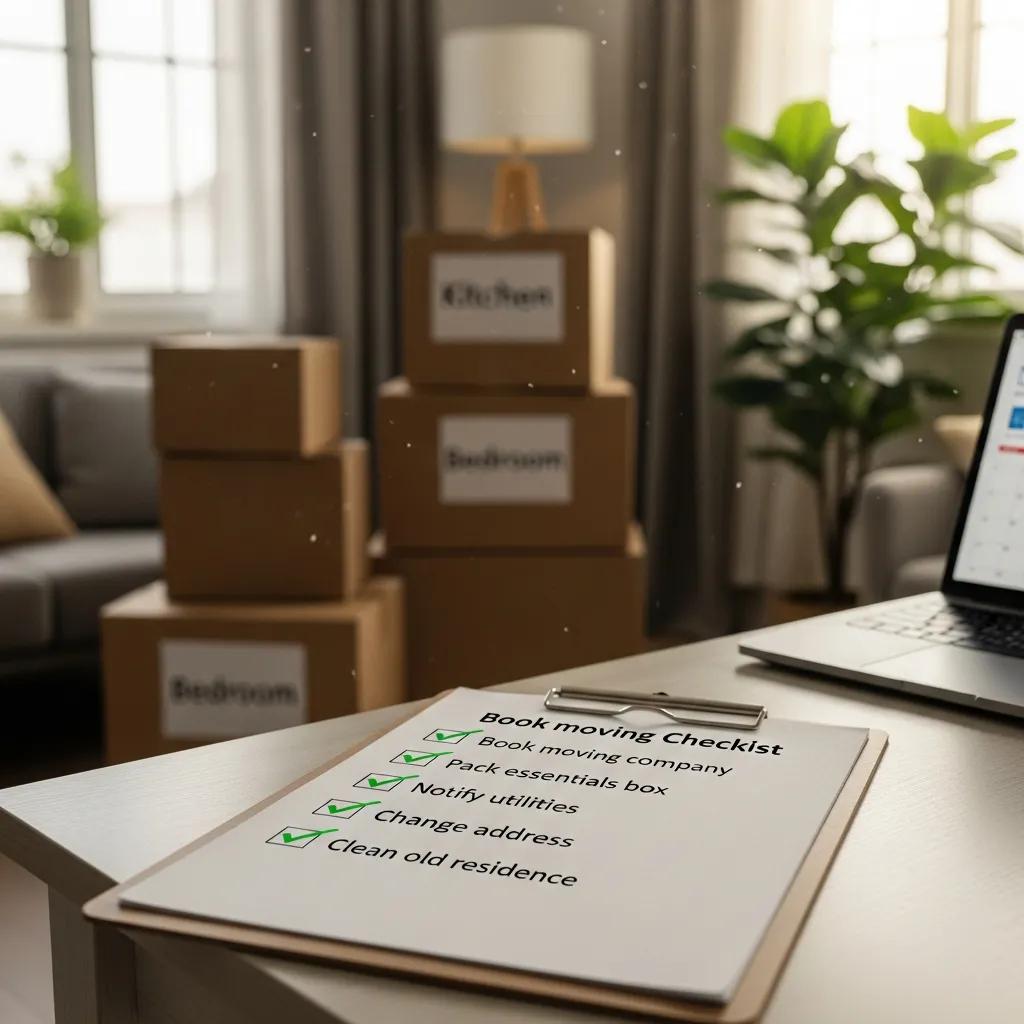
Your moving checklist should cover both practical tasks and paperwork so nothing gets overlooked. Start with high-impact items like booking movers, informing your landlord, and securing housing. Then add critical documents: medical and school records, vehicle title and registration, and proof-of-residency you’ll need after you move. Plan an essentials box for items you’ll need during the trip and the first few days at your new place so you’re not living out of boxes. Assign deadlines and owners for each task—this makes budgeting and hiring decisions easier as the move date nears.
How Do I Budget for a Cross-Country Move?

Budgeting for an interstate move means identifying the biggest cost drivers: mover service level, packing and supplies, fuel and transportation, travel and temporary housing — then adding a contingency for surprises. Movers often price by weight or volume; list packing services and special handling for items like pianos or antiques separately. Timing matters: summer weekends cost more, while mid-week or off-season moves are cheaper. Plan a 5–15% contingency and get at least three estimates so you can spot odd fees. Then decide whether full-service packing, partial help, or self-packing fits your budget and schedule.
Use these ranges to model small, medium, and large household scenarios and decide where to save—decluttering cuts weight and fees, off-peak dates lower base rates, and packing small items yourself reduces costs. With a working budget, you’ll get more accurate estimates and pick the service level that fits your priorities.
What Are the Best Tips for Hiring Long-Distance Movers?
Picking the right long-distance mover comes down to checking licensing, insurance, clear pricing, and the services offered — packing, loading, transport, unloading, and furniture placement. Confirm a mover’s USDOT number and insurance, ask for written estimates (binding or non-binding), and read reviews to learn how they handle timing and claims. A careful vetting process protects your belongings and helps you spot fees like access charges or fuel surcharges. A clear contract and an accurate inventory reduce surprises on moving day.
Before you contact movers, use this verification checklist to validate providers and why each check matters.
- Confirm USDOT registration and active status so the company is legally authorized for interstate moves and has a public record you can check.
- Ask about insurance and valuation options so you understand coverage levels and claims procedures.
- Get written, itemized estimates to compare binding versus non-binding offers and any extra service fees.
- Check references and recent reviews for on-time performance and how damage claims were handled.
The verification table below shows the most important checks and why they matter when choosing long-distance movers.
If you prefer a vetted, full-service provider, Mountain Movers ATX is a family-owned Austin company that focuses on stress-free moves and clear pricing. You can verify their USDOT number 3352346 as part of your checks. Doing this helps you pick a reliable partner while keeping the hiring process objective and straightforward.
How Do I Choose a Reliable Long-Distance Moving Company?
A trustworthy long-distance mover will show clear licensing, appropriate insurance, transparent written estimates, and consistent positive feedback. When you talk to companies, ask about transit windows, specialty-item handling (pianos, antiques), packing standards, and claims procedures. Request references from recent interstate jobs and watch for red flags like pressure for large deposits without a binding contract or vague answers about valuation coverage. Ask to see a sample contract or bill of lading so you can understand accessorial charges before moving day.
What Packing Services and Strategies Should I Consider for Interstate Moving?
Packing options range from full-service — pros pack and label everything — to partial or DIY packing if you want to save money. Full-service packing lowers the risk of damage on long hauls; self-packing saves cash if you have time and good materials. For high-value or awkward items (pianos, antiques), hire specialists with the right equipment. No matter the approach, pack an essentials box and label boxes by room and priority so your first 48 hours at the new place are manageable.
What Legal and Administrative Tasks Must I Complete After Moving?
Once you arrive, update legal and administrative records quickly: driver’s license, vehicle registration, insurance, tax residency, and employer and bank addresses. Most states require new residents to get a driver’s license and register vehicles within 30–90 days, and you’ll need documents like proof of identity, proof of residency, and vehicle title or registration. Update your address with USPS, banks, insurers, and subscriptions to avoid lost mail and billing problems. Finishing these tasks early lets you focus on unpacking and settling in without bureaucratic headaches.
The essential administrative tasks and why they matter are listed below.
- Update your address with USPS and banks first to keep important mail and financial statements flowing.
- Transfer or obtain a new driver’s license and register your vehicle within your state’s window to avoid fines.
- Tell insurers, tax authorities, and your employer/HR about your new address to align coverage and tax withholding.
- Register to vote and update your voter registration so you can participate in local elections.
Completing these updates wraps up the legal side of moving and leads into the practical steps for DMV visits and utility setups described next.
How Do I Transfer My Driver's License and Register My Vehicle in a New State?
To transfer your driver’s license and register a vehicle you’ll typically need proof of identity (passport or birth certificate), proof of Social Security or exemption, and proof of residency (lease or utility bill), plus the vehicle title and current registration. States usually set a deadline — commonly 30 to 90 days — to complete these steps; missing it can mean fines. Bring originals and copies, check required forms online before you go, and make an appointment if the DMV offers one to avoid long waits. Keep receipts and new documents in your central file for insurance and future paperwork.
What Are the Steps to Update My Address and Set Up Utilities?
Update your address and schedule utilities so you have power, water, and internet from day one and don’t get billed at your old place. Start with USPS mail forwarding and notifications to banks, employers, and insurers, then schedule utility shutoffs and start dates to overlap by a day. Book internet and cable appointments early — slots fill fast — and check transfer or termination policies to avoid fees. Save confirmation numbers and contact names in your moving file so you can track activations after you arrive.
How Can I Research and Prepare for Life in My New State?
Researching your new state ahead of time reduces surprises and helps with housing, job searches, taxes, and daily life. Compare cost-of-living factors — housing, taxes, utilities, and transport — against your current city to set realistic expectations. Look into local job markets if you’re searching, and check state rules that might affect licenses or professional certifications. Learn about weather patterns, transit options, and community resources so you can pack and house-hunt with practical needs in mind.
Use these priorities to structure your destination research and find resources quickly.
- Compare housing costs, property taxes, and rental markets to understand affordability and neighborhood trade-offs.
- Check local employment resources and industry concentrations to assess job prospects in your field.
- Review state laws that affect your profession, vehicle requirements, and tax residency to avoid surprises.
- Explore community amenities, healthcare, and schools to evaluate quality-of-life factors.
These steps help you target neighborhoods and services, which leads into finding healthcare and schools — covered next.
What Should I Know About the Cost of Living, Job Market, and Local Laws?
Focus on a few reliable metrics when evaluating cost of living: median rent or home prices, state and local taxes, and typical utility costs. Use government data and labor reports for unemployment trends and dominant industries, and check licensing reciprocity if you have regulated credentials. Local laws — from vehicle rules to tenant protections — can change daily life, so prioritize a few legal checks that matter to you. These economic and regulatory insights will guide your housing and financial decisions before you finalize moving plans.
How Do I Find New Healthcare Providers and Schools After Moving?
Start by checking your insurance network and nearby health systems: search provider directories, read clinic and hospital reviews, and request medical records transfers before you move. For schools, use enrollment portals and confirm required documents like immunization records and proof of residency, and schedule visits to see if a school is a good fit. Ask current providers to transfer records early, especially for chronic conditions. Planning healthcare and schooling ahead makes the first weeks after your move much smoother.
What Are the Essential Post-Move Actions to Settle In Smoothly?
After you arrive, prioritize tasks that restore everyday life: unpack the essentials box, set up beds and key furniture, get utilities and internet running, and confirm address updates with institutions that send important mail. Make a room-by-room unpacking plan so bedrooms, kitchen, and bathrooms are usable first, then tackle storage and less-urgent boxes over the first week. Open local accounts with utilities and services, and sign up for community resources like libraries and rec centers to start building local connections. These actions help you move from temporary living to feeling at home after a long-distance move.
Below is a practical unpacking priority list to organize the first week after moving.
- Set up beds and bedding first so everyone can sleep comfortably on night one.
- Unpack essential kitchen items and toiletries so you can eat and maintain hygiene right away.
- Place key furniture and basic electronics to create a functional living space that supports daily routines.
- Schedule deeper unpacking and storage organization for days 3–7 to avoid overwhelm and keep momentum.
Following these priorities helps you regain normal routines and leads into establishing residency and voter registration, covered next.
How Do I Establish Residency and Voter Registration in My New State?
Establish residency by transferring your driver’s license, registering your vehicle, and updating your address with banks and state tax authorities; common proofs include leases, utility bills, and official mail. To register to vote, follow your state’s process — often online or at the DMV — and confirm your registration ahead of local election deadlines. Keep copies of residency documents in your moving file and note any state-specific deadlines so you meet them on time. Establishing residency not only allows you to vote but also aligns your legal and tax status with your new home.
What Are the Best Practices for Organizing and Unpacking After a Long-Distance Move?
Use a room-by-room unpacking plan and set small daily goals so you don’t get overwhelmed. Start with beds, then kitchens and bathrooms, and leave decorative items and deep organization for week two. Label boxes by room and priority to speed the process. Think about furniture placement early — professional movers who include furniture setup can save you time and effort. A steady, paced plan helps you preserve energy and turn a new house into a home while you settle into work, school, and the neighborhood.
Where Can I Get a Free Quote and Professional Help for My Interstate Move?
When you’re ready for professional help, getting a free quote is simple: share a room-by-room inventory, your origin and destination ZIP codes or cities, your move date, and any specialty services like full packing or piano moving. Expect clear pricing details, a list of included services (packing, loading, transport, unloading, furniture placement), and an explanation of valuation and insurance options. Look for trust signals like a visible USDOT number, family-owned values, and transparent written estimates with no hidden fees. Below is what movers need for an accurate quote and what to expect during the estimate process.
- Provide a room-by-room inventory and photos so movers can produce precise weight- or volume-based estimates.
- Share preferred move dates and any access constraints at origin or destination so scheduling is accurate.
- List specialty items and services like full packing or appliance disconnection to get itemized pricing.
- Request written estimates and clear explanations of valuation and insurance before you book.
Following these steps makes comparing companies easier and helps you book with confidence. If you want a family-owned option with transparent pricing and turnkey services — packing, loading, transport, unloading, and furniture placement — Mountain Movers ATX presents itself as a stress-reduction partner with upfront quotes, dependable crews, and a commitment to treating customers like family.
How Does Mountain Movers ATX Provide Stress-Free and Transparent Long-Distance Moving Services?
Mountain Movers ATX offers full-service interstate moving that bundles packing, loading, transport, unloading, and furniture placement into practical, turnkey solutions to reduce your workload. The company emphasizes stress-free moves, transparent pricing, reliable crews, and family-owned care — all important for long-distance moves where coordination matters most. When you request a free quote, provide an inventory and move dates so you get a clear, itemized estimate. Mountain Movers ATX stresses upfront pricing with no hidden fees and offers packing for fragile and specialty items to lower damage risk. Choosing a mover that matches your priorities gives you a single, trusted contact to simplify the whole process.
What Makes Mountain Movers ATX a Trusted Family-Owned Moving Company in Austin, TX?
Mountain Movers ATX builds trust through a family-owned approach, a focus on Austin and Central Texas, and public commitments to clear pricing and reliable service. The company lists long-distance and interstate moves as core services and highlights full-service options — packing, transport, and furniture placement — that solve common pain points in cross-state relocations. A practical verification step is confirming their USDOT number 3352346 and requesting a written estimate that spells out included services and valuation coverage. Those checks follow best practices for hiring long-distance movers and help you compare providers on the same terms.
Conclusion
Moving between states takes planning, budgeting, and the right moving partner to keep things on track. Follow the steps in this guide and consider resources like Mountain Movers ATX to reduce stress and avoid common moving mistakes. When you’re ready, request a free quote and take the next step toward a smoother move. Welcome to the next chapter — you’ve got this.